Martin Scorsese
1978
The Last Waltz - definitive concert film grammar
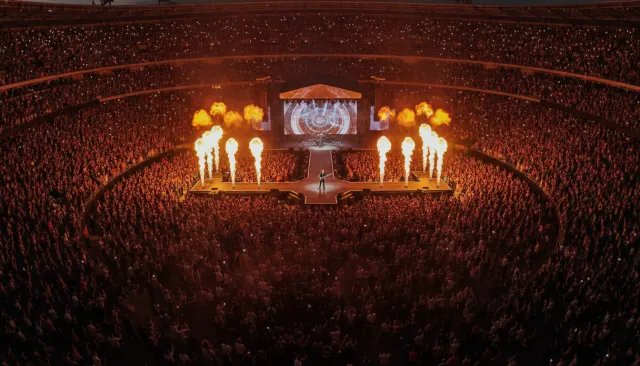
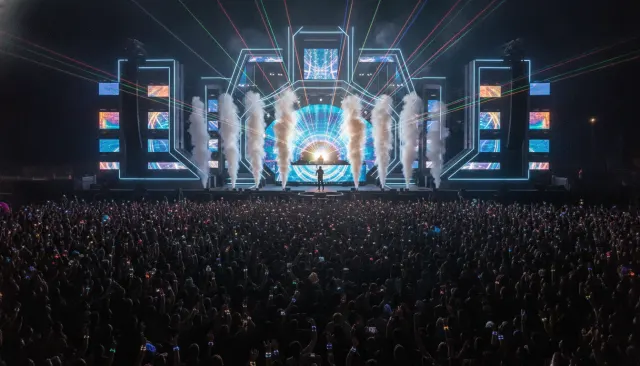
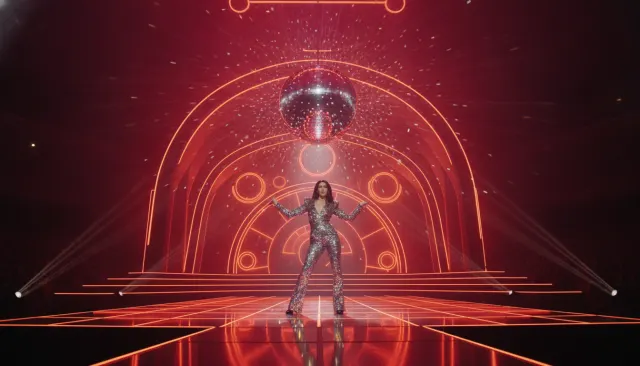
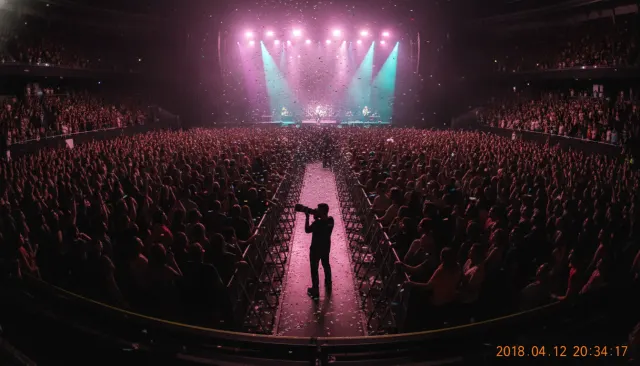
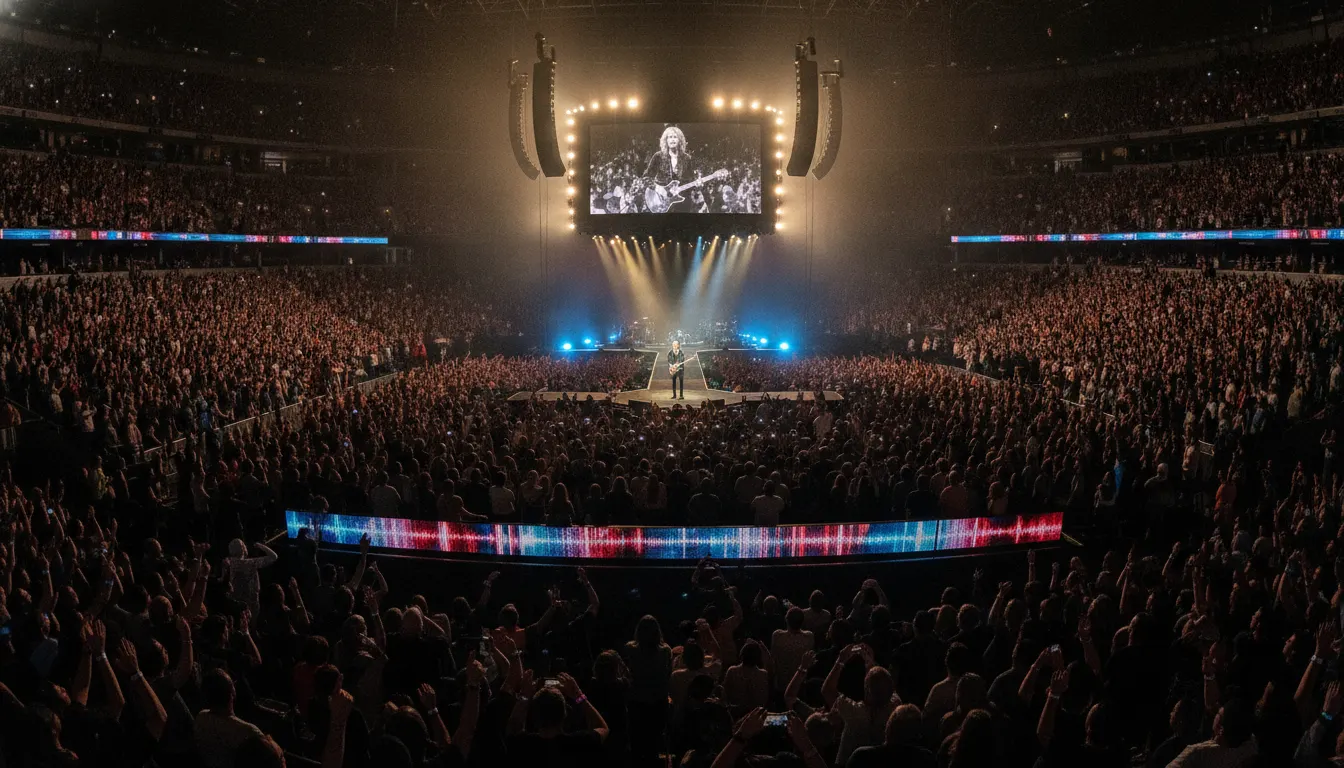
Multicam arena concert capture. Six-cam broadcast cut, jib swing, audience-cam selfie pan, jumbotron cut-away, broadcast LED lower-third.
The moves a human crew would use to get here. Cue applies them for you, and knowing their names is how you ask for a change.
coordinated director-cameraman communication for live-cut decision making
production color grade to unify disparate camera exposure conditions from different positions under different stage lighting
cutting on big lighting state changes (strobes, spots, wash transitions) rather than just musical beats
level camera for performer-perspective intimacy within the larger multicam structure
motion inserts (120fps+ cameras at key positions) for chorus peaks and emotional climax moments
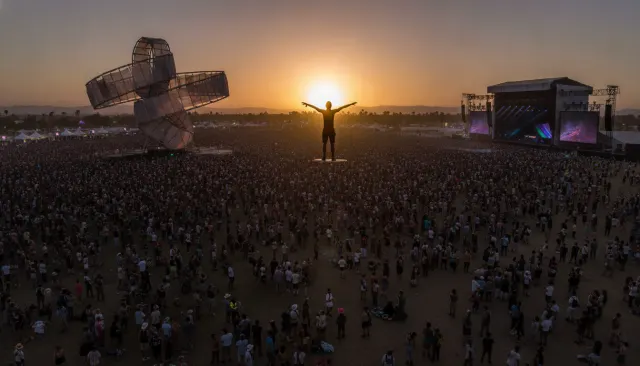
The multicam arena concert look is the professional broadcast grammar for large-scale live performance: multiple camera positions simultaneously capturing the same moment from different distances and angles, edited in real time or in post to create a coherent screen experience from an event designed to be experienced live at scale. It is the oldest established music video grammar and the most practically constrained by the physical reality of a live performance.
The multicam concert film grammar was codified by directors like Hal Ashby (The Last Waltz was actually Martin Scorsese, 1978), D.A. Pennebaker (Don't Look Back, 1967; Monterey Pop, 1968), Albert and David Maysles (Gimme Shelter, 1970), and later Michael Wadleigh (Woodstock, 1970). Each of these landmark films established camera position vocabularies - photo pit, stage wing, audience, crane, stage floor - that are still used today.
The transition to broadcast and DVD-era concert films in the 1990s and 2000s introduced television production values: more cameras, tighter shot lists tied to specific song moments, coordinated director-cameraman communication via IFB (in-ear monitoring), and color grading applied in post to standardize the disparate exposure conditions of a live show.
Contemporary arena concert filming for streaming (Netflix, Disney+, Amazon) has industrialized the grammar further: 15-20 camera positions including aerial (drone or crane), robotic rail cameras on stage, and audience-embedded cameras are now standard for major-artist productions.
The established positions: photo pit (front of stage, wide-to-mid on performer); FOH (front-of-house on the PA tower, telephoto on stage); stage wing (tight on performer profiles from the side); stage floor (wide-angle looking up at performer against lighting rig); audience wide (behind and above crowd looking toward stage); crane or Technocrane (flexible high-angle on stage or crowd); and handheld floor (embedded in crowd for first-person experience).
1978
The Last Waltz - definitive concert film grammar
1968
Monterey Pop
1970
Woodstock
Gimme Shelter (1970, Rolling Stones)
Live at Wembley '86 (1986, dir. Gavin Taylor)
Homecoming (2019, dir. Beyoncé, Netflix)
The Eras Tour (2023, dir. Sam Wrench)
Get Back to Toronto (various era)
A Look is not a filter. It is a set of stored decisions the pipeline reads before it makes a single frame, so two videos in the same Look actually match.