KISS
Rock and Roll All Nite (Live, 1975, Alive! tour)
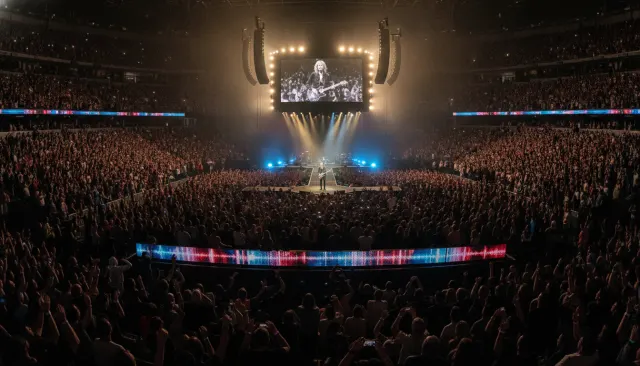
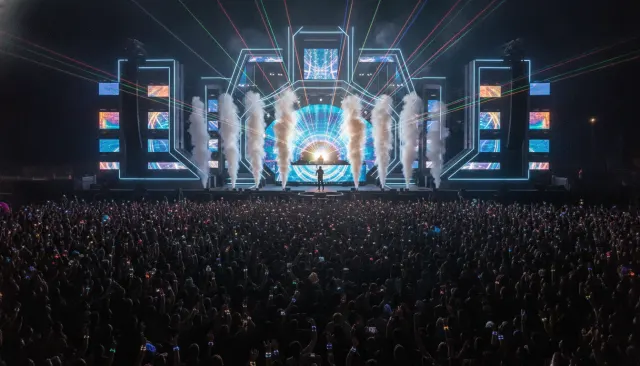
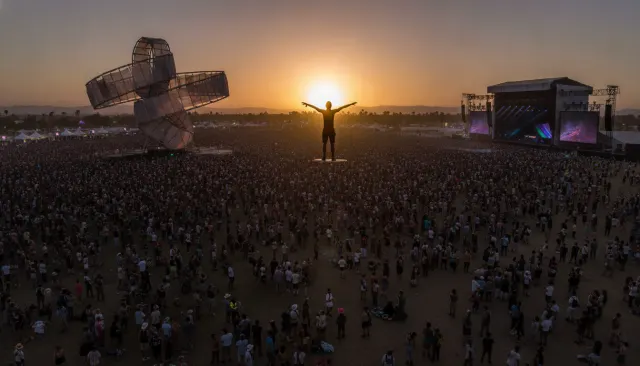
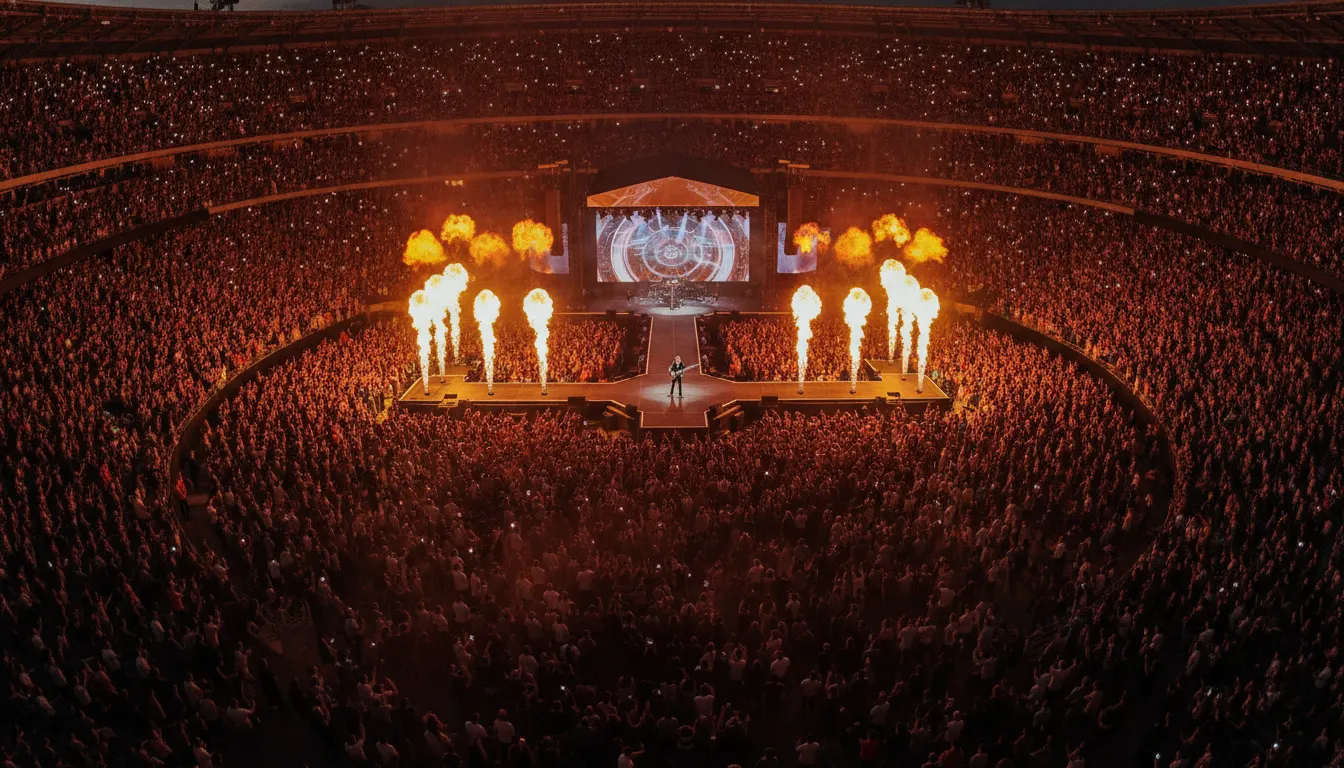
Arena rock pyro spectacle MV. Foo Fighters and Muse stadium, T-stage runway, flame jets, lighter-aloft crowd, drone fly-around panorama.
The moves a human crew would use to get here. Cue applies them for you, and knowing their names is how you ask for a change.
flame columns or spark waterfalls - timed to power chords or drum hits
camera live cut rhythm: wide-mid-tight on performer in rapid succession through choruses
tape cannons at emotional song climaxes with slow-motion insert
lighters, phones, raised fists - to confirm collective experience
level dolly or steadicam that tracks performers while the light rig creates depth behind
The arena rock spectacle look is the visual language of stadium rock at maximum scale: vast stages flanked by fire columns, confetti cannons, laser arrays and LED walls, with multi-camera footage cut to the peak emotional moments of a live performance. This aesthetic emerged in the 1970s and 1980s as acts like KISS, AC/DC, and Queen industrialized showmanship into a repeatable live-broadcast grammar.
KISS pioneered the pyrotechnic vocabulary on their Alive! (1975) and Destroyer (1976) era tours, with Ace Frehley's rocket-firing guitars and fire-breathing bass becoming set-piece tropes that every subsequent arena act borrowed. AC/DC's Highway to Hell (1979) and Back in Black (1980) tours codified the opposite approach: maximum sonic power with stripped-back pyrotechnics - huge bells, cannons, and a simplicity that read across 80,000-seat venues.
Metallica's Live Shit: Binge & Purge (1993) and the Metallica Black Album tour demonstrated how pyrotechnics could serve a heavy band's brand without spectacle for its own sake. James Hetfield's famous incident with a pyrotechnic malfunction at the 1992 Montreal show became a perverse endorsement of how physically real the danger is.
Queen's live footage - especially Live at Wembley '86 - showed how lighting design (Patrick Woodroffe) and camera choreography could turn Freddie Mercury's performance into pure cinematic event. The concert film aesthetic they established influenced every live rock DVD release for a decade.
The defining elements are: wide establishing shots that reveal stage scale before cutting to tight performance close-ups; synchronized lighting cue changes with song peaks; flames or sparks used as punctuation for power chords and drum fills; confetti or ticker-tape at emotional climaxes; and aerial or crane shots that pull back to reveal the crowd as a single mass organism.
Rock and Roll All Nite (Live, 1975, Alive! tour)
Live at Wembley '86 (1986, dir. Gavin Taylor)
Highway to Hell tour footage (1979-1980)
1993
Live Shit: Binge & Purge
Pyromania World Tour (1983-1984)
1987
Slippery When Wet Tour
Zoo TV Tour (1992-1993, Mark Fisher stage design)
Born in the USA Tour (1984-1985)
A Look is not a filter. It is a set of stored decisions the pipeline reads before it makes a single frame, so two videos in the same Look actually match.