Deadmau5
2012
Cube 2.1 Live at Madison Square Garden
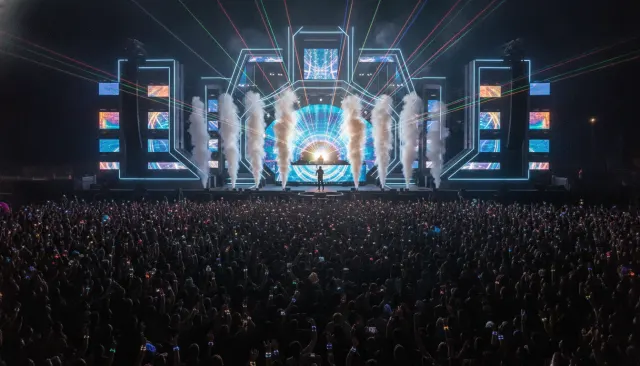
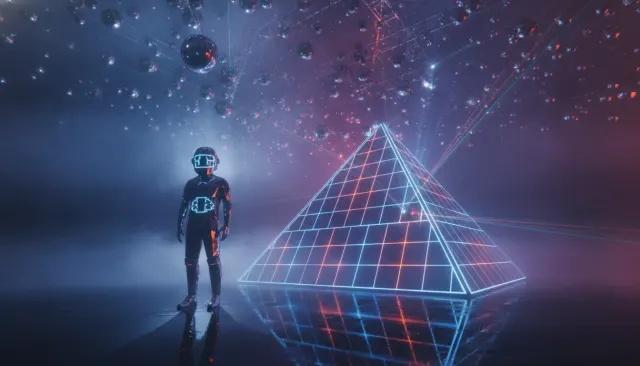
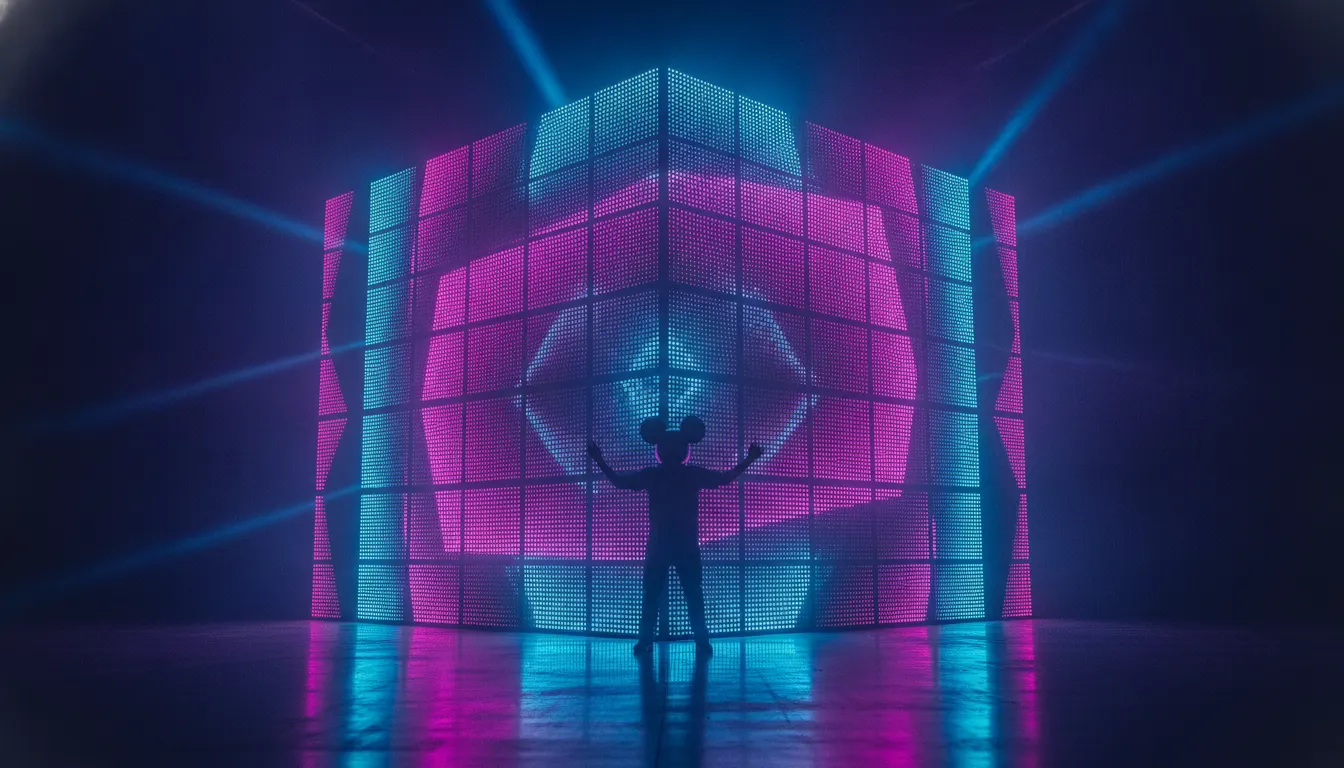
Deadmau5 LED cube stage. Mouse-head silhouette, programmed LED-mapped cube, dark progressive house geometry, deep magenta and cyan grid.
The moves a human crew would use to get here. Cue applies them for you, and knowing their names is how you ask for a change.
locked animation that responds in real time to musical triggers
the visual priority shifts from face to geometric spectacle
scale anchor within the abstract LED world
cube faces, grid patterns, and Cartesian geometry as primary visual language
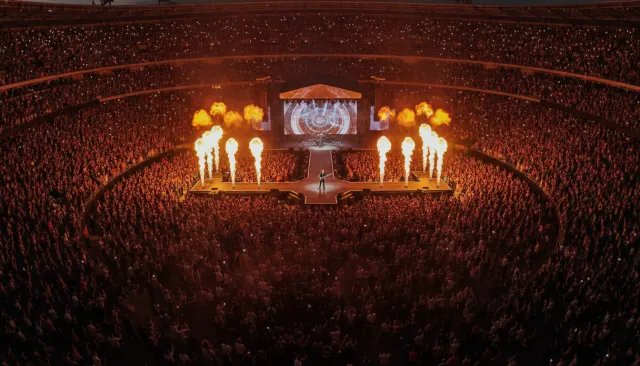
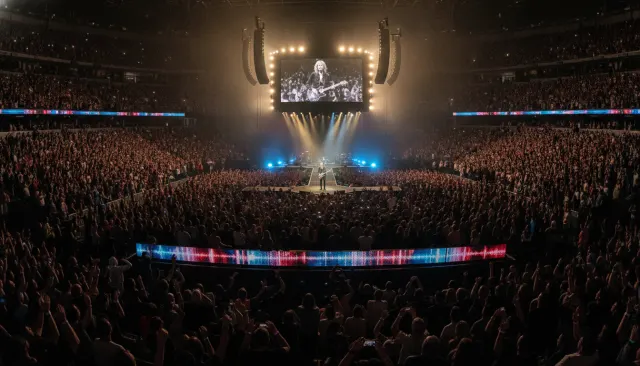
eye-level and aerial camera positions that show the cube as sculpture within the arena environment
Deadmau5 (Joel Zimmermann) turned his live performance setup into one of the most recognizable pieces of stage design in electronic music: the LED cube, a massive programmable light sculpture that encloses the performer in a geometric visual world synchronized to the music. The cube and the mau5head mouse helmet together constitute a visual identity system that is simultaneously DIY-derived and arena-scale spectacular.
The original deadmau5 live setup used a cube-shaped LED panel rig of approximately 5 meters per side, with each face containing a dense matrix of programmable RGB LEDs. The visual content - abstract animations, pulsing geometric patterns, synchronized reactive graphics - was programmed by deadmau5's visual team and driven by the same MIDI signals that trigger the music, creating genuine audio-visual lock-in rather than the pre-programmed light show that most arena acts use.
The original cube appeared publicly in 2010-2011 and went through multiple iterations: Cube 2.1 (2012), Cube 2.2 (2014-2016), and Cube 3.0 (2017 onward, a more complex dodecahedron-adjacent shape). Each iteration increased LED density, pixel count, and visual resolution, moving from abstract geometric animation toward photographic-quality playback on the curved surfaces.
The mau5head (the giant mouse helmet worn in performance) predates the cube and provides the human-scale visual anchor: a cartoonishly oversized geometric head with LED eyes that can change expression, creating the same persona-concealment strategy as Daft Punk's helmets but in a deliberately silly rather than futurist register.
Deadmau5's cube contributed to a broader arms race in EDM stage design that characterized the 2010s: Eric Prydz's massive EPIC hologram systems, Aphex Twin's LED floor systems, Nine Inch Nails's Trent Reznor-designed reactive LED environments, and the festival-scale light architecture of Ultra, Tomorrowland, and EDC all share the fundamental premise that the stage visual design should be a coherent audio-visual instrument rather than a background light show.
The specific visual language of the LED cube: hard geometric edges, RGB color cycling, pattern sequences that move from geometric abstraction toward organic form and back, and the performer as silhouette within the light environment rather than as spot-lit foreground star.
2012
Cube 2.1 Live at Madison Square Garden
Random Album Title Live (2009-2010, original cube)
Cube 3.0 Tour (2017-2019)
TESTPILOT alias cube performances (2018-2020)
EPIC 4.0 (2016, adjacent LED stage grammar)
Lights in the Sky Tour (2008, Trent Reznor LED floor design)
Selected Ambient Works Live (LED floor reactive system)
Hypnotic LED stage design (2018-present)
A Look is not a filter. It is a set of stored decisions the pipeline reads before it makes a single frame, so two videos in the same Look actually match.