Daft Punk
Around the World (1997, dir. Michel Gondry)
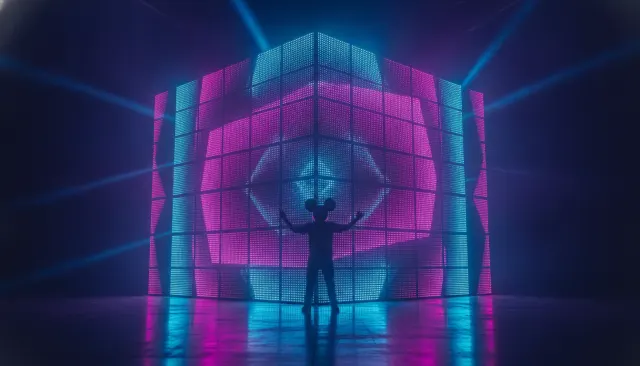
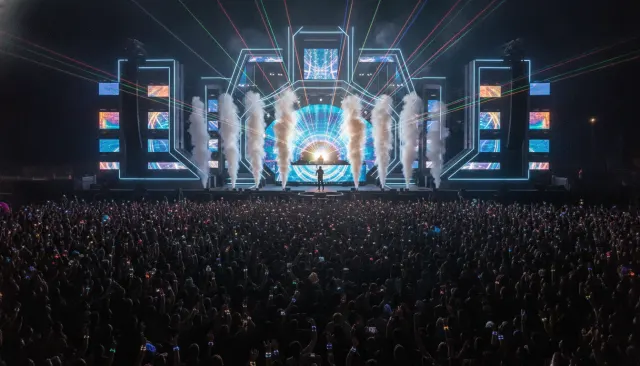
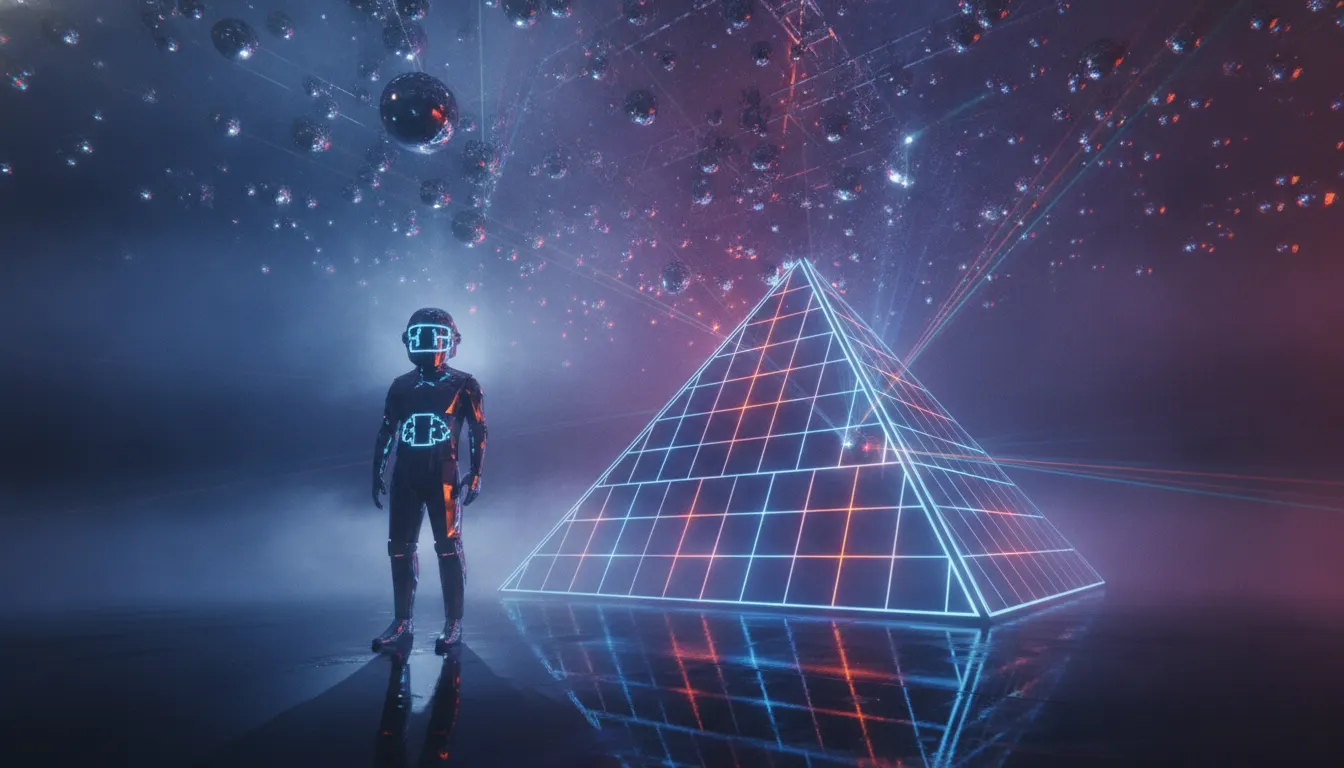
Daft Punk helmet disco MV. Chrome robot helmets, Tron-coded pyramid stage, vocoder-coded geometry, disco-French-touch gloss, mirror-ball cosmic.
The moves a human crew would use to get here. Cue applies them for you, and knowing their names is how you ask for a change.
integrated robot helmets that conceal facial identity while providing animated visual interaction
amber-gold highlights, rich warm midtones, soft fill light
as-sonic-decomposition choreography (the Gondry approach): each performer represents a distinct musical element
fi illustration: chrome surfaces, warm LED grids, geometric geometry
aesthetic light cycles and grid environments for extended visual universe content
environment choreographic films where the simplicity of one space allows complete focus on movement
helmet-wearers always in character, never revealing human faces in any context
Daft Punk's visual identity is one of the most rigorously maintained in popular music: from the moment Thomas Bangalter and Guy-Manuel de Homem-Christo adopted their robot personas in 2001, every public visual output was filtered through the helmet mythology. The helmet disco look synthesizes 1970s French disco warmth, futurist robot aesthetics, retrofuturism borrowed from 1970s sci-fi illustration, and a specific quality of golden LED light that became their visual trademark.
The robot helmets were designed and built by Tony Gardner of Alterian Inc. for Daft Punk's public rollout around the Discovery album (2001). Gardner created two distinct helmets: Thomas's gold-visor chrome helmet (the Thomas helmet) and Guy-Manuel's silver-visor brushed aluminum helmet. Both use LED matrices in the visor that can display text and animated sequences - the first helmet to integrate functional LED animation.
The persona decision was strategic and total: Bangalter and de Homem-Christo agreed in the late 1990s that their faces would never appear in any promotional context, and they held to this for the remaining two decades of their career. This absolute visual consistency is rare in pop and is part of what makes the helmet disco look so distinctive.
Before the robot helmets, Michel Gondry directed some of Daft Punk's most important early videos. Around the World (1997) from Homework is one of the defining music videos of the 1990s: a single-room choreographic piece with five groups of performers (mummies, robots, swimmers, skeletons, and tall-suited dancers) each performing a distinct movement vocabulary that corresponds to a distinct sonic layer of the track. The concept - dance as sonic decomposition - influenced every dance-film director who came after.
Da Funk (1997, dir. Spike Jonze) featured a dog-headed man wandering New York with a boombox, a narrative Jonze approach.
Tron Legacy (2010) brought Daft Punk's visual universe to Hollywood scale: a sequel to the 1982 Disney film, scored and performed by Daft Punk, with production design by Darren Gilford that incorporated the helmet aesthetic directly into the film's visual world. Their cameo appearance as DJs in The End of Line Club is the definitive helmet-disco moment on screen.
Around the World (1997, dir. Michel Gondry)
Da Funk (1997, dir. Spike Jonze)
One More Time (2001, Interstella 5555 animation)
Harder Better Faster Stronger (2001, Interstella 5555)
Technologic (2005, dir. Daft Punk)
Get Lucky feat. Pharrell (2013, dir. Kamel Ouali)
2013
Instant Crush feat. Julian Casablancas
A Look is not a filter. It is a set of stored decisions the pipeline reads before it makes a single frame, so two videos in the same Look actually match.