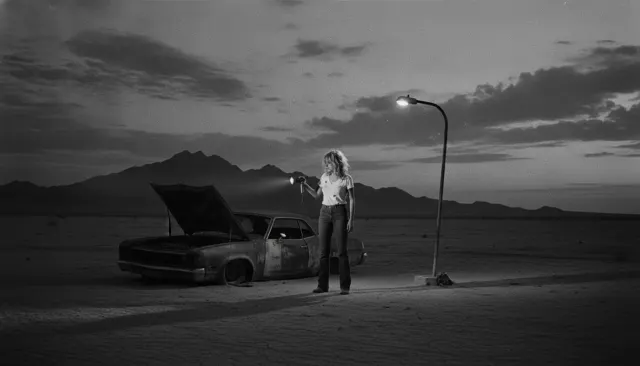
Barbara Morgan
1935
*Martha Graham: Lamentation* , defining image of modern dance photography
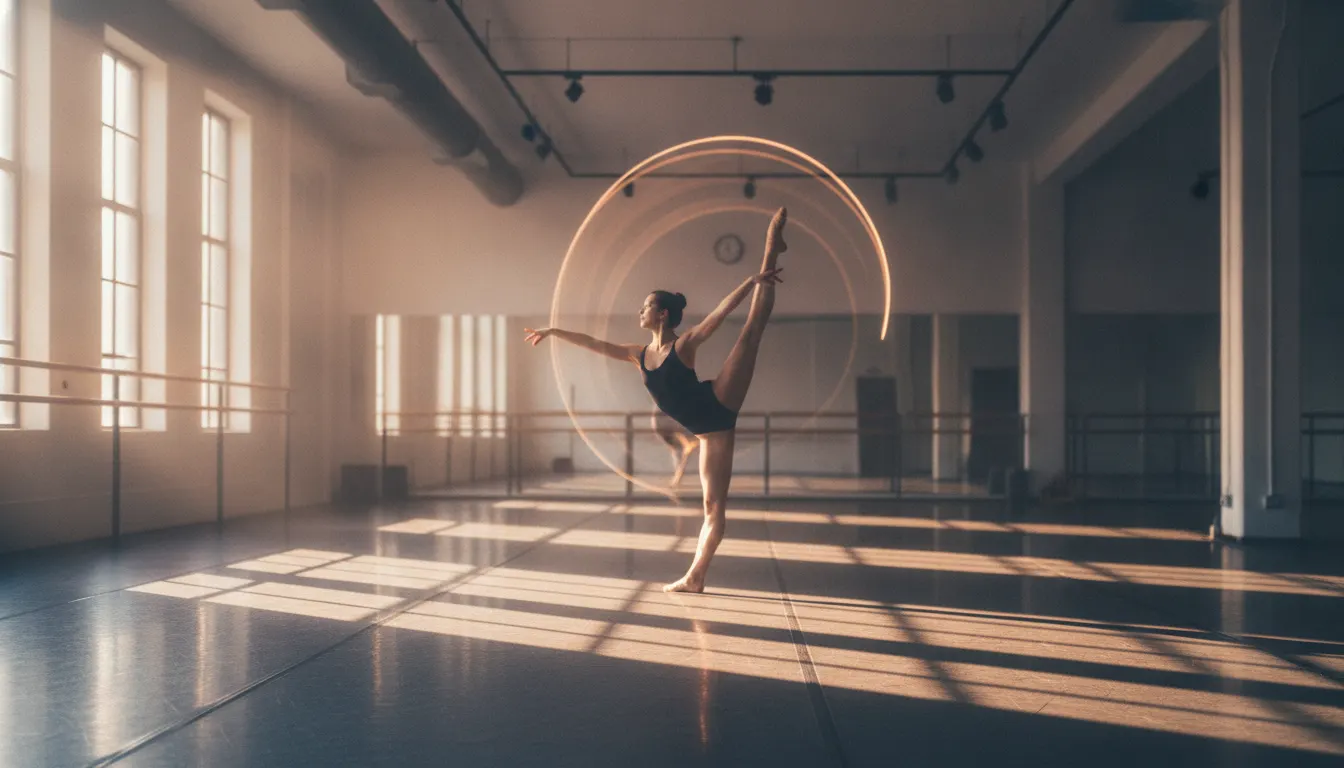
Dance photography rehearsal studio. Long-exposure motion blur trail, marley floor, leotard dancer mid-extension, Lois Greenfield trampoline tradition.
The moves a human crew would use to get here. Cue applies them for you, and knowing their names is how you ask for a change.
shutter continuous light (1/8s - 1s) for pure motion-blur streaks painting the dancer's path
flash (slow shutter + rear-curtain strobe): sharp ghost at movement endpoint, blur trail preceding it
powered strobe freeze at 1/5,000 - 1/10,000s to suspend impossible peak-of-leap geometry
two or three positions of the same dancer composited in a single frame
level perspective emphasizing height of elevation and dramatic foreshortening
different gels at different moments during a long exposure create chromatic motion trails
Dance photography sits at the intersection of sports photography, fine-art portraiture, and abstract image-making. Its defining challenge is translating the fourth dimension - time and movement - into a two-dimensional still image. The discipline splits into two opposing schools: the peak-of-action freeze (shutter speeds of 1/500s or faster, capturing the apex of a leap) and the expressive blur (slow shutter or strobe techniques that paint movement as streaks, echoes, or painterly smears).
American photographer Barbara Morgan (1900-1992) is the foundational figure in expressive dance photography. Her decade-long collaboration with Martha Graham produced images - Lamentation (1935), El Penitente (1940), Letter to the World (1940) - that remain the canonical reference for how still photography can embody choreographic intent rather than simply document a performance. Morgan used open flash in darkened studios and multiple exposures to compound movements into single frames.
Lois Greenfield (active 1970s-present) pushed the freeze-frame extreme, using high-powered strobes to stop movement at 1/10,000 second, capturing impossible-seeming mid-air configurations. Her long-running Breaking Bounds project, and her work for the Alvin Ailey American Dance Theater and Paul Taylor Dance Company, defines the peak-freeze aesthetic at its most refined.
The blur school uses shutter speeds from 1/8s down to several seconds, with dancers moving through continuous or colored light sources. When combined with a brief strobe "ghost" - a short burst of flash that freezes one instant within the blur - images layer sharp and blurred information in the same frame, describing trajectory rather than a single moment.
Digital photography has made the technical bar for dance photography lower than it was in the film era, but the conceptual challenge remains identical: how do you communicate movement in a still image? Contemporary dance photographers like Erin Baiano (New York Times), Quinn Wharton, and Beowulf Sheehan work across ballet, contemporary dance, and commercial performance photography. The genre's influence extends into fashion photography - runway movement, fabric in motion, and athletic wear campaigns all draw on the visual logic that dance photography established.
1935
*Martha Graham: Lamentation* , defining image of modern dance photography
1940
*Martha Graham: Letter to the World* , triple-exposure leap sequence
1992
*Breaking Bounds* , landmark freeze-frame dance photography book
stroboscopic multi-exposure dance and sports studies for *Life* magazine (1940s)
American Ballet Theatre dancers for Vogue, 2015 and ongoing
editorial dance photography for *New York Times Magazine*
A Look is not a filter. It is a set of stored decisions the pipeline reads before it makes a single frame, so two videos in the same Look actually match.