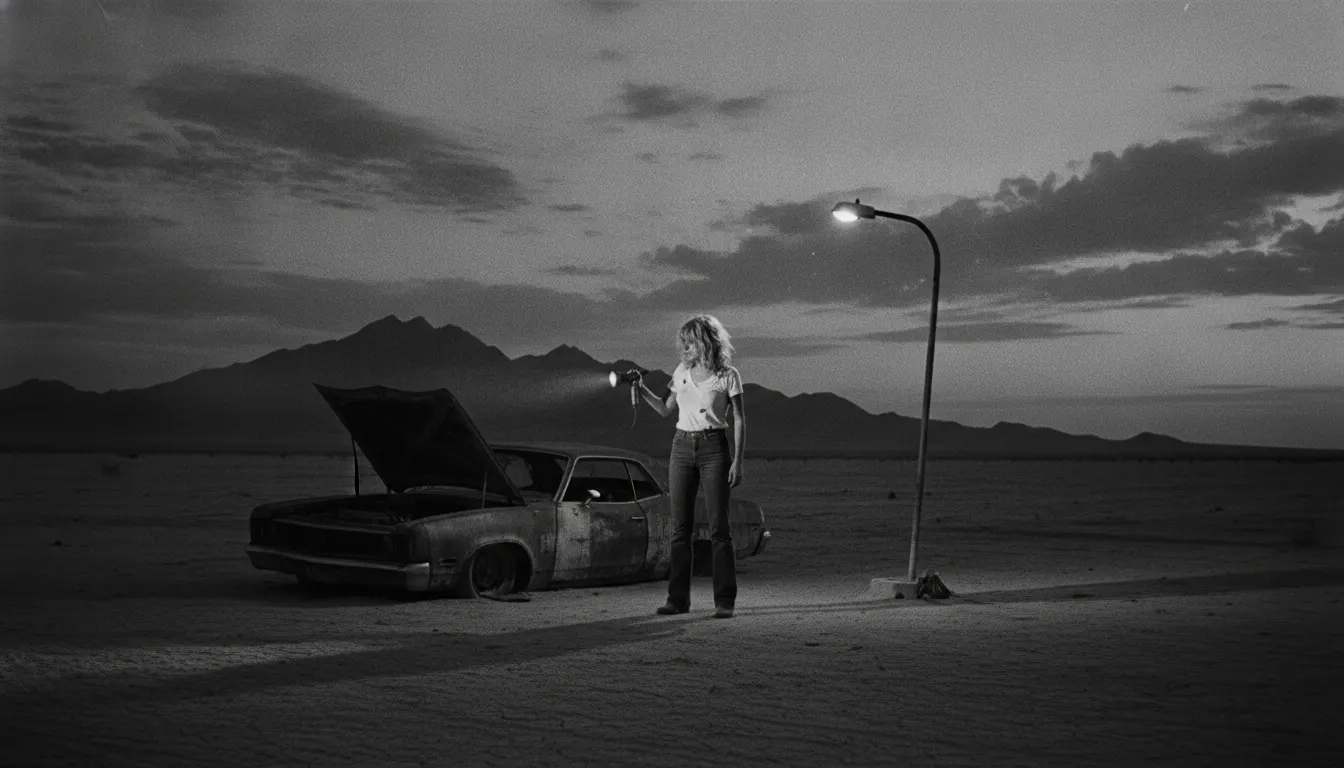
Cindy Sherman, 'Untitled Film Stills' complete series (1977-1980)
69 photographs
Cindy Sherman Untitled Film Stills. Self-portrait as fictional B-movie heroine, costume and wig, faux-still bw, conceptual identity performance.
The moves a human crew would use to get here. Cue applies them for you, and knowing their names is how you ask for a change.
timer photography enabling Sherman to be both photographer and character without assistant
type specific aesthetic matching: black and white grain, lighting conventions, and framing for each reference genre
35mm film stills to large-format chromogenic prints for later series
one wall, one window, a bed - suggesting a world beyond the frame
vulnerability, anxiety, sexuality, horror communicated through character types
scale large format prints in later work: chromogenic C-prints at 4-5 feet maximum dimension
Cindy Sherman (b. 1954, Glen Ridge, New Jersey) has produced one of the most critically analyzed bodies of work in contemporary photography, spanning nearly five decades of self-portraiture in which she is simultaneously photographer, subject, costume designer, hair and makeup artist, and character. Her work investigates the constructed nature of identity - particularly female identity as mediated through cinema, advertising, fashion, and art history.
The Untitled Film Stills series (1977-1980) is Sherman's foundational and most celebrated work. Sixty-nine black and white photographs each depict Sherman in a character type drawn from 1950s-1960s genre films: the secretary in the city, the suburban housewife, the femme fatale, the vulnerable hitchhiker, the woman alone in the apartment. Each image looks exactly like an authentic production still from a film that doesn't exist.
The deception is precise: Sherman researched the visual language of film stills thoroughly - the camera angles, the lighting setups, the costume and makeup conventions - and replicated them with a small camera on a self-timer. The grainy, slightly underexposed quality, the specific framing that suggests a narrative moment within a larger story, the character types that feel instantly recognizable: all were carefully constructed to read as authentic studio documents.
MoMA acquired the complete series in 1995 for approximately $1 million - at the time a significant price for contemporary photography. Individual prints from the series have sold at auction for over $2 million.
Sherman's early work (Untitled Film Stills, Rear Screen Projections, Centerfolds 1981) used 35mm film and relatively simple lighting. As her work became more elaborate in the 1990s and 2000s - the History Portraits (1988-1990) in which she poses as subjects of Old Master paintings; the Clowns (2003-2004); the Fairy Tales (1985); the Disasters (1986-1989) - she moved to medium and large format and increasingly elaborate prosthetics, wigs, and special effects.
Her Society Portraits (2008) use wide-angle lenses and deliberately unflattering lighting to create images of wealthy society women in which the gap between self-presentation and self-awareness becomes the subject. These large-format color images were exhibited at Metro Pictures in New York.
Sherman's work has been central to poststructuralist photography criticism since Laura Mulvey and Rosalind Krauss wrote about the Film Stills in the early 1980s. The work is read as a systematic deconstruction of the male gaze, of feminine archetypes as media constructions, and of photography's claim to capture authentic identity.
69 photographs
1981
2008
A Look is not a filter. It is a set of stored decisions the pipeline reads before it makes a single frame, so two videos in the same Look actually match.
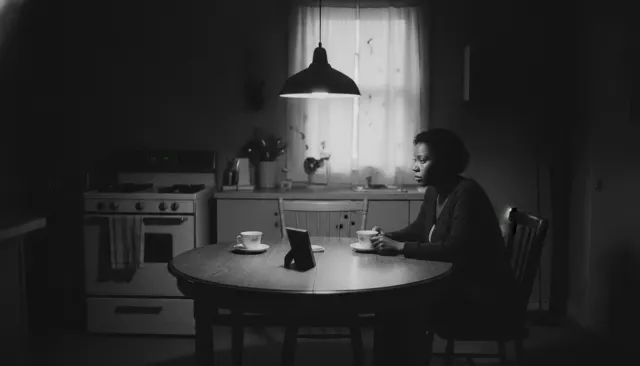 Photographers Color ModernCarrie Mae Weems Narrative BW
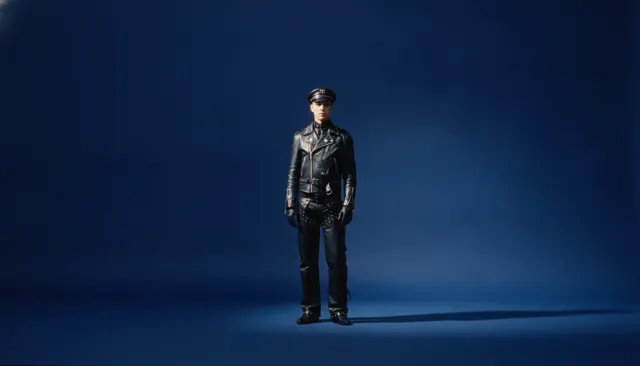 Photographers Fine ArtCatherine Opie Portrait Formal
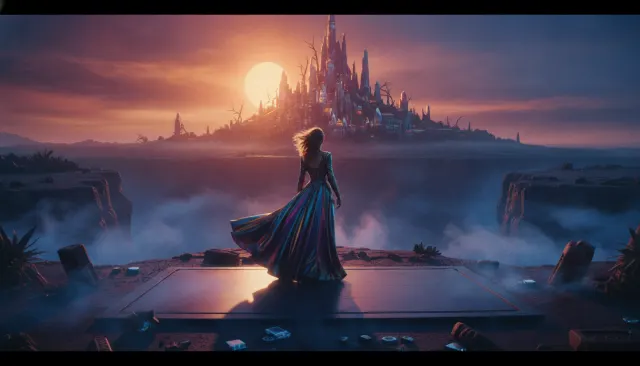 Fashion EditorialAnnie Leibovitz Celebrity Portrait
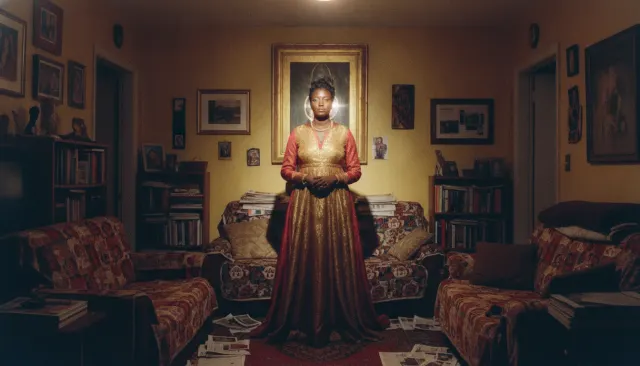 Photographers Color ModernDeana Lawson Staged Color Portrait
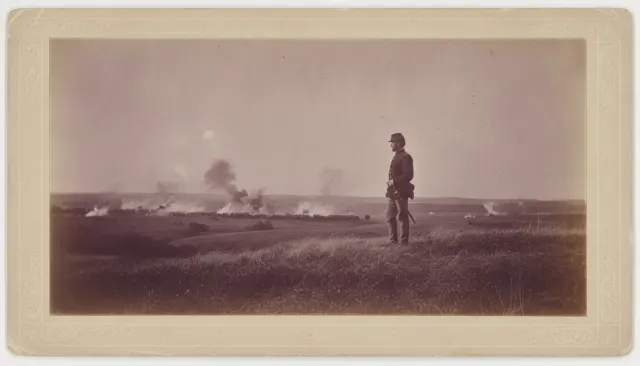 Vintage Formats ExtendedAlbumen Print 1860s Portrait
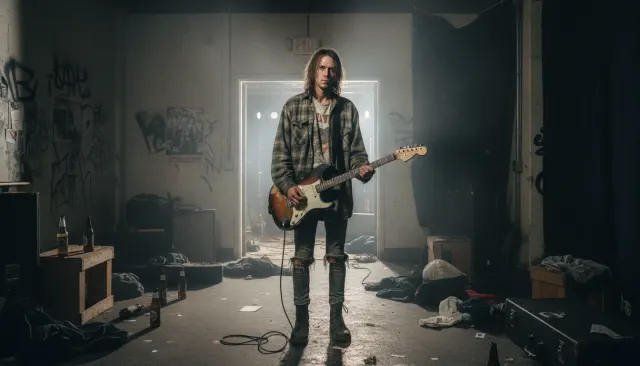 Era Specific Color1990s Grunge Music Portrait