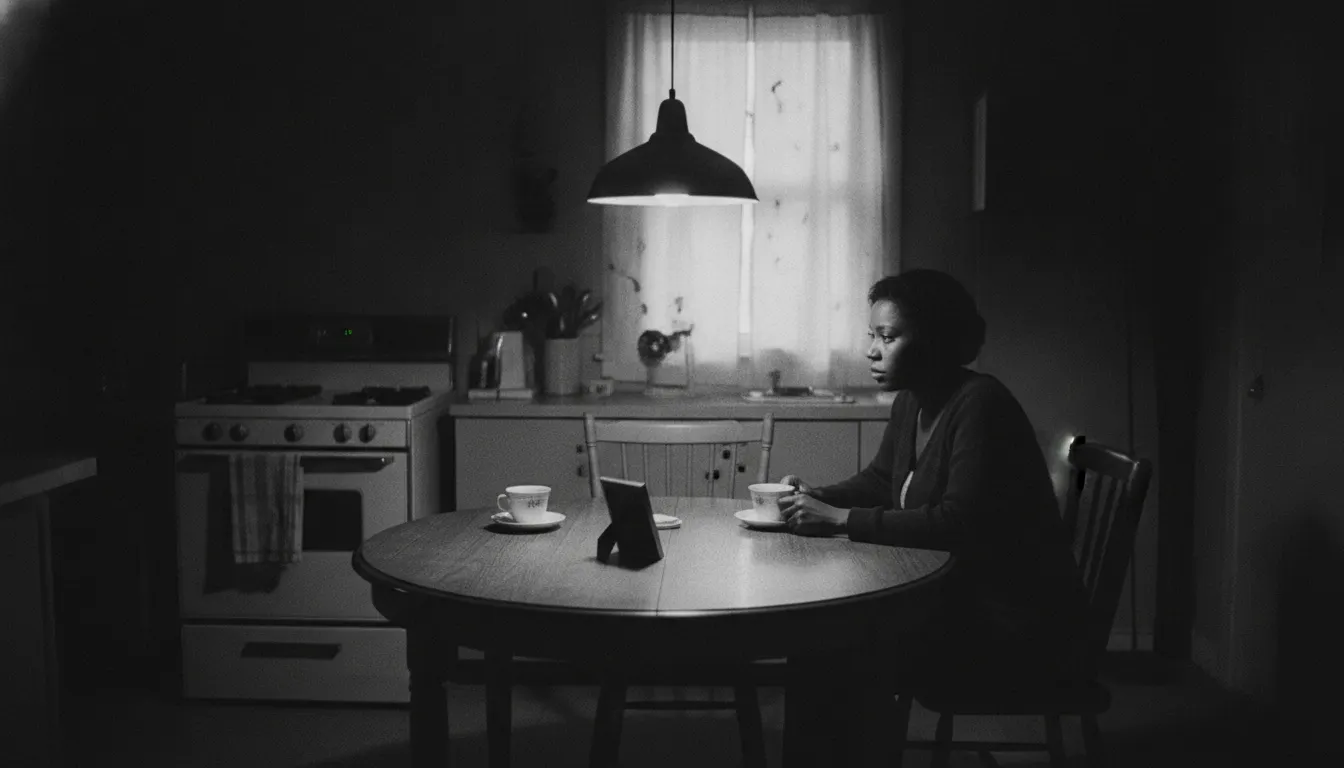
Carrie Mae Weems, 'The Kitchen Table Series'
1990
Carrie Mae Weems Kitchen Table Series narrative bw. Pendant-lamp tableau, mother daughter scene, text-and-image conceptual sequence, Black domestic interior.
The moves a human crew would use to get here. Cue applies them for you, and knowing their names is how you ask for a change.
like framing around domestic spaces
harsh downlight modeling faces dramatically from above
narrative text becomes part of the finished work, not supplementary caption
photographer and subject collapsed into single identity in the work
same table, same light, same framing
images are theatrical constructions, not documentary observations
light-style quality despite the controlled studio setup
Carrie Mae Weems (b. 1953, Portland, Oregon) is among the most important conceptual photographers working in America today, and her work has consistently used photography not as transparent documentary but as staged, text-integrated, narrative construction in which the photograph functions as one element of a larger meaning system. Her work addresses race, gender, history, and identity through imagery that requires the viewer to read actively rather than observe passively.
The Kitchen Table Series is Weems' most analyzed and celebrated body of work. The series comprises twenty black and white photographs, each accompanied by text panels, depicting scenes enacted around a single kitchen table. The table serves as a stage; Weems herself appears in every image as the central character. The text panels create a literary narrative - sometimes running counter to or in ironic relationship with the visual imagery.
The photographic format is rigorously consistent: square frame, overhead pendant light as primary illumination source, Weems visible from approximately chest height up, the table surface as compositional anchor. The light is harsh and directional from above - a single bare bulb creating deep shadow under the brow and chin, modeling the face dramatically against the dark kitchen environment.
The series tracks a woman's life through domestic space: alone, with a man, with children, with female friends. The domestic sphere is never simply domestic - it is a site of negotiation, desire, argument, silence, and survival. The work draws on the African American literary tradition, on feminist theory, and on the social documentary photography tradition simultaneously.
Weems uses medium format film for the Kitchen Table Series - the square Hasselblad format reinforces the series' formal consistency and its theatrical framing. The printing is silver gelatin, deep and warm with controlled midtones. The text panels - printed white on black - were attached to the framed prints as integral components of the finished works, not as separate explanatory labels.
Beyond the Kitchen Table, Weems' practice has included From Here I Saw What Happened and I Cried (1995-1996), appropriating and printing on 19th-century photographs of enslaved people; Colored People (1989-1990), color tinted portraits with embedded racist terminology as titles; and large-scale installation work. She received the MacArthur Fellowship in 2013.
1990
2001
2012
A Story in 5 Parts'
2013
2014
A Look is not a filter. It is a set of stored decisions the pipeline reads before it makes a single frame, so two videos in the same Look actually match.
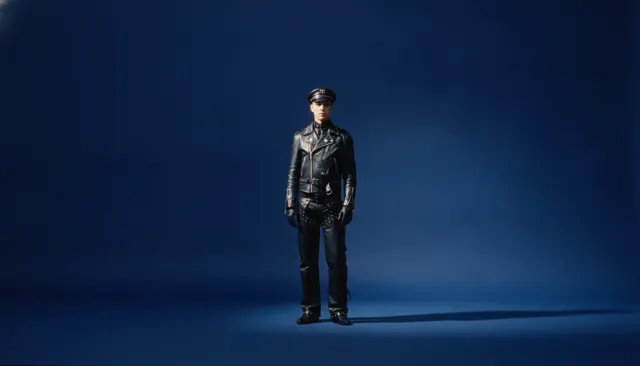 Photographers Fine ArtCatherine Opie Portrait Formal
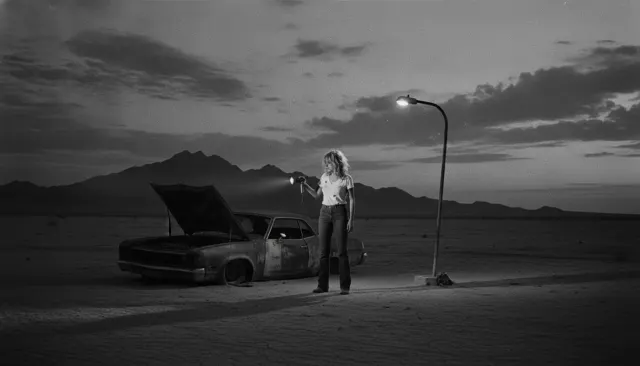 Photographers Fine ArtCindy Sherman Conceptual Portraiture
 Fashion EditorialAnnie Leibovitz Celebrity Portrait
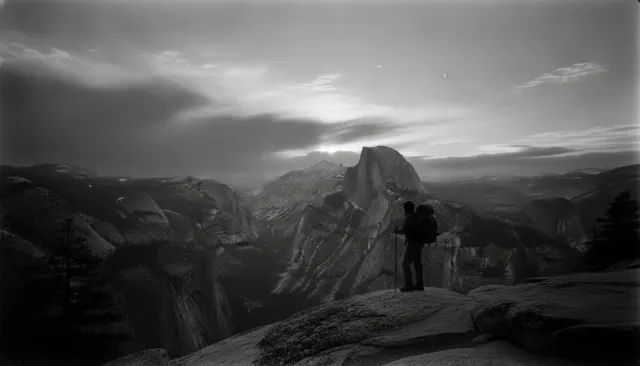 Wildlife NatureAnsel Adams BW Yosemite Large Format
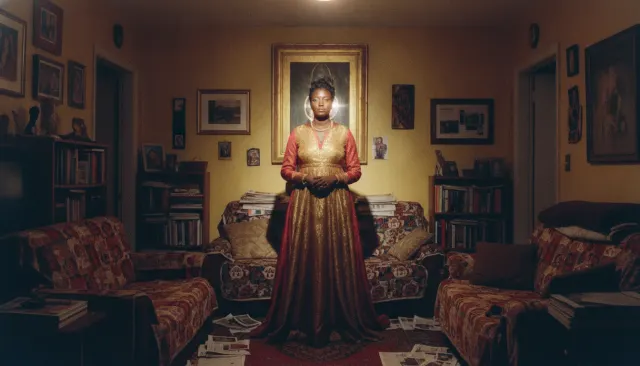 Photographers Color ModernDeana Lawson Staged Color Portrait
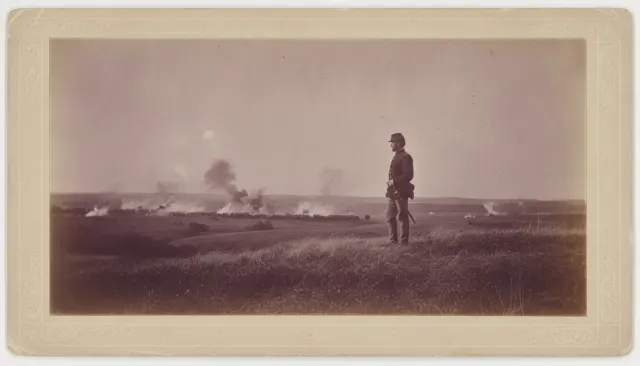 Vintage Formats ExtendedAlbumen Print 1860s Portrait