Jim Marshall, Woodstock and Monterey Pop (1967) documentation
1969
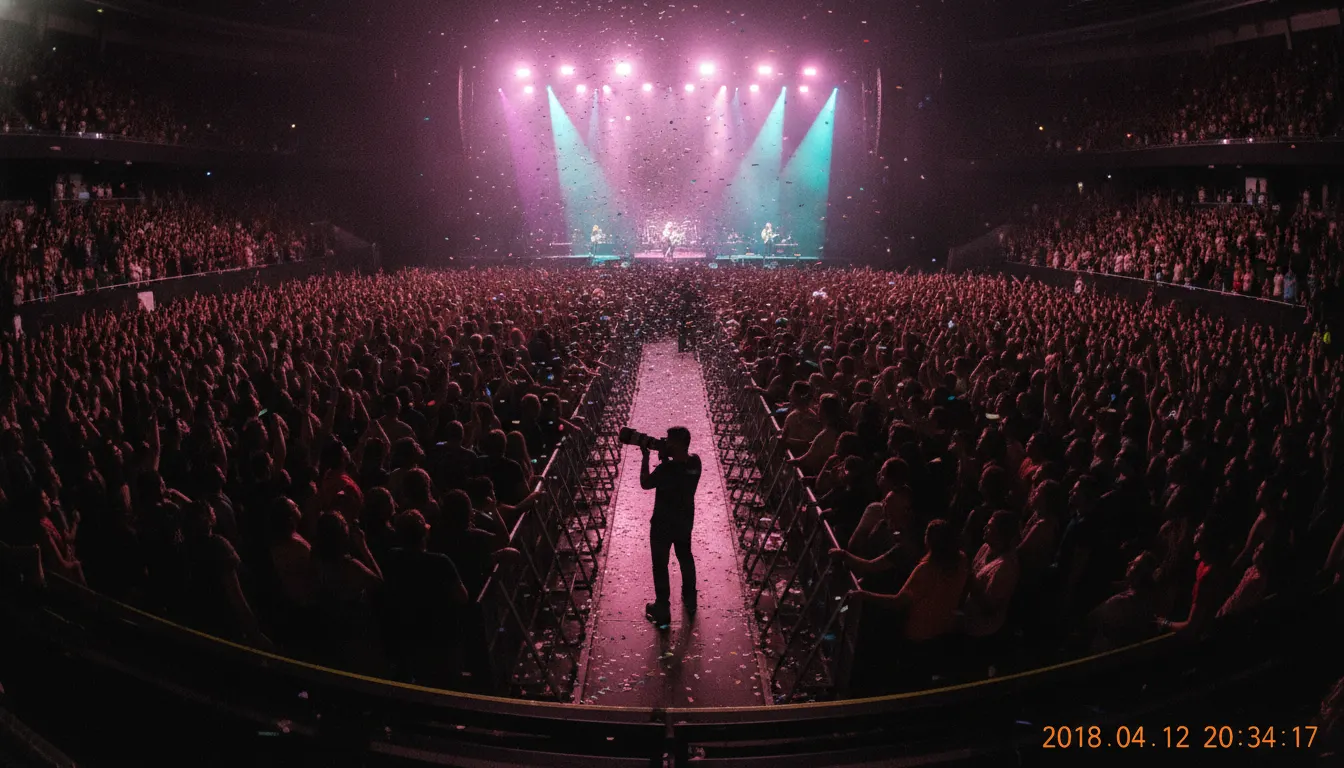
Concert pit photographer. First-three-songs rule, fast 70-200 telephoto, magenta-and-cyan stage wash, sweat and confetti, arena tour.
The moves a human crew would use to get here. Cue applies them for you, and knowing their names is how you ask for a change.
6400): visible grain structure is part of the aesthetic, not a flaw to minimize
shallow depth of field isolating performer from band or stage environment
cyan, magenta, amber, deep blue color casts from stage lighting fixtures
stage fog or haze making beam lights visible as ray graphics
200mm or 300mm): compressing stage depth and isolating subjects
performer outlined against bright backlight with face in shadow
based capture: reading performer movement to predict peak moments before they occur
Concert photography is one of the most technically demanding and aesthetically distinctive genres in commercial photography, defined by extreme lighting conditions, restrictive access protocols, and the specific challenge of capturing peak moments within the three-song pit window that became standard in the music industry from the mid-2000s onward.
Stage lighting at live concerts creates an environment of extreme contrast and rapid color change. Professional lighting designers use DMX-controlled moving heads, LED wash fixtures, and haze machines to create the visual environment that accompanies the music. The resulting light for photographers: bright spot beams in saturated colors (cyan, magenta, amber, deep blue) switching rapidly between states, extreme contrast between lit figures and dark stage surrounds, and the haze or atmospheric fog that gives beam lights their visible ray quality.
Photographers work at ISO 1600-6400, often at 1/500th or faster to freeze movement, wide aperture (f/2.8 or faster), which means high grain and occasional blur are features rather than flaws. The image quality standard of concert photography is deliberately different from controlled studio portraiture - the grain, motion blur, and color cast from gels are evidence of the live environment.
The concert photography tradition begins in earnest in the late 1960s with photographers like Jim Marshall (Woodstock 1969, Monterey Pop 1967), Henry Diltz, and Barry Feinstein gaining backstage access at major festivals. Their work defined the visual language of rock music for a generation - black and white and early color images of Jimi Hendrix, Janis Joplin, The Beatles, and The Rolling Stones in performance.
Anton Corbijn's work for NME and later Depeche Mode and U2 (1980s-2000s) shifted concert photography toward high-contrast black and white with dramatic graphic quality. Neal Preston's work with Led Zeppelin (1975-1977) and later arena rock acts set standards for the telephoto performance image.
By the 2000s, major artists had standardized the 'three-song rule': photographers are admitted to the pit (the area between stage front and security barrier) for the first three songs only, without flash, and must sign photo release agreements. This created the specific limitation that shapes contemporary concert photography - getting the best possible images in limited time with available stage light only.
1969
A Look is not a filter. It is a set of stored decisions the pipeline reads before it makes a single frame, so two videos in the same Look actually match.