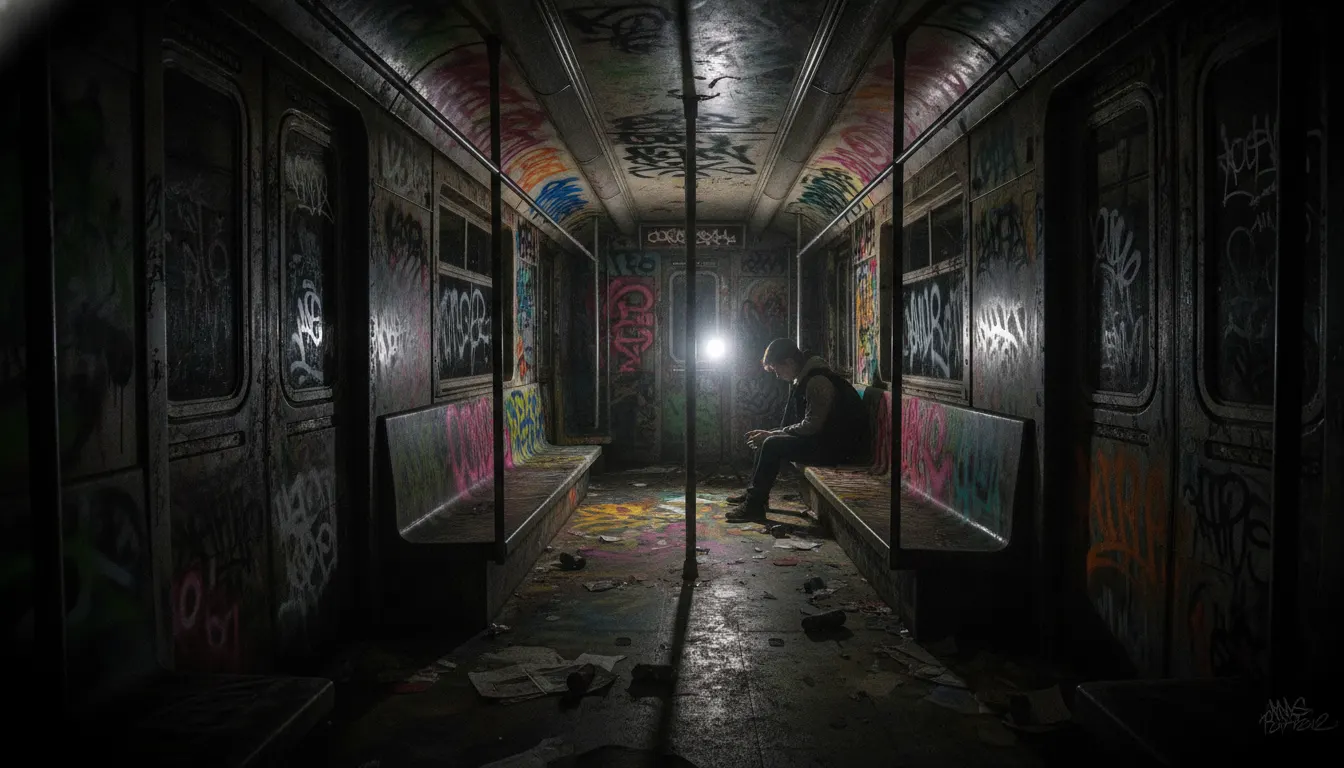
ERA SPECIFIC COLOR · 1980S · USA
1980s Subway Graffiti Bruce Davidson
1980s subway graffiti Bruce Davidson. Tagged NYC subway car interior, flash-lit rider, neon-color spray throw-up, urban-decay era documentary.
subwaygraffitiflash1980s-nyc
LUT davidson-subway-flash
WHEN TO USE
- Hip-hop history, street art, or urban youth culture content from the 1970s-1990s
- Content about New York City's 1970s-80s era of fiscal crisis and cultural reinvention
- Documentary content about graffiti art, spray paint culture, or aerosol aesthetics
- Music videos or editorial content referencing early hip-hop visual culture
- Photography history content about documentary flash work or Magnum-style portraiture
- Brand content for streetwear, sneaker culture, or urban lifestyle in a period-authentic register
WHEN NOT TO USE
- Content requiring positive associations with transit infrastructure or public safety
- Polished luxury or aspirational brand content - the aesthetic reads as gritty urban decay
- Content where the 1980s NYC associations with crime could undermine the message
- Outdoor or nature content - the look is fundamentally interior and urban
SIGNATURE TECHNIQUES
How the look is made.
The moves a human crew would use to get here. Cue applies them for you, and knowing their names is how you ask for a change.
- 01On
camera electronic flash (Vivitar 283-style) creating harsh, democratic directional light
- 02Kodacolor negative film palette
slightly warm with greenish fluorescent contamination
- 03Close subject proximity
shooting at 1-2 meters in confined subway car interiors
- 04Graffiti as environmental texture covering every visible surface
- 05Hard shadow edges from single
source flash bouncing off metal and vinyl surfaces
- 06Low
angle wide shots for whole-car graffiti documentation showing scale of murals
- 07Available light supplemented by flash in underground station platforms
- 08Documentary opacity
subjects caught mid-action rather than posed
HISTORY & CONTEXT
Where it comes from.
1980s Subway Graffiti Photography
The New York City subway in the late 1970s and early 1980s was a site of institutional collapse and extraordinary cultural production simultaneously. Two photographic traditions documented this moment: Bruce Davidson's intimate portrait work Subway (1986) and the hip-hop graffiti documentation pioneered by Martha Cooper and Henry Chalfant in Subway Art (1984).
Bruce Davidson: Subway (1980-1983)
Bruce Davidson (b. 1933), a Magnum Photos member who had earlier documented East 100th Street in Harlem (1966-1968), turned to the subway system for a three-year project that required nerves of steel. The MTA refused him a permit; he bought a monthly pass and rode the lines daily with a Leica and a battery-powered Vivitar 283 flash unit.
The resulting images - published in the book Subway (1986) and exhibited at the International Center of Photography - show New York's underclass in ultra-close color flash: sleeping passengers, teenagers in gang colors, a man urinating in a corner, a woman applying makeup, couples embracing. The flash creates a harsh, democratic light that exposes every surface detail - graffiti-covered car interiors, torn vinyl seating, fluorescent light strips, faces caught in unselfconscious moments. The color is Kodacolor negative film scanned under harsh flash, producing the slightly greenish cast and hard shadow characteristic of 1980s transit photography.
Martha Cooper and Henry Chalfant: Subway Art (1984)
Subway Art (Thames & Hudson, 1984) by photographer Martha Cooper and subway culture chronicler Henry Chalfant became the single most influential document of the early hip-hop era. Cooper began photographing subway graffiti writers in 1978 for the New York Post, gaining access to the underground culture of writers including DONDI, LEE, FUTURA 2000, BLADE, and FAB 5 FREDDY. Chalfant had been documenting the phenomenon independently since 1975.
The book's visual methodology was systematic and reverential: whole-car shots photographed from low angles to capture full murals before they were painted over, writers photographed with their work, documentation of the layered accumulation of tags and pieces in train yards. The photography uses available light and flash in train yards at night - the resulting images have a reportage quality that elevated graffiti to the status of monumental public art.
Cultural and Historical Context
New York's fiscal crisis of 1975 had produced a city unable to maintain public infrastructure. The Transit Authority's 6,000 subway cars became an involuntary gallery for a generation of young artists developing what would become hip-hop visual culture. By 1989, the Metropolitan Transportation Authority's Clean Train Movement had eliminated painted cars entirely - the window for this photography was roughly 1971-1989.
NOTABLE WORKS
Where you have seen it.
Martha Cooper and Henry Chalfant, 'Subway Art' (Thames & Hudson, 1984)
Bruce Davidson, 'East 100th Street' (Harvard University Press, 1970)
precursor project
Martha Cooper, writer documentation series for New York Post, 1978-1984
Henry Chalfant, 'Style Wars' documentary film
1983
co-director
DONDI's 'Children of the Grave Part 2' whole-car, documented by Cooper, 1978
Bruce Davidson, ICP exhibition 'Subway', 1980
Jack Stewart graffiti documentation archive, 1968-1975 (early precursor)
THE RECIPE
The exact knobs
the renderer turns.
A Look is not a filter. It is a set of stored decisions the pipeline reads before it makes a single frame, so two videos in the same Look actually match.
SettingValue
GradeColour LUT applied to every frame
davidson-subway-flashTransitionHow one shot becomes the next
hard cuts · 180ms · linearKen BurnsCamera move applied to stills
Static framesTypographyDisplay / body / mono pairing
Space Grotesk · Inter · JetBrains MonoMusic moodWhat the bed under the voice sounds like
early-hip-hop · no-wave-east-villagePrompt suffixAppended to every shot prompt in this Look
1980s NYC subway graffiti Bruce Davidson, tagged subway car interior, flash-lit rider, neon-color spray throw-up, urban-decay documentaryPALETTE
Primary
#C82A8E
Secondary
#7A1F5C
Accent
#5C7A30
Text/Light
#1A0510
Text/Dark
#FFE0F0
BG 900
#0A0008
BG 800
#1A0510
RELATED LOOKS
Next to it on the shelf.
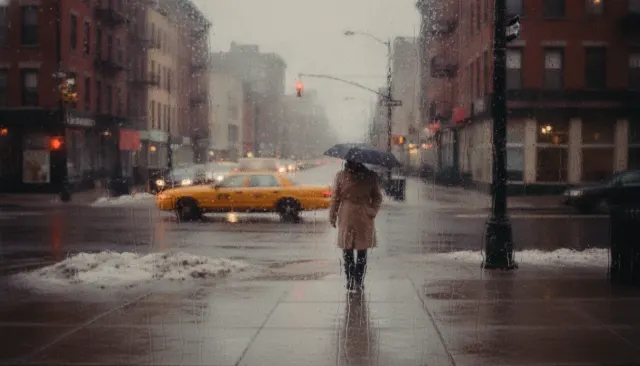 Era Specific Color1970s Gritty New York Color Saul Leiter
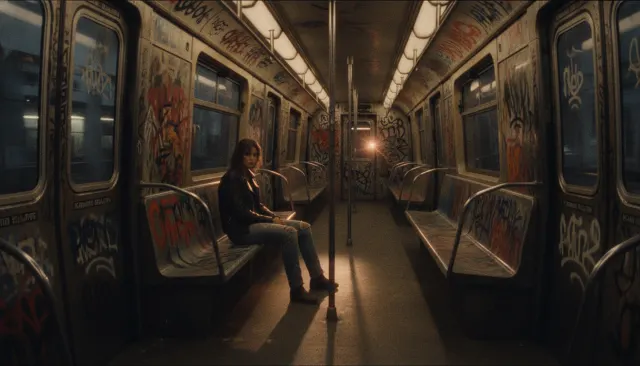 Street PhotographyBruce Davidson Subway Flash
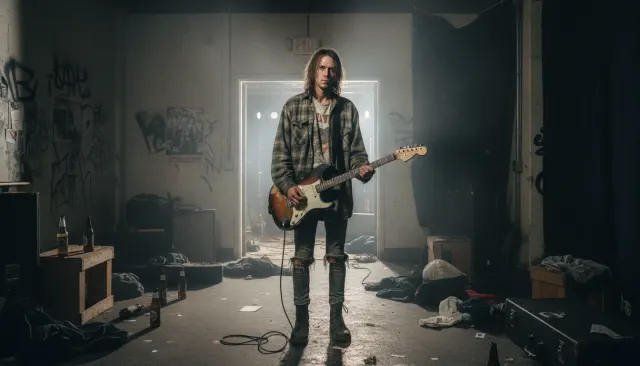 Era Specific Color1990s Grunge Music Portrait
 Genres ExtendedConcert Photography Stage Lights
 Genres ExtendedConflict Zone Photojournalism Color
 Architectural RealestateBrutalist Architecture Photography
Your first cut
is on us.
+ New videoFree plan · no card · 1080p export