Saul Leiter, 'Snow' (c. 1960)
red umbrella in white-out snowfall
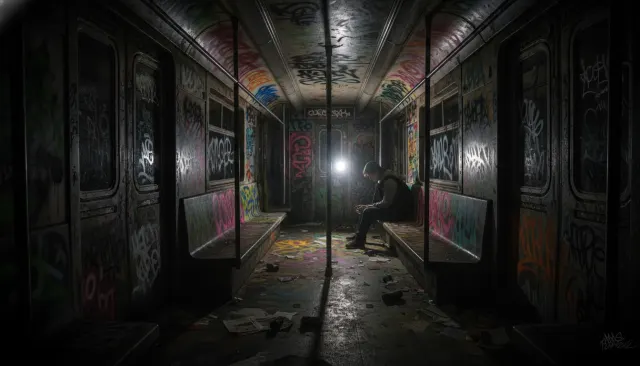
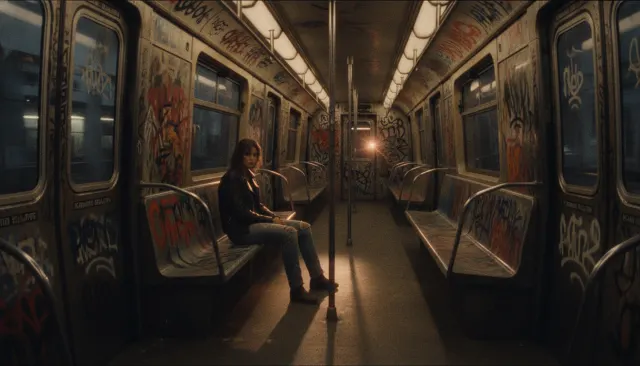
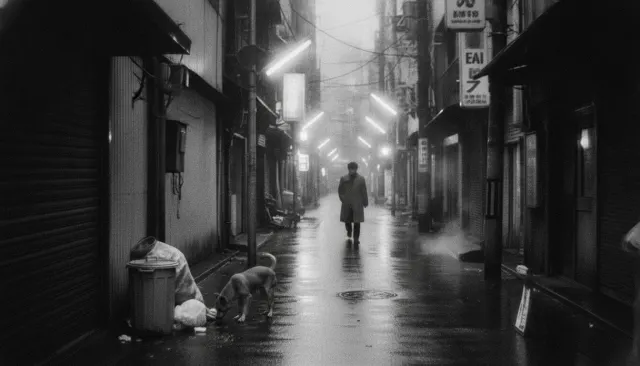
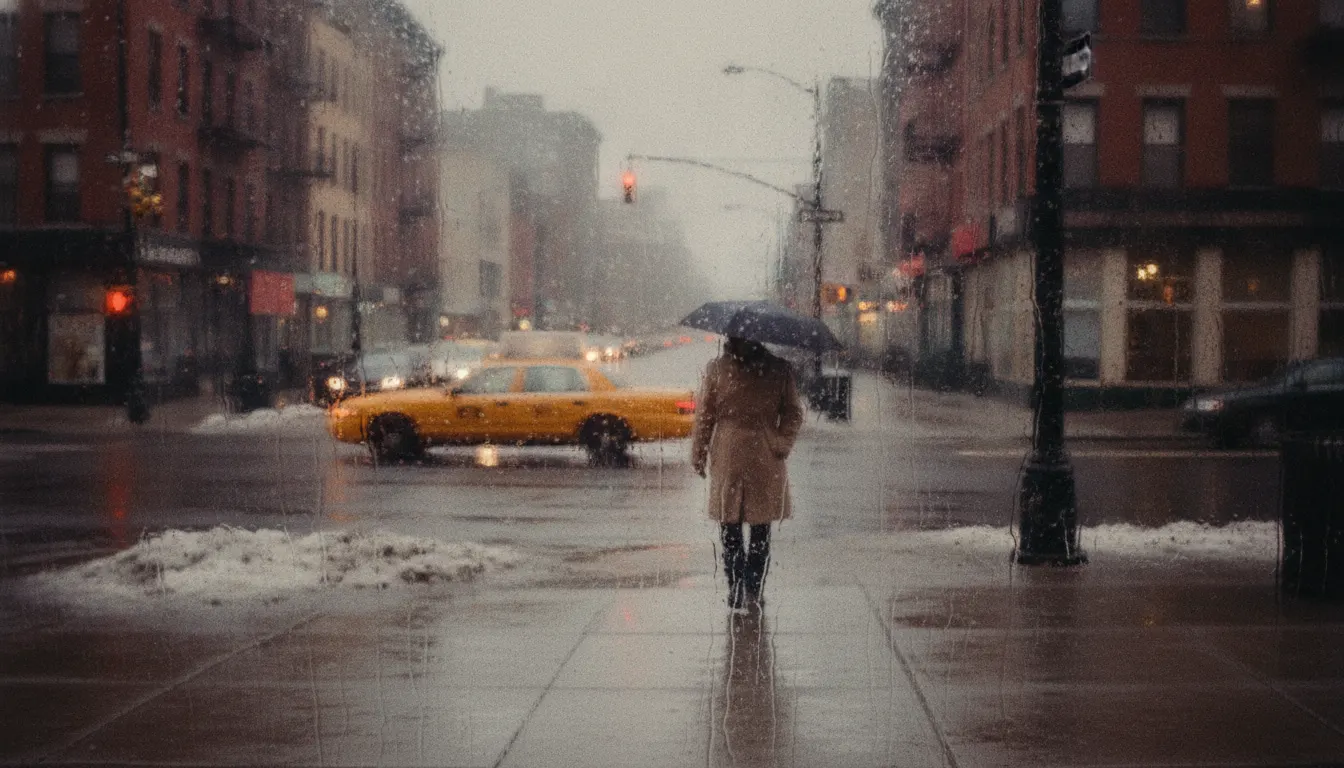
1970s gritty New York color. Saul Leiter rain-streaked window, taxi yellow through condensation, painterly fogged glass, East Village winter.
The moves a human crew would use to get here. Cue applies them for you, and knowing their names is how you ask for a change.
135mm) flattening urban depth into layered color planes
streaked, frost-fogged, or condensation-covered glass
warm midtones, cyan shadow bias, soft grain
Saul Leiter (1923-2013) pioneered color street photography in New York City from the early 1950s onward, decades before color documentary work was taken seriously by the fine-art world. Working primarily in the neighborhoods of the East Village and Lower East Side with a Leica and 35mm Kodachrome, Leiter produced images that looked more like Impressionist paintings than photographs.
Leiter's approach was fundamentally anti-documentary. Where photographers like Garry Winogrand or Joel Meyerowitz sought decisive moments and sharp social observation, Leiter sought atmosphere, obstruction, and color relationships. His most celebrated images are shot through rain-streaked or frost-fogged windows, through umbrellas in the foreground, through reflections in puddles that compress the vertical stack of tenements, fire escapes, and neon signs into a single layered plane.
The documentary In No Great Hurry: 13 Lessons in Life with Saul Leiter (2014, dir. Tomas Leach) revealed the man behind the method - a deeply private former rabbinical student who spent 30 years as a fashion photographer for Harper's Bazaar and Esquire while keeping his street work nearly unknown.
Kodachrome's distinctive palette - warm midtones, cyan shadows, slightly desaturated deep tones - defines the look. Unlike the harsh contrast of Ektachrome, Kodachrome rendered New York's grimy light with an almost painterly softness. Steam from subway grates, taxi headlights reflected in wet pavement, the orange-yellow sodium glow of 1970s street lighting: Leiter's color is never loud but always intentional.
His telephoto work (85mm-135mm) compressed urban depth, flattening the picture plane so that a bright red awning, a pedestrian's yellow umbrella, and a distant cab become abstract color shapes in compositional relationship rather than literal objects in three-dimensional space.
The Howard Greenberg Gallery published Early Color (Steidl, 2006), bringing Leiter's work to wide public attention when he was 83. The book triggered a reassessment that placed him alongside William Eggleston as a founding figure of color photography. His work from the 1950s and 1960s had languished in slide boxes for half a century. The 2014 documentary accelerated his late-life recognition, and posthumously his Estate has continued releasing previously unseen work.
The gritty New York quality comes also from the era itself - the 1970s fiscal crisis, high crime, peeling buildings, and urban density of pre-gentrification Manhattan. Joel Meyerowitz, Helen Levitt, and Garry Winogrand all photographed the same streets with different intentions. Leiter's distinctive contribution was to treat the city as color and abstraction rather than social document.
red umbrella in white-out snowfall
1957
yellow cab seen through rain-streaked window
1958
telephoto compression of street scene
50 years of previously unseen work
fashion editorial for Harper's Bazaar, 1958-1965
color portraits in community spaces
A Look is not a filter. It is a set of stored decisions the pipeline reads before it makes a single frame, so two videos in the same Look actually match.