Joy Division
Atmosphere (1988, dir. Anton Corbijn)
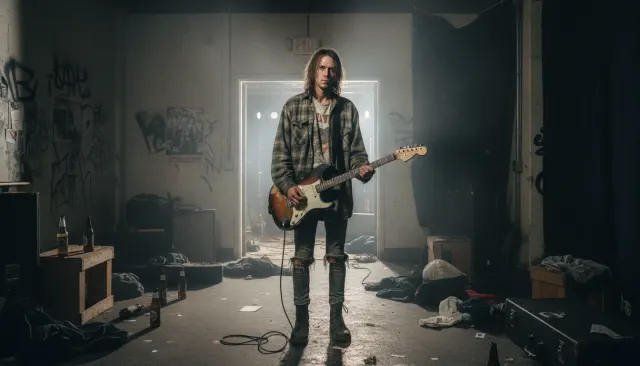
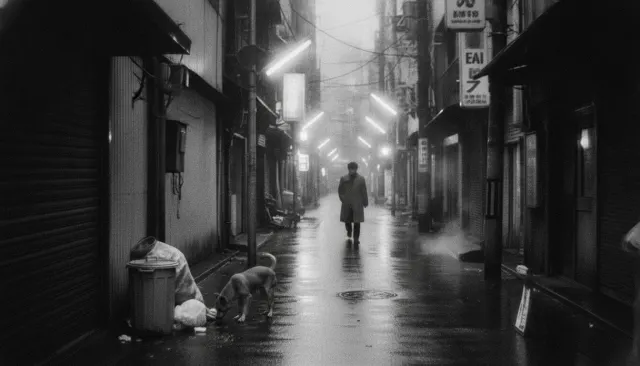
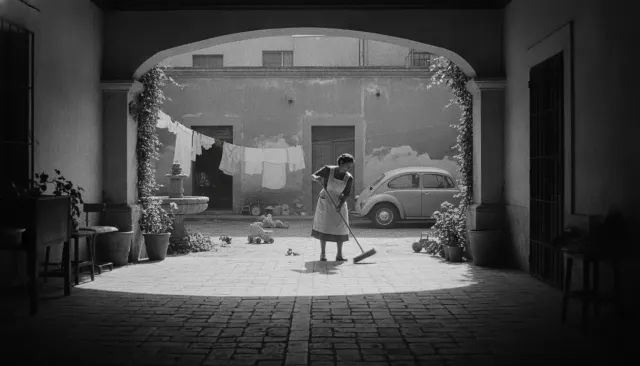
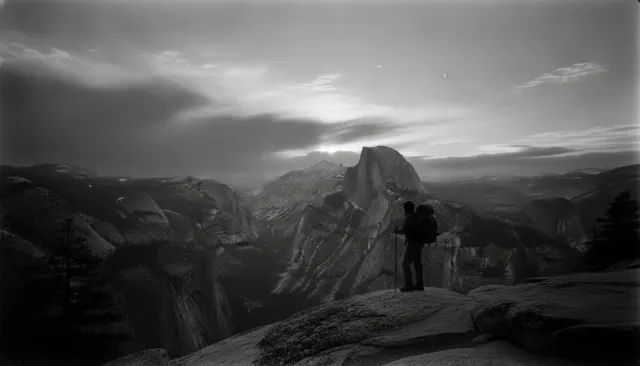
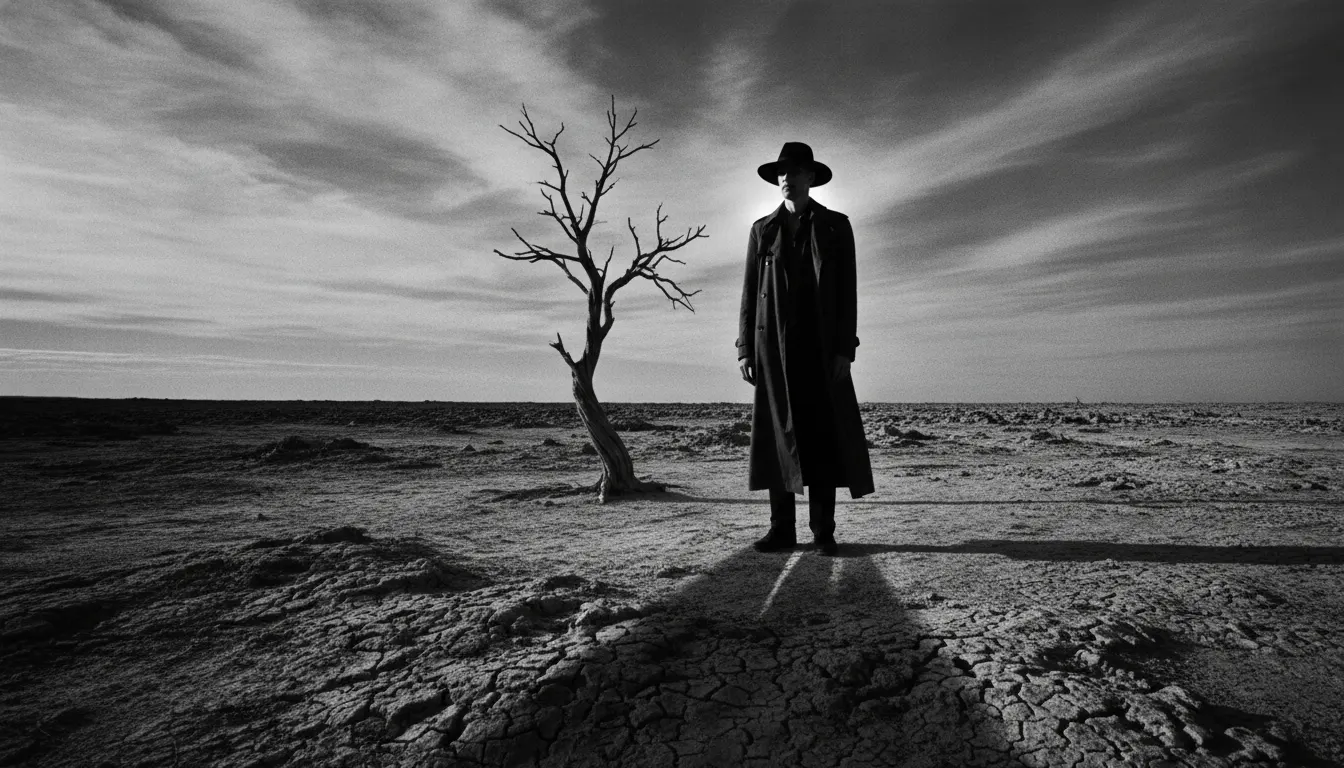
Anton Corbijn high-contrast BW MV. Depeche Mode and U2 portraits, raked side light, austere wide landscape, brooding silhouette.
The moves a human crew would use to get here. Cue applies them for you, and knowing their names is how you ask for a change.
grain 35 mm monochrome with heavy shadow compression and blown-out highlights
snowfields, deserts, empty industrial interiors - with no decorative elements
style blocking: performers stand, exist, and stare rather than perform choreography
often a single key source - to maintain a found-footage emotional truth
Anton Corbijn is the Dutch photographer and director who defined a photographic language for post-punk, alternative rock, and industrial music through radical tonal compression and 35 mm grain. His visual world strips away color to expose emotional truth, pulling subjects out of context and dropping them into bleak, mythological landscapes that feel both timeless and elegiac.
Corbijn's music video approach grew directly from his editorial photography for NME and Melody Maker in the late 1970s, where he shot Joy Division with the same stripped, grainy aesthetic he later brought to film. His 1988 video for Joy Division's Atmosphere distilled the entire aesthetic into a single iconic image: robed figures carrying a giant portrait across a desolate snowfield, every detail rendered in crushing black and white with blown highlights and ink-black shadows. It remains one of the most referenced music videos in history.
Depeche Mode became Corbijn's longest creative partnership. Personal Jesus (1989) placed Martin Gore and Dave Gahan in a dusty Spanish western setting, the high-contrast monochrome giving the video a timeless Sergio Leone quality. Policy of Truth (1990) and Enjoy the Silence (1990) continued the collaboration with wide desert panoramas and minimalist staging.
For Nirvana, Corbijn directed Heart-Shaped Box (1993), arguably the most disturbing mainstream music video of the grunge era. The imagery - a Christ figure on a poppy field, obese angels, a child in a Ku Klux Klan costume - used the same high-contrast desaturation and forensic grain to create visual dread rather than beauty.
He also directed videos for U2 (One, 1992, shot across dragtravesti performers in Berlin) and Nick Cave.
Corbijn's signature moves include underexposing negative to push contrast in the darkroom, shooting on high-ISO stock or pushing development to maximize grain, blocking subjects against featureless sky or flat ground to remove all spatial hierarchy, and pacing edits to breathing rather than beat. His framing frequently places subjects at the absolute edge of the frame or lets them disappear entirely into shadow. Color, when it appears, is drained to near-monochrome through bleach bypass or heavy desaturation.
Atmosphere (1988, dir. Anton Corbijn)
Personal Jesus (1989, dir. Anton Corbijn)
Enjoy the Silence (1990, dir. Anton Corbijn)
Heart-Shaped Box (1993, dir. Anton Corbijn)
One (1992, dir. Anton Corbijn)
Policy of Truth (1990, dir. Anton Corbijn)
The Ship Song (1990, dir. Anton Corbijn)
The Unforgiven (1991, inspired aesthetic)
A Look is not a filter. It is a set of stored decisions the pipeline reads before it makes a single frame, so two videos in the same Look actually match.