Madonna
Express Yourself (1989, dir. David Fincher)
David Fincher MV era. Madonna Vogue locked precision, Aerosmith Janie Got A Gun grim narrative, single-frame subliminal, cyan procedural gloss.
The moves a human crew would use to get here. Cue applies them for you, and knowing their names is how you ask for a change.
amber-olive shadows, muted skin tones, preserved architectural detail in midtones
no shot exists without a reason for its movement
symmetry, geometry, and perspective lines used as emotional instruments
setup, complication, resolution without sacrificing visual style
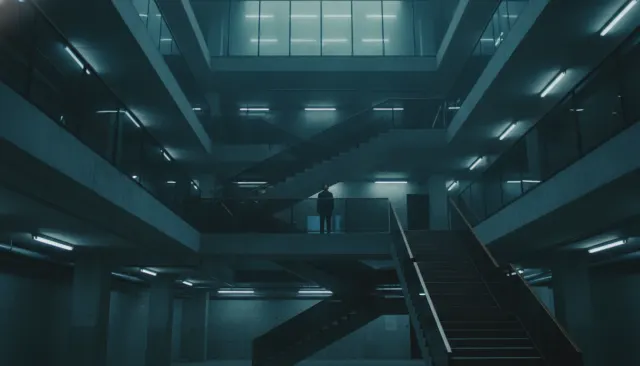
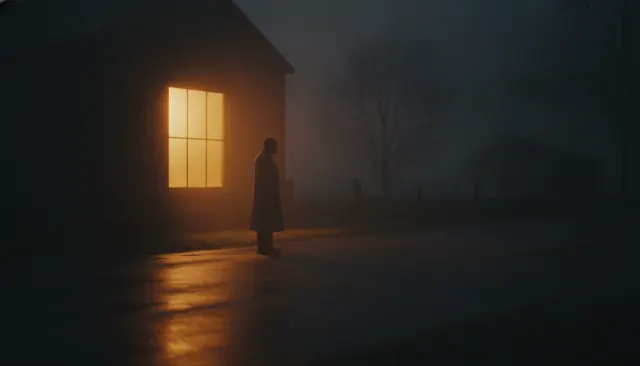
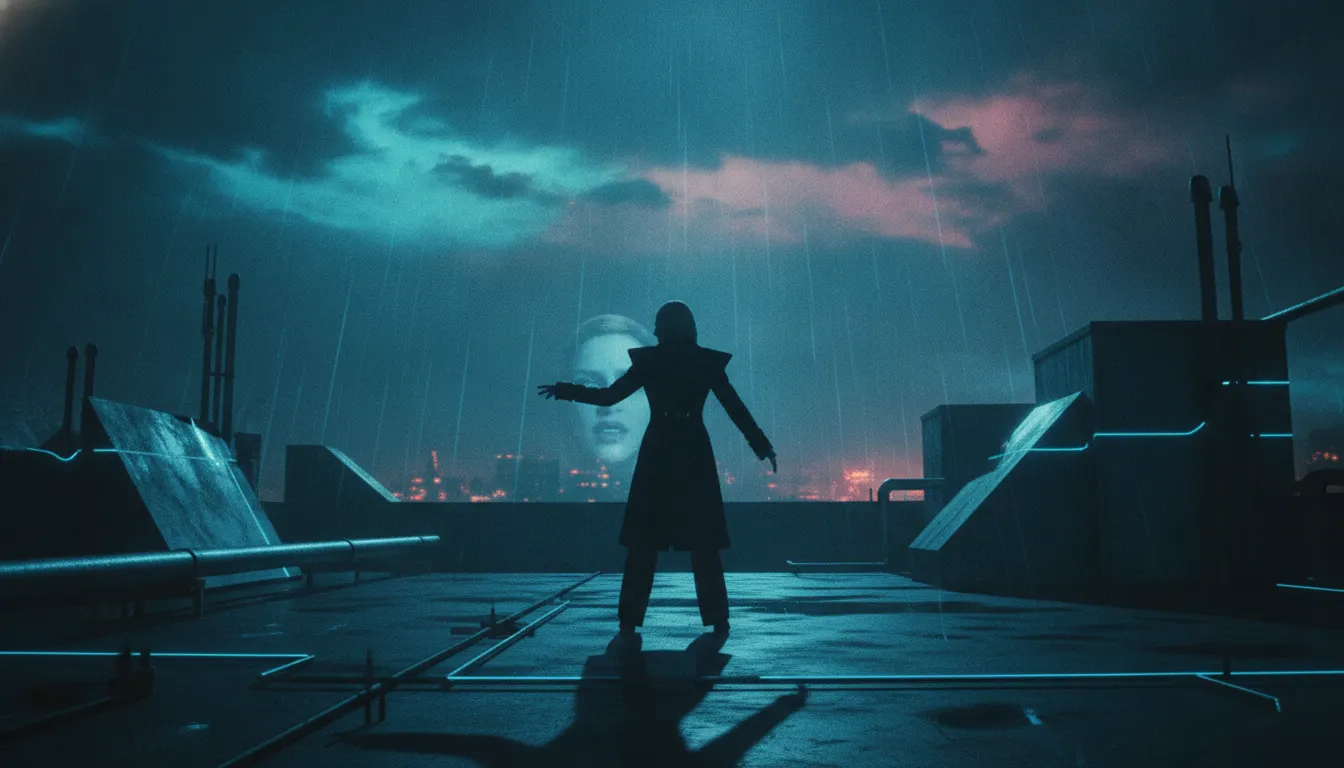
Before David Fincher directed Se7en (1995) and Fight Club (1999), he was one of the most innovative and prolific music video directors working. Between 1984 and 1994 he directed over 100 music videos and commercials, developing the dark, compositionally precise, and psychologically intense visual grammar that would define his theatrical career. The 'fight club style' look applied to music video is the noir-industrial aesthetic: deep contrast, desaturated color science, precise architectural framing, and an emotional coldness that coexists with visceral physical intensity.
Fincher's most celebrated music video collaboration was with Madonna. Express Yourself (1989) is arguably the most expensive music video ever made at its time of production (some reports put the budget around $5 million), a direct homage to Fritz Lang's Metropolis (1927) featuring industrial machinery, an Art Deco ziggurat skyline, and Madonna in a suit commanding a factory of enslaved male workers. The visual grammar anticipates everything about Fincher's theatrical work: deliberate camera movement, extreme compositional control, lighting that tells a story independent of performance.
Vogue (1990) was a different register - ballroom culture, tuxedos, old Hollywood glamour - but shot with the same formal precision. Oh Father (1989) went darker: autobiographical Catholic trauma with cemetery imagery and Pietà references. Bad Girl (1993, dir. David Fincher) used a Hitchcock narrative structure (Christopher Walken as a guardian angel) that reads like a test run for The Game.
Aerosmith - Janie's Got a Gun (1989) was Fincher's definitive dark-narrative statement before Se7en: a child abuse and murder narrative shot with cinematic commitment to the subject's weight, using the visual vocabulary of 1940s noir thriller.
Fincher's MV color science before Fight Club was a specific version of what would later be called the teal-and-orange grade: desaturated warm tones pushed toward amber, shadows crushed toward olive-grey rather than black, skin tones preserved but muted. The industrial settings - factories, meat-packing plants, urban warehouses - are always architecturally legible: Fincher shoots buildings as characters.
Express Yourself (1989, dir. David Fincher)
Vogue (1990, dir. David Fincher)
Oh Father (1989, dir. David Fincher)
Bad Girl (1993, dir. David Fincher)
Janie's Got a Gun (1989, dir. David Fincher)
Love Is Strong (1994, dir. David Fincher)
Forever Your Girl (1989, dir. David Fincher)
Cradle of Love (1990, dir. David Fincher)
A Look is not a filter. It is a set of stored decisions the pipeline reads before it makes a single frame, so two videos in the same Look actually match.