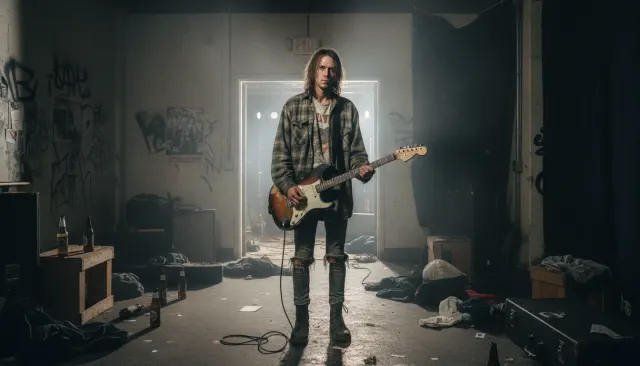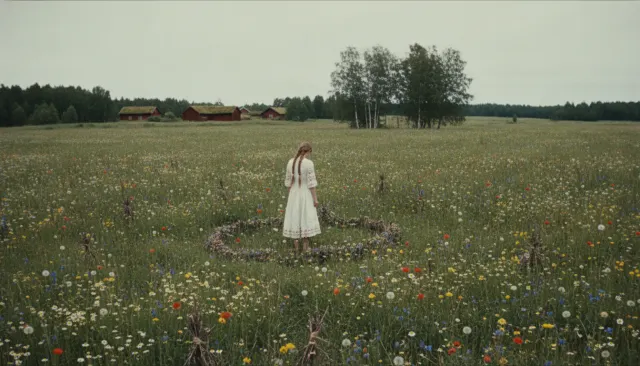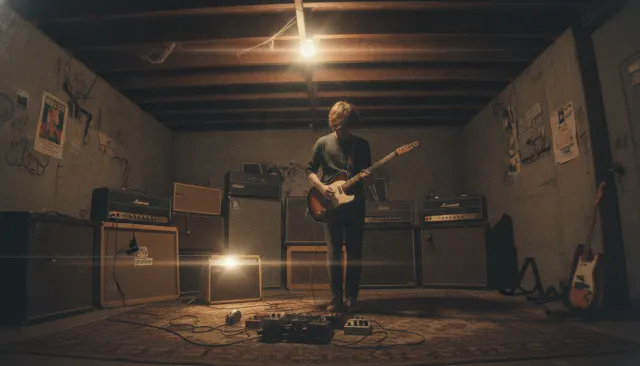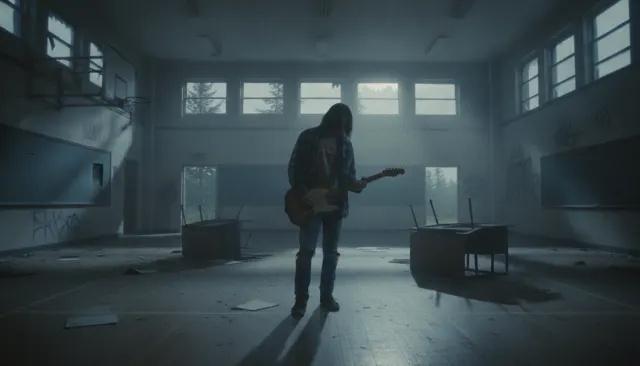
Iron & Wine, 'Naked As We Came'
2004
candlelit close-up performance
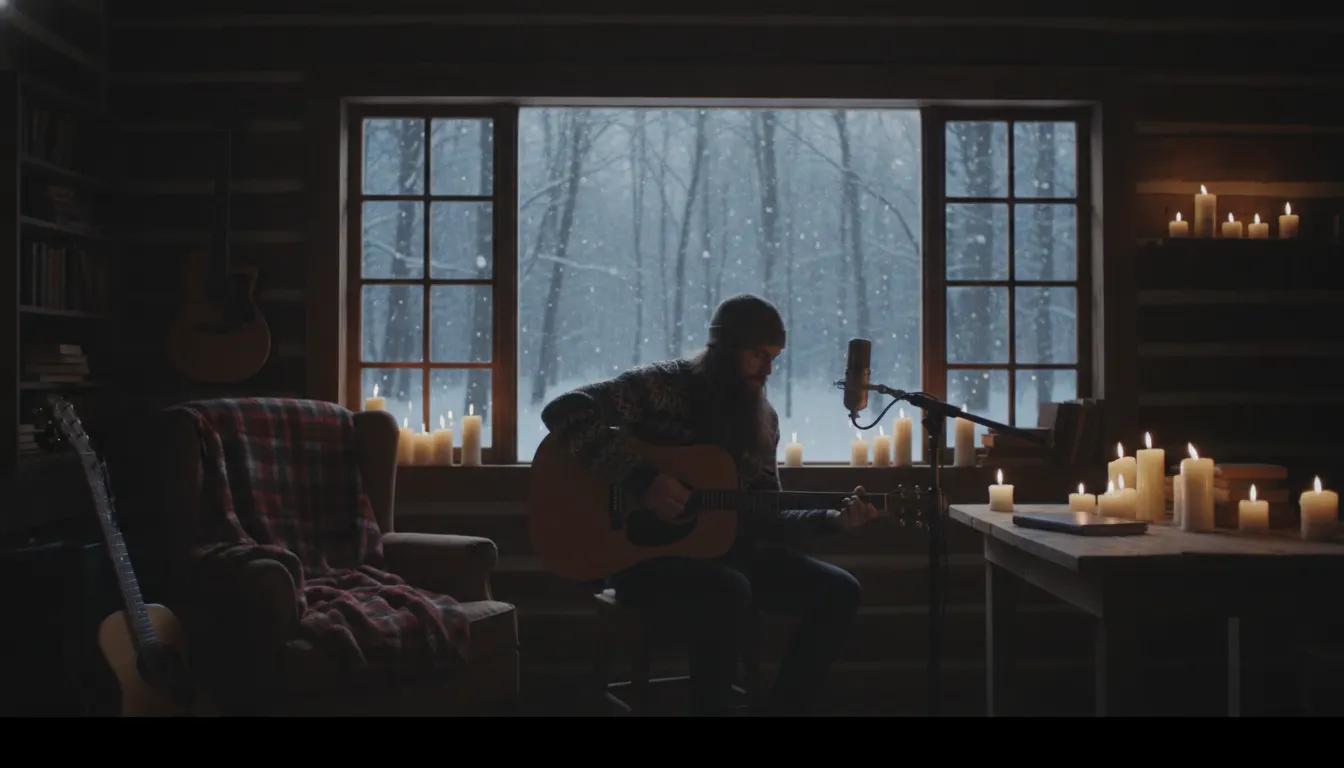
Folk acoustic cabin MV. Bon Iver Wisconsin cabin, single condenser mic, candlelit window, fingerpicked acoustic, snowfall outside, plaid blanket.
The moves a human crew would use to get here. Cue applies them for you, and knowing their names is how you ask for a change.
real or digitally emulated - with warm orange-amber color cast
source practical lighting: candles, incandescent bulbs, window daylight only
unfinished wood planks, exposed brick, woven textiles, aged paper
down or very slow handheld camera at medium-to-close range - no fast cutting
steam from a mug, snow through a window
centric framing with minimal separation between artist and domestic setting
wind, fire crackling, distant birds
The folk acoustic cabin aesthetic is defined by radical intimacy - a deliberate rejection of the arena and the studio in favor of the kitchen table, the porch, and the wood-paneled living room. Shaped by the late-2000s freak-folk and Americana revival, it became a dominant visual register for artists who wanted sincerity as their primary brand value.
Bon Iver's debut album For Emma, Forever Ago (2007), recorded in a Wisconsin hunting cabin over a winter, established the sonic template and, almost by accident, the visual one. Early promotional photography and low-budget video work for Justin Vernon reflected that origin: unheated rooms, breath visible in cold air, wood surfaces catching the only available light. Fleet Foxes' self-titled 2008 promotional materials leaned into Pacific Northwest forest imagery - beards, flannel, dense trees, golden-hour meadow light.
Iron & Wine (Sam Beam) produced some of the earliest and most influential cabin-aesthetic videos in the mid-2000s. His 2004 video for "Naked As We Came" and 2007 work around The Shepherd's Dog used 16mm and Super 8 film stocks with warm tungsten push, minimal artificial light, and deeply textured environments - exposed brick, hanging herbs, handmade quilts.
The palette centers on amber and sepia: candlelight, incandescent bulbs left warm in the frame, late-afternoon sun through dusty glass. Walls and surfaces carry texture - rough plank wood, peeling paint, linen and wool fabrics. The camera tends toward stillness punctuated by slow zooms or gentle handheld drift, reflecting a documentary respect for the performance.
Super 8 and 16mm film stocks (or contemporary digital emulation of them) contribute organic grain and a slight color shift toward magenta-green or orange-teal depending on the emulsion. Common stocks referenced aesthetically are Kodak Vision3 250D (warm daylight) and Ektachrome 100D (punchy slide film that elevates greens and blues).
Performance framing is almost always close and unadorned - a single performer at a wooden table, guitar in lap, window light from camera left. Multicam setups are rare; the single-angle locked-down wide or intimate medium shot dominates.
Phoebe Bridgers' early visual work ("Motion Sickness," 2017) drew on this tradition even while pushing toward more cinematic ambition. Noah Kahan's 2023 breakthrough cycle for Stick Season returned to the Vermont landscape aesthetic with careful attention to autumn color, overcast natural light, and domestic interiors. Hozier's early acoustic sessions and stripped videos used Irish cottage settings to similar effect.
2004
candlelit close-up performance
2008
illustrative but tonally aligned
2017
early cabin-aesthetic visual language
2022
Vermont autumn palette
A Look is not a filter. It is a set of stored decisions the pipeline reads before it makes a single frame, so two videos in the same Look actually match.