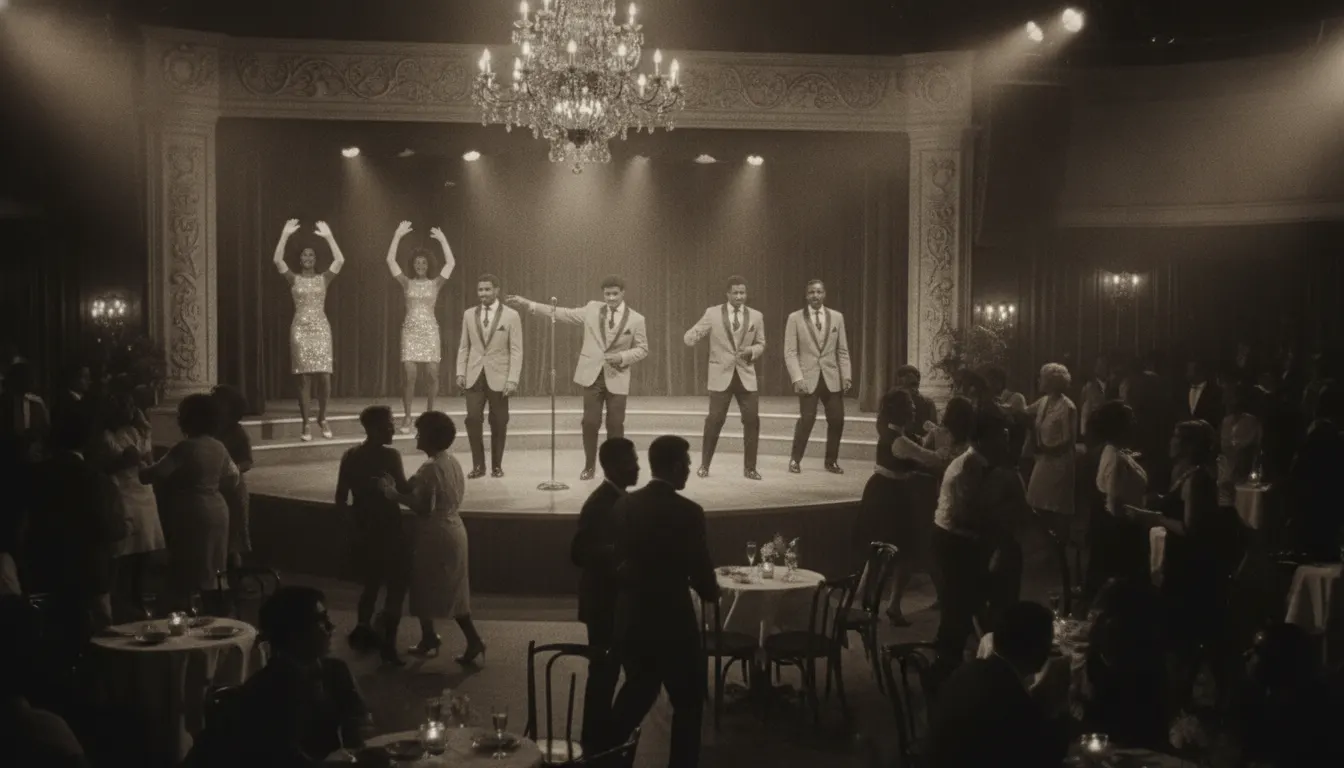
The Supremes, 'Stop! In the Name of Love' on Ed Sullivan Show
1965
three-point lit stage classic
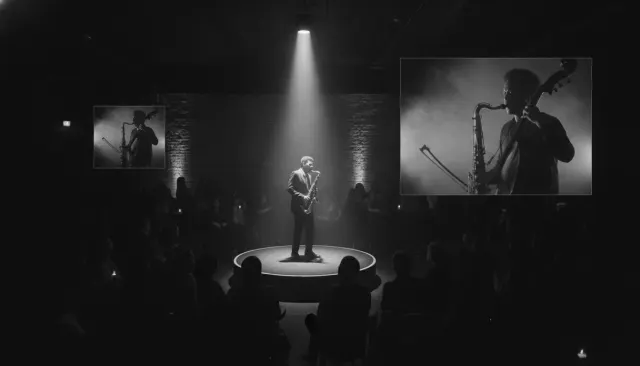
Motown classic stage performance film. Temptations matching suits, Supremes glove choreography, BW with warm sepia, club-tier hot spot.
The moves a human crew would use to get here. Cue applies them for you, and knowing their names is how you ask for a change.
point lighting: key, fill at half intensity, and hairlight/backlight for performer-background separation
coordinated colors, materials, and silhouettes - the group as a visual unit
precise, coordinated, with arm and hand movements as primary visual language
deep blue, purple, or red behind the performers, warm front lighting
direct address to lens as audience surrogate
evening wear, sequined gowns, tailored suits - the visual rhetoric of presentation and pride
community as visual context for the performance
The Motown stage performance aesthetic is one of the most precisely engineered visual systems in the history of popular music - a look developed by Berry Gordy Jr.'s artist development program in the early 1960s that combined the visual vocabulary of Las Vegas lounge performance with elements of Broadway choreography and the specific requirements of Black television programming in an era of segregation and limited access to mainstream broadcast.
From 1959 onward, Berry Gordy's Motown Records in Detroit employed a full-time artist development staff that trained acts in choreography, etiquette, wardrobe, and stage presentation. Maxine Powell, who ran the artist development program, drew on her modeling and finishing school background to establish presentation standards that would make Motown acts presentable to white mainstream America without abandoning the Black musical traditions that were the source of the sound.
The visual result was a specific and elegant synthesis: matching costumes in jewel tones or coordinated ensembles, choreography that was precise but not so extreme as to intimidate mainstream audiences, and a performance relationship with the audience that was warm and inclusive rather than threatening. The Supremes in particular - Diana Ross, Mary Wilson, Florence Ballard - established a performance template that influenced virtually every subsequent female pop group.
Don Cornelius' Soul Train (syndicated from 1971) became the primary visual document of Black popular music performance for three and a half decades. The format was built around two elements: in-studio performances by artists and the Soul Train Line - the dance competition walkway in which audience members demonstrated their own choreographic interpretation of the music.
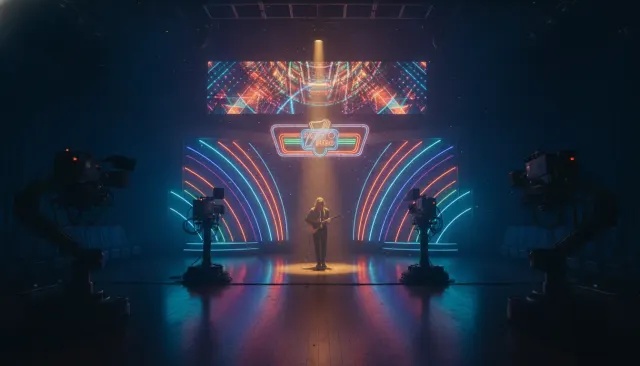
The production aesthetic was specific to its era and budget: flat television lighting with colored gels on the background, the specific warmth and color rendering of 1970s-1990s NTSC television, and the famous "Soul Train" title card and train animation that opened each episode. Don Cornelius as host established a specific style - measured, cool, articulate - that was itself a visual argument about Black American presentation.
The standard Motown performance lighting setup was the television three-point system: key light from the front, fill light from the opposite side at half the key's intensity, and a backlight or hair light from above and behind. This setup, originally developed for Hollywood studio photography, was adopted wholesale by television production because it rendered faces clearly while maintaining a sense of depth. The aesthetic result is immediately identifiable: well-lit faces, a slight shadow defining facial structure, and a separation between the performer and the background.
The Motown performance aesthetic influenced the visual language of virtually every subsequent Black American pop and R&B production. Michael Jackson's early Motown work with the Jackson 5 provided the foundational training that shaped his later solo performance vocabulary. Whitney Houston, Luther Vandross, and the entire 1980s Black pop tradition drew directly on the Motown performance framework.
1965
three-point lit stage classic
synchronized choreography template
1965
the format origin
1971
young Michael in the Motown template
1970
1967
A Look is not a filter. It is a set of stored decisions the pipeline reads before it makes a single frame, so two videos in the same Look actually match.