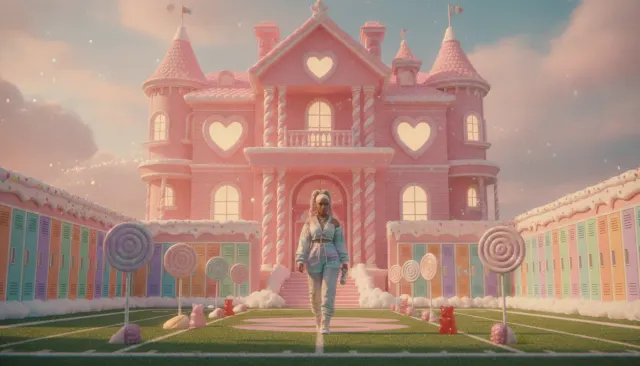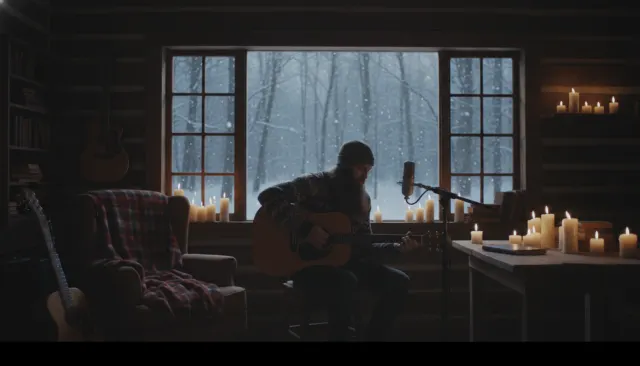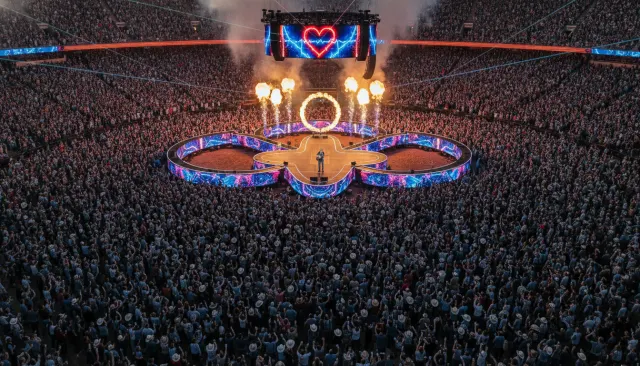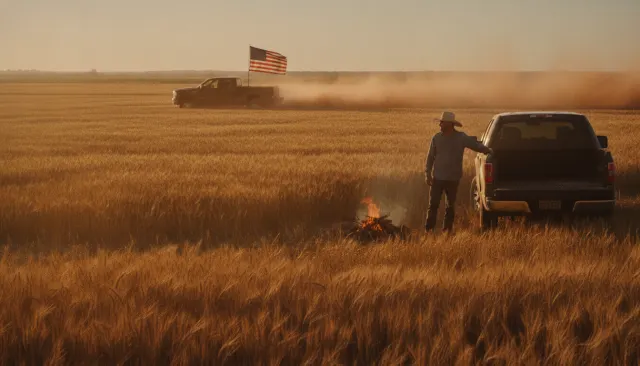
Kacey Musgraves, 'High Horse' dir. Tara Razavi
2018
disco-country pastel apex
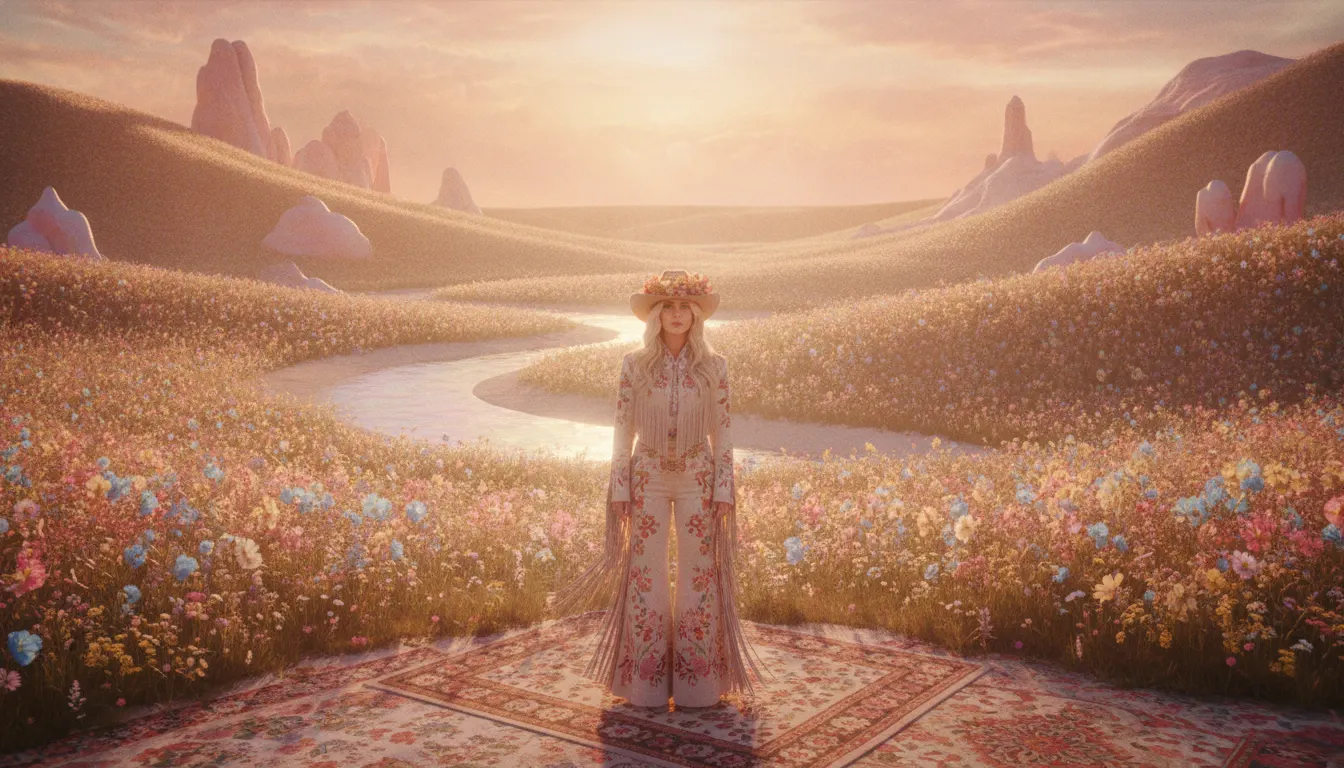
Kacey Musgraves soft country pastel MV aesthetic. Golden Hour era dreamy psychedelic country, pastel-prairie palette, floral cowgirl set design, indie crossover Americana.
The moves a human crew would use to get here. Cue applies them for you, and knowing their names is how you ask for a change.
hour color temperature: amber-peach-coral highlights, warm shadow tone, no cool blue grading
peach, rose, lavender, mint, soft gold
practical sparkle elements used as warm light sources
rainbows, butterflies, celestial bodies, wildflowers
warm neon against pastel environment (High Horse dancehall template)
exposure treatment connecting to 1960s-70s album cover art
Kacey Musgraves' visual world, particularly as defined during her Golden Hour album cycle (2018), represents a specific and influential synthesis: classic country's warm Americana iconography filtered through psychedelic color, glitter, and an aesthetic sensibility that the Nashville establishment found peculiar and the rest of the world found irresistible. The visual language is gentle, saturated, slightly surrealist, and deeply sincere.
The Golden Hour album title is also a color temperature direction: the visual campaign for the album consistently used the warm amber-pink-peach light of the hour after sunset, applied both to outdoor location photography and to studio-set color grading. The album cover itself - Musgraves against a golden sunset sky - established the palette, and the videos expanded it.
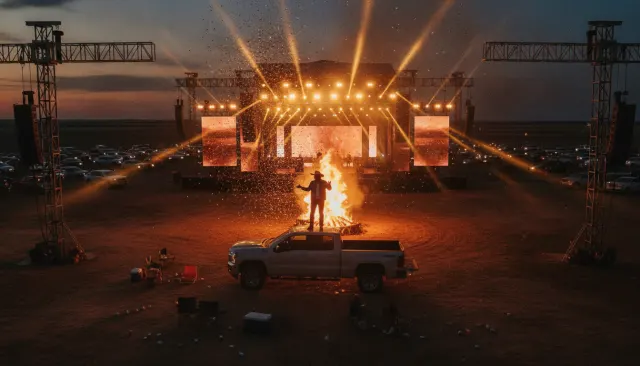
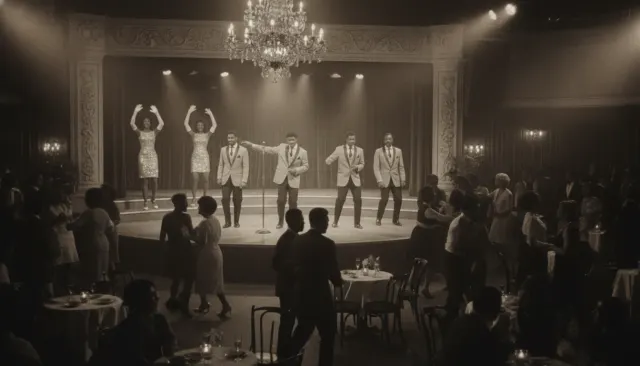
"High Horse" (2018, dir. Tara Razavi) is the most fully realized statement of the aesthetic. A disco-country concept video - Musgraves on horseback in a neon-lit dancehall, other riders performing in pastel lighting - it used a palette of warm peach, coral, and gold against the deep jewel tones of neon signage. The visual joke (horseback riding in a disco) was delivered with complete sincerity: no winking at the camera, the concept played straight.
"Rainbow" (2018) is the aesthetic's emotional core: Musgraves against a spare, brightly lit environment with the video's color emerging from glitter and light rather than complex production design. The visual simplicity foregrounded the song's lyrical emotional directness.
Running through the Musgraves visual work is a quiet psychedelic thread - not the aggressive distortion of classic rock psychedelia but the gentle cosmic imagery of 1960s and 1970s country-rock album cover art: rainbows, butterflies, flowers, celestial bodies. The connection to artists like Emmylou Harris, Gram Parsons, and Flying Burrito Brothers' visual aesthetic is present but filtered through 2018 production design capabilities.
The glitter and sparkle elements that appear throughout the Musgraves visual canon - from her own performance styling to the lighting design of her concert sets - connect to the tradition of Western wear rhinestone decoration (Nudie Cohn cowboy suits) but also to 1970s glam rock's use of sparkle as sincerity signal.
Musgraves' willingness to foreground pastel, glitter, LGBTQ+ inclusive imagery, and psychedelic color within the country music context was itself a statement. The visual language was not a departure from country tradition but a recovery of its less-dominant threads: the cosmic cowboy movement, the outlaw country aesthetic of Willie Nelson and Waylon Jennings, and the Laurel Canyon crossover of the early 1970s.
2018
disco-country pastel apex
2018
simple glitter-light sincerity
2018
pastel floral cosmic imagery
2018
Texas landscapes in golden-hour treatment
2018
2021
Greek tragedy pastel extension
Americana pastel lineage
cosmic country reference point
A Look is not a filter. It is a set of stored decisions the pipeline reads before it makes a single frame, so two videos in the same Look actually match.