Blake Shelton
Boys 'Round Here (2013, dir. Peter Zavadil)
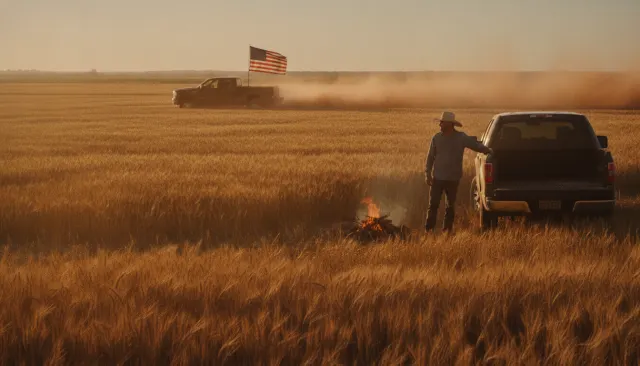
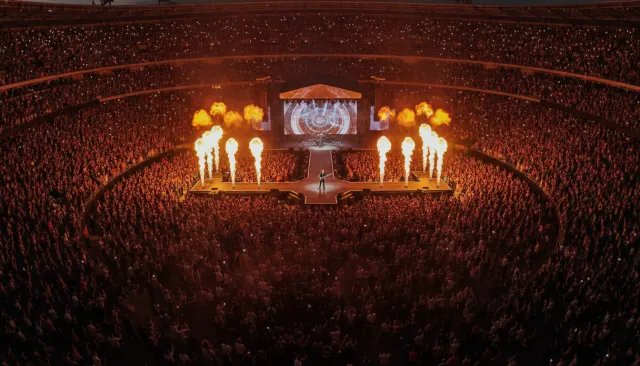
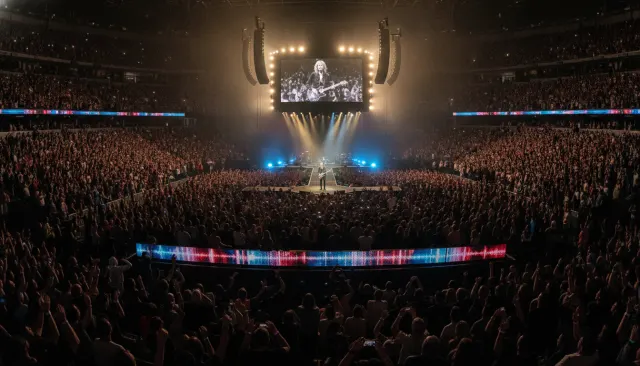
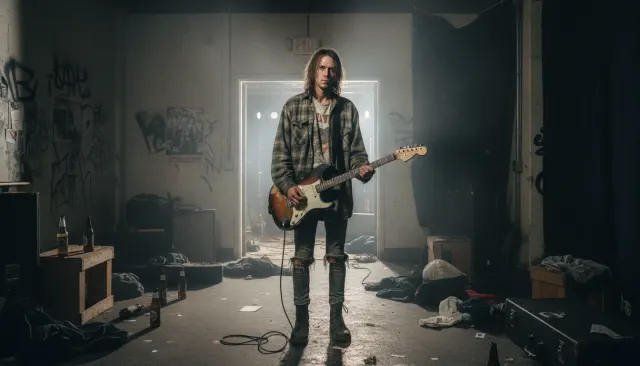
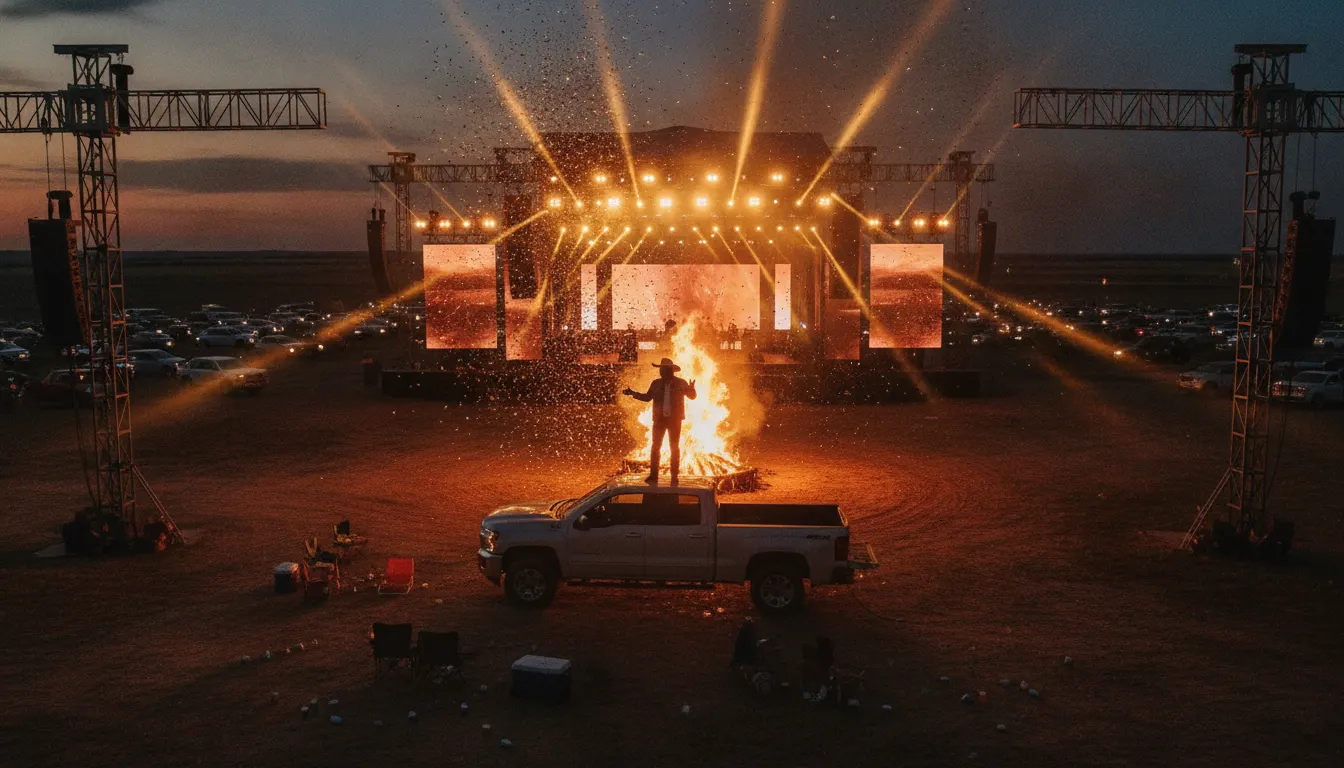
Blake Shelton modern bro country MV aesthetic. Lifted truck and bonfire party, Voice-era star power, big stadium country production, Friday-night tailgate set design.
The moves a human crew would use to get here. Cue applies them for you, and knowing their names is how you ask for a change.
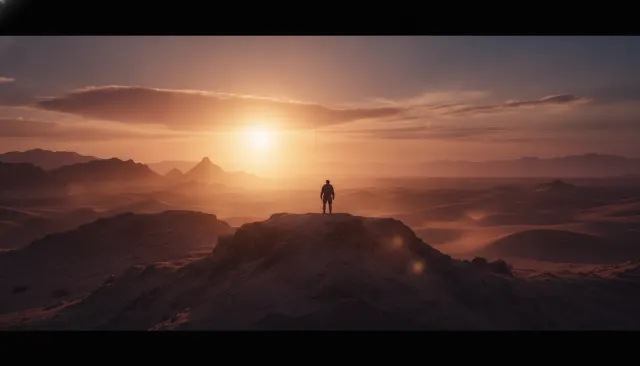
amber tones across skin, dust, and water
oranges pushed, blues cooled, skin tones golden
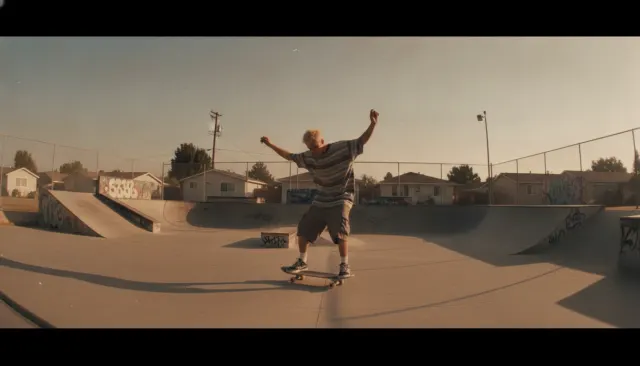
shirts as the consistent visual uniform
tailgate jumps, rope swings, water splashes as kinetic punctuation
Bro country is the dominant visual grammar of mainstream country music from roughly 2010 to the present: a celebration of pickup trucks, dirt roads, lake parties, small-town summer nights, and male friendship coded through shared physical activity. Blake Shelton is one of its most commercially successful practitioners, and his visual output - especially his videos for Ole Red-era singles and The Voice era - defined the mainstream, non-ironic version of the genre for a decade of Nashville production.
The bro country MV grammar emerged from the success of artists like Jason Aldean (She's Country, 2009), Luke Bryan (Country Girl (Shake It for Me), 2011), and Florida Georgia Line (Cruise, 2012). Blake Shelton's videos operate within this grammar while applying a slightly more polished, network-television-friendly aesthetic inherited from his long-running The Voice platform.
Core elements: pickups (specifically trucks that have been styled but not too perfectly - they need light mud, a dent or two, a gun rack); worn jeans, boots, and plaid or branded t-shirts as the visual uniform; exteriors shot in golden hour to maximize warmth; water - lakes, rivers, backyard pools - as a social gathering space; and a camera grammar of steady wide establishing shots followed by social-group medium shots that never challenge the viewer.
Blake Shelton's God's Country (2019, dir. Shaun Silva) pushed toward a harder-edged, elemental version: ranch work, mud, cattle, and a more severe Oklahoma plainscape rather than fun lake imagery. I Lived It (2018) was a more nostalgic, narrative-driven approach. But his commercial peak videos like Boys 'Round Here (2013) are the template for the fun, unserious end of the spectrum.
Most bro country MVs are shot in Middle Tennessee, often on private ranches outside Nashville, with local production companies who specialize in the genre's look. The color grade is almost always warm and desaturated: orange and amber pushed, blues cooled, skin tones kept golden. Lens choice tends toward moderate zoom compression to flatten the depth of crowd scenes and make groups look larger and more social.
Boys 'Round Here (2013, dir. Peter Zavadil)
God's Country (2019, dir. Shaun Silva)
2018
I Lived It
Cruise (2012, defining bro country template)
2011
Country Girl (Shake It for Me)
2009
She's Country
2014
Drunk on a Plane
2017
Body Like a Back Road
A Look is not a filter. It is a set of stored decisions the pipeline reads before it makes a single frame, so two videos in the same Look actually match.