Garth Brooks
The Thunder Rolls (1991, dir. Bud Schaetzle)
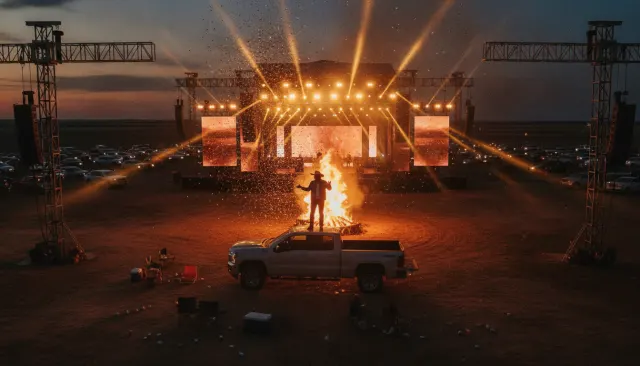
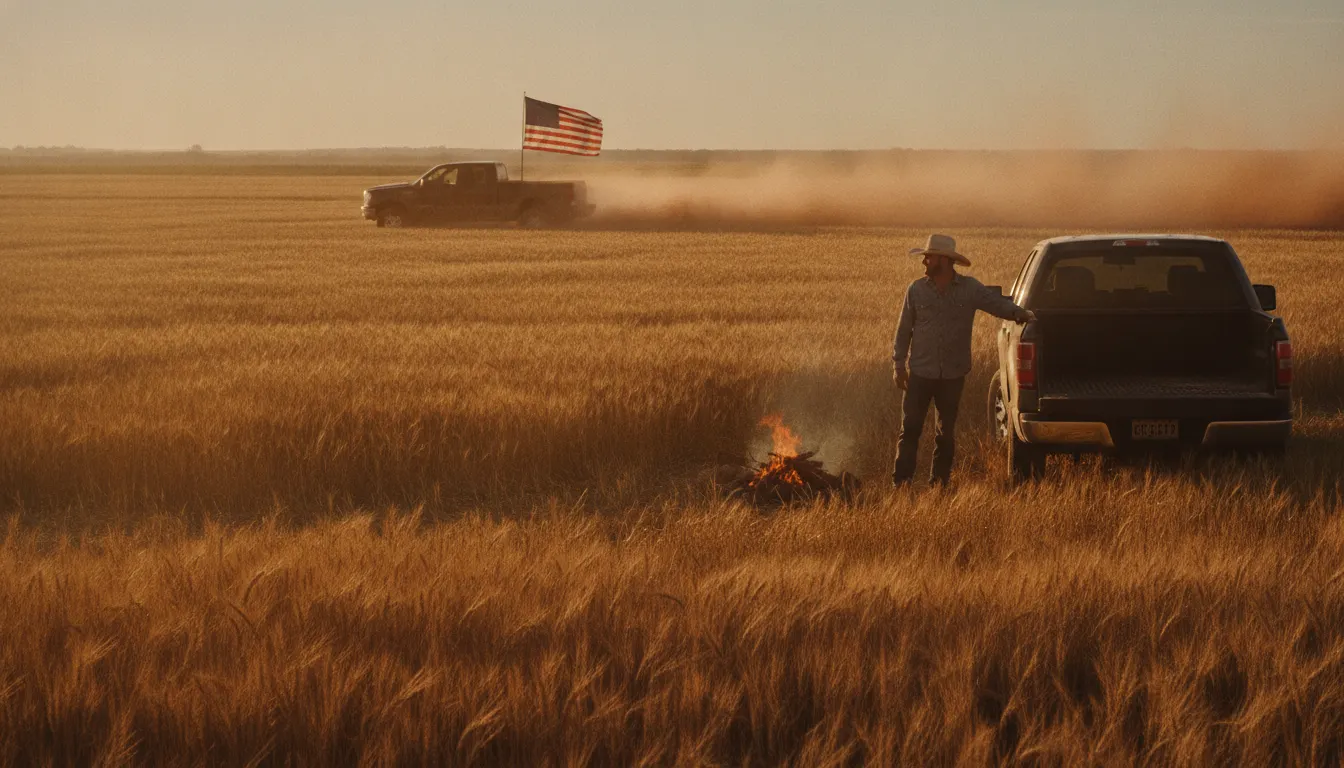
Country pickup-and-dust MV. Tailgate Friday night, golden-hour wheat field, denim and Stetson, F-150 dust plume, Americana flag motif.
The moves a human crew would use to get here. Cue applies them for you, and knowing their names is how you ask for a change.
amber color grading with warm midtones, reduced blue channel, and haze-softened light
angle camera looking along the road surface to maximize the horizontal quality of evening light
fence lines, hay bales, combines, grain elevators in the background
hour window (30 minutes before and after sunset) for the defining light quality
storm clouds building behind a performer, lightning at the horizon
The country pickup dust look is the foundational visual grammar of traditional and neo-traditional country music video: a celebration of Southern and rural American geography centered on pickup trucks, dirt roads, working land, and the golden light that falls on all of it at dusk. It is older than bro country and more earnest: where bro country is a party, country pickup dust is a way of life.
The visual grammar traces back to early country music video production of the 1980s, when the Nashville music industry first embraced the MTV format. Garth Brooks's video for Friends in Low Places (1990) and The Thunder Rolls (1991, dir. Bud Schaetzle) established a narrative tradition within the format: trucks, storms, domestic drama, and the land as both setting and character.
Traditional country MV visual elements are deeply geographically specific to the South and Great Plains: red clay dirt roads, white-board fence lines, fields of either cotton or corn depending on the season, weathered barns, and the particular quality of late-afternoon light that falls at low angles across flat agricultural land. This light - orange-warm, dusty, horizontal - is so central to the aesthetic that it drives not just location choice but shooting time: country MV crews consistently wrap by 8pm to preserve the golden-hour palette.
Morgan Wallen's Whiskey Glasses (2018) and Wasted on You (2021) represent the contemporary version: the truck is newer, the production cleaner, but the red-dirt-road-and-farm geography remains the dominant setting.
Jason Isbell and the 400 Unit represent the Americana variant - more literary, more real, less aspirational - that shares location grammar but differs in color science (cooler, grittier, more photojournalistic).
Country pickup dust color grading is almost universally: orange-amber highlights, warm midtones, reduced blue channel. Dust itself is treated as a visual asset: a truck on a dirt road kicking up a plume of red or brown dust is a narrative climax image that concentrates the entire visual vocabulary into one shot. Haze and dust also diffuse the light, creating the soft-but-warm atmosphere that is the genre's defining visual quality.
The Thunder Rolls (1991, dir. Bud Schaetzle)
1990
Friends in Low Places
2018
Whiskey Glasses
2021
Wasted on You
2018
Beautiful Crazy
2019
Rainbow - Americana variant
2013
Cover Me Up - literary Americana
2015
Tennessee Whiskey
A Look is not a filter. It is a set of stored decisions the pipeline reads before it makes a single frame, so two videos in the same Look actually match.