Luke Bryan, 'Country Girl (Shake It for Me)'
2011
tailgate party template
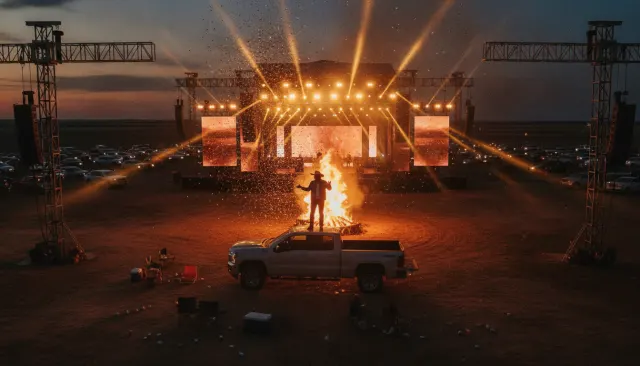
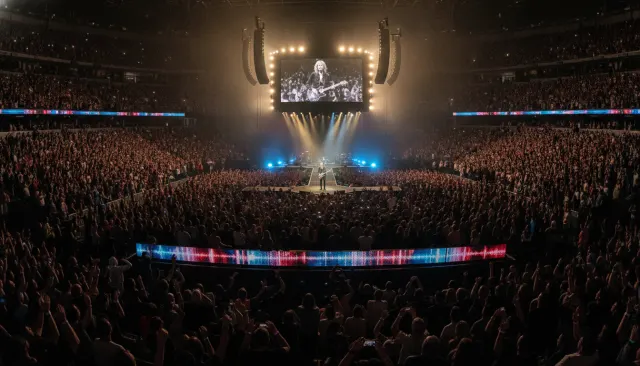
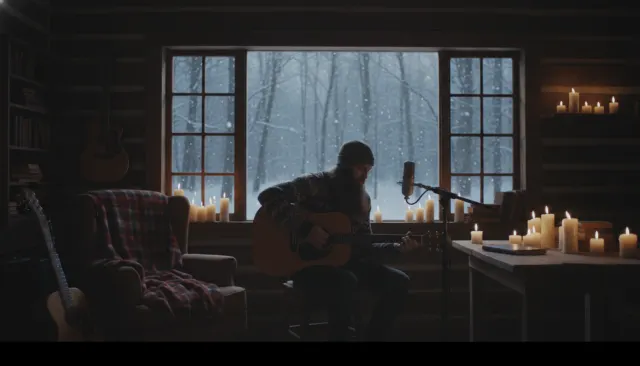
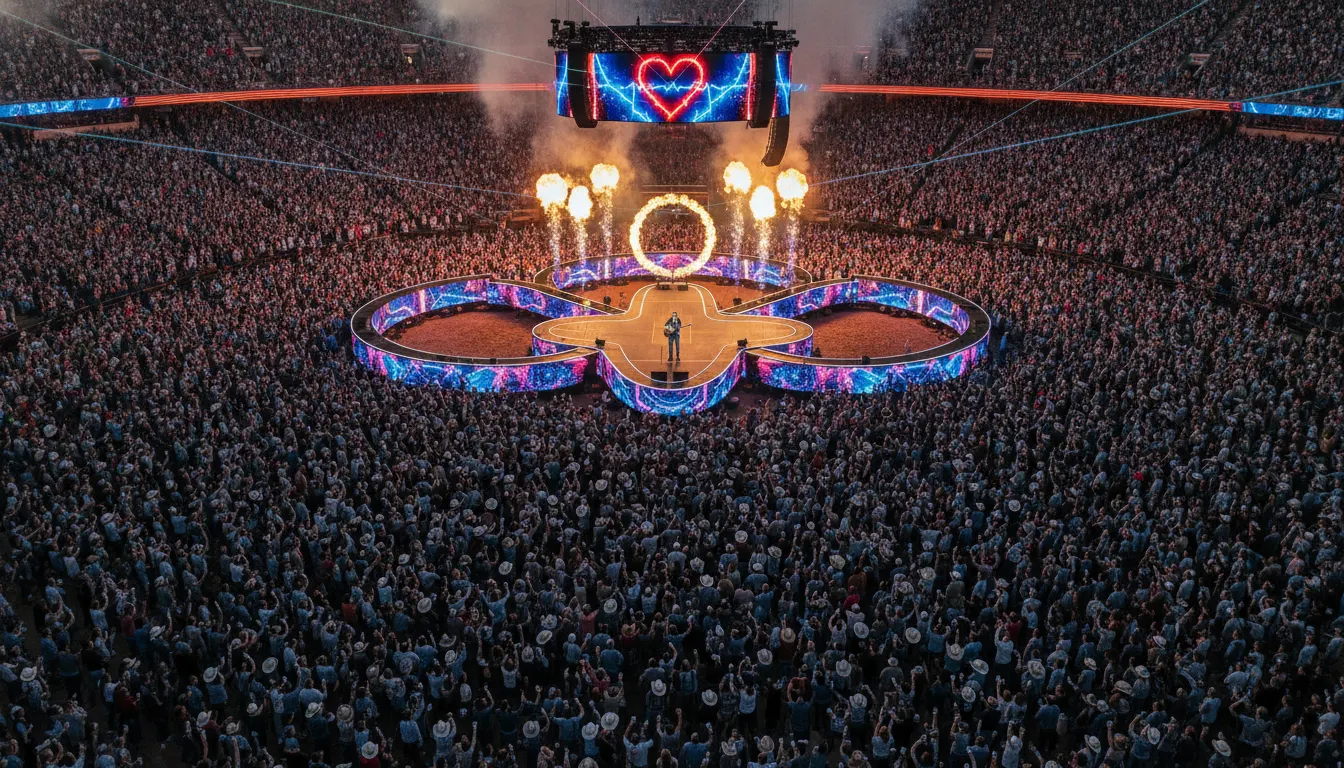
Bro country stadium MV. Morgan Wallen-coded arena, denim crowd waving cans, pyro on the chorus, drone over rodeo arena, neon honky-tonk.
The moves a human crew would use to get here. Cue applies them for you, and knowing their names is how you ask for a change.
hour amber lighting: 45-minute pre-sunset low-angle warmth, lens flare in wideshots
specific model-year trucks with custom trim as personal brand extension
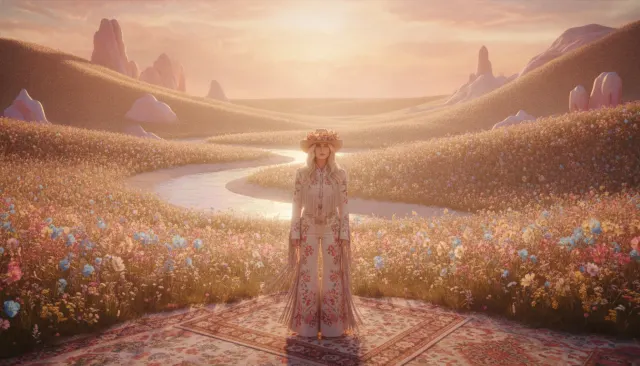
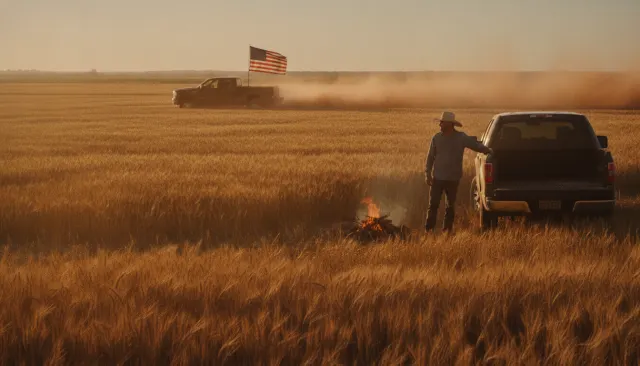
rural Southern or Midwestern landscape at summer heat
the artist embedded in community rather than elevated above it
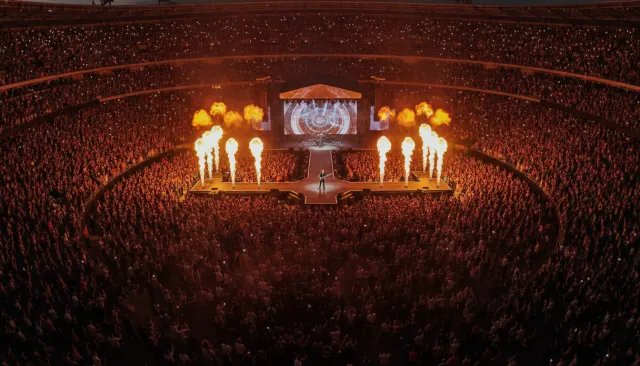
arena production scale with country iconography
motion dust or grass: field debris in slow-motion as visual texture
class heritage props grounding the aspiration in community identity
The bro country aesthetic emerged as country music's most commercially dominant visual language in the period roughly 2011-2018 - a synthesis of traditional country iconography (trucks, dirt roads, small towns, summer heat) with the production values of arena rock and the party-culture visual grammar of mainstream pop. The term "bro country" was coined somewhat derisively by critics, but the aesthetic it names achieved genuine cultural saturation.
The bro country visual formula is consistent enough across artists and videos that it functions as a genre template. Its primary elements are: the pickup truck (usually a Ford F-150 or Chevy Silverado, often in a specific model year and color that connects to the artist's personal brand), the dirt road or field at golden hour, the tailgate party or bonfire, the lake or river, and the female subject who is the implied audience for the lyrical content.
The lighting almost always references golden hour: the specific low-angle amber light of 45 minutes before sunset, warming skin tones, creating lens flare in wide shots, and bathing the landscape in a nostalgic warmth. This lighting choice is so consistent that it has become a genre convention: you can identify bro country visual content from the color temperature alone.
Luke Bryan's visual work through his peak commercial period (2011-2015) established the template. "Country Girl (Shake It for Me)" (2011), "Drunk on You" (2012), and "Crash My Party" (2013) each used variations of the same visual vocabulary: outdoor party, golden light, Bryan at the center of a community of young adults whose leisure activities (tailgating, boating, dancing in a field) are the subject matter.
Bryan's visual identity was supported by his arena show production values: the Dirt Road Diaries tour (2012) and subsequent productions used wide stages, LED backdrop walls, and a stadium lighting package that brought arena rock production to country.
"Cruise" (2012, with later remix featuring Nelly) was the visual and commercial apex of bro country's crossover into mainstream pop consciousness. The video - shot with professional production values but maintaining the specific iconographic elements of the genre - received significant crossover MTV and YouTube play.
By 2018-2020, the aesthetic had evolved through Morgan Wallen and Hardy's more Appalachian-inflected visual work, and through Post Malone and Lil Nas X's country crossover content ("Old Town Road," 2019) which engaged with and complicated the genre's racial and cultural assumptions.
2011
tailgate party template
2012
bro country commercial apex
2011
rural Southern aesthetics
2013
golden-hour field party
2013
dust and truck iconography
2014
humor in the formula
2020
post-bro evolution
2019
genre-complicating crossover
A Look is not a filter. It is a set of stored decisions the pipeline reads before it makes a single frame, so two videos in the same Look actually match.