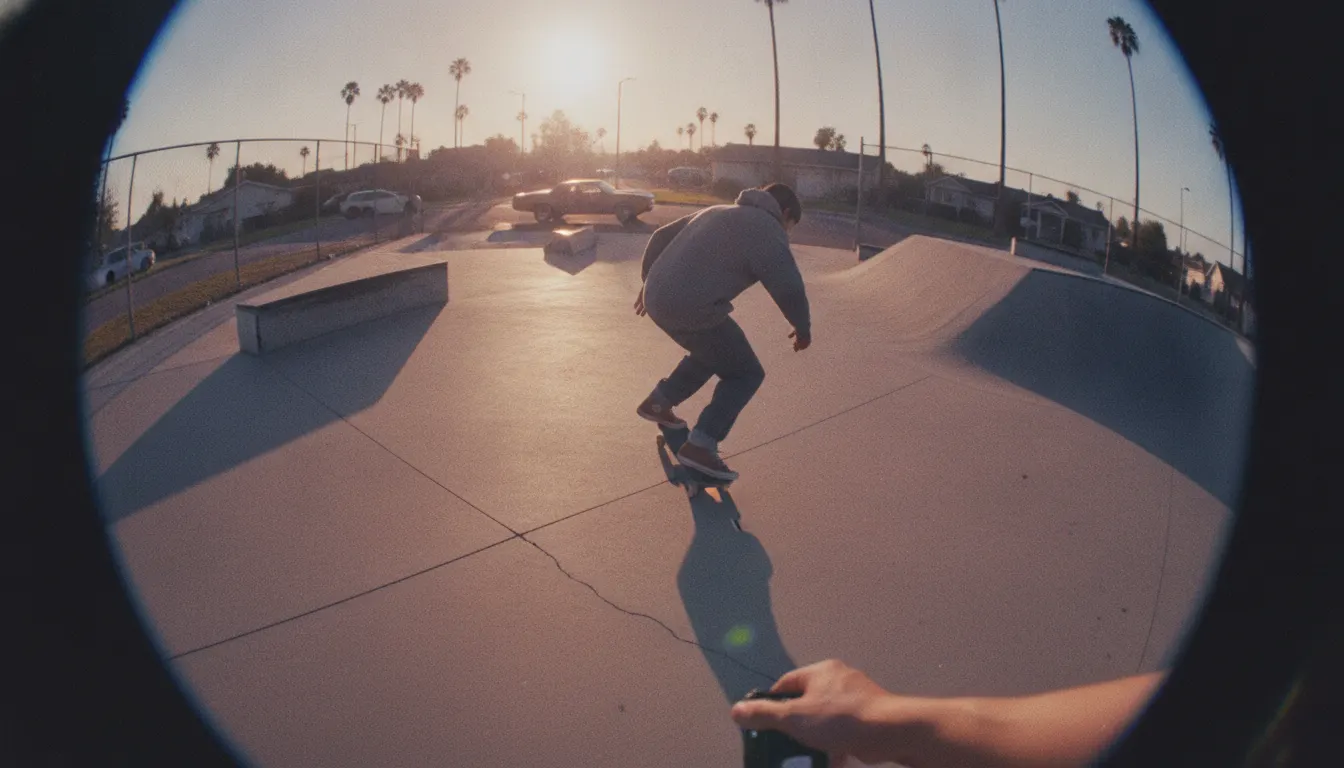
MV DIRECTOR · 1990S · USA
Spike Jonze Skate VHS MV
Spike Jonze skate-video MV. Fisheye handheld skate cam, VHS chroma bleed, suburban concrete, Beastie Boys Sabotage chase energy.
skatevhshandheldplayful
LUT jonze-vhs-skate-faded
WHEN TO USE
- Alternative, indie, or hip-hop content that benefits from a lo-fi, anti-commercial, found-footage aesthetic
- Comedy music content that deploys pastiche or genre parody with straight-faced commitment
- Content referencing 1990s skate culture, VHS aesthetics, or early-internet visual language
- Content that uses guerrilla or documentary-mode production as conceptual content rather than budget limitation
- Brand content for skateboarding, streetwear, or youth culture that wants authentic connection to the tradition
- Content where the humor comes from commitment to the bit rather than winking at the audience
WHEN NOT TO USE
- Polished pop or R&B content where lo-fi grain and camera shake undercut the aspirational message
- Content for luxury or prestige brands where VHS degradation reads as low quality
- Serious dramatic content where the comedy grammar conflicts with the emotional register
- Content that requires high-definition visual clarity for product detail or technical demonstration
SIGNATURE TECHNIQUES
How the look is made.
The moves a human crew would use to get here. Cue applies them for you, and knowing their names is how you ask for a change.
- 01Super 8 or VHS
degraded footage: grain, color shift, scan lines as texture rather than error
- 02Handheld pursuit camera
following movement as a skate videographer follows a rider
- 03Straight
faced commitment to absurd premises: no winking at the audience
- 04Period
accurate pastiche: costume, color grade, and edit grammar matched to the reference era
- 05Guerrilla documentary mode
real locations, non-actor reactions, visible imperfection
- 06Fictional frame within the video
the video is 'supposedly' something else (a dance promotion, a home video)
- 07Comedy casting with physical commitment
non-dancer band members in choreography, fake mustaches
- 08Found
footage editing rhythm: the edit doesn't clean up the imperfections, it keeps them
HISTORY & CONTEXT
Where it comes from.
Spike Jonze Skate VHS Aesthetic
Spike Jonze arrived in music video direction from skateboarding photography and video - he was a teenage skate photographer and filmmaker before becoming a director - and that origin is visible in every formally important choice his early work makes. The grammar of skateboarding video (handheld 8mm or VHS cameras, the pursuit shot following a skater, the willingness to include falls and failed attempts as content, the acceptance of noise and grain as truthful) translated directly into a music video aesthetic that felt radically different from the theatrical, polish-obsessed videos that dominated early-to-mid 1990s MTV.
Beastie Boys 'Sabotage' (1994)
'Sabotage' is a note-perfect pastiche of 1970s American crime TV - 'Starsky and Hutch', 'Kojak', 'S.W.A.T.' - shot on Super 8 and VHS-degraded footage to match the period's television quality. Jonze and the Beastie Boys created personas, costume, and fake-mustache prop comedy with the commitment of genuine television actors; the editing matches the quick-cut grammar of 70s cop shows but pushes it into absurdity. The video won the MTV Video Music Award for Best Direction in 1994. Its influence on the music video form - and on the subsequent decade of celebrity in comedy-pastiche format - is difficult to overstate.
Weezer 'Buddy Holly' (1994)
'Buddy Holly', also directed by Jonze in 1994, digitally inserted Weezer into footage from 'Happy Days', the 1970s ABC television series. The technical achievement was remarkable for 1994 - Industrial Light and Magic did the compositing - but the conceptual achievement is as important: Jonze understood that the joke required commitment to the period's visual grammar (3:1 aspect ratio broadcast video, grain and color matching) rather than a comfortable frame that reminded you it was a gag. Microsoft included it on CD-ROMs bundled with Windows 95 as a demonstration of the multimedia computer, reaching an audience that had never seen a music video.
Fatboy Slim 'Praise You' (1999)
'Praise You' is Jonze's most formally audacious video: he appears in it himself, as the fictional director of a dance company performing an impromptu routine in a movie theater lobby while the management tries to shut them down. The video was shot guerrilla-style on consumer DV in a Los Angeles movie theater before a real audience. The fictional framing - this is supposedly the dance company's own promotional video, not a Fatboy Slim production - created a mise-en-abyme layer that only became visible on close examination.
The Skate Video Grammar
Jonze's skate origins inform the camera choices across all this work: the acceptance of imperfect framing, camera shake, and missed focus as evidence of realness; the found-footage aesthetic that positions the camera as witness rather than author; and the humor that comes from treating absurd situations with straight-faced documentary commitment.
NOTABLE WORKS
Where you have seen it.
Spike Jonze dir., Weezer 'Buddy Holly', 1994 (Happy Days digital insertion, Windows 95 pack-in)
Spike Jonze dir., Fatboy Slim 'Praise You', 1999 (guerrilla dance in movie theater lobby)
Spike Jonze dir., Beastie Boys 'In a Freeze (Sure Shot)', 1994
Spike Jonze dir., Bjork 'It's Oh So Quiet', 1995 (MGM musical pastiche)
Spike Jonze dir., Daft Punk 'Da Funk', 1995 (New York dog-and-cardboard-box character piece)
Spike Jonze dir., Weezer 'Undone
the Sweater Song', 1994
Spike Jonze dir., Ween 'Push th' Little Daisies', 1992 (early skate-adjacent lo-fi)
THE RECIPE
The exact knobs
the renderer turns.
A Look is not a filter. It is a set of stored decisions the pipeline reads before it makes a single frame, so two videos in the same Look actually match.
SettingValue
GradeColour LUT applied to every frame
jonze-vhs-skate-fadedTransitionHow one shot becomes the next
hard cuts · 100ms · linearKen BurnsCamera move applied to stills
Static framesTypographyDisplay / body / mono pairing
Anton · Inter · JetBrains MonoMusic moodWhat the bed under the voice sounds like
big-beat · fuzz-rockPrompt suffixAppended to every shot prompt in this Look
Spike Jonze skate video music video, fisheye handheld skate cam, VHS chroma bleed, suburban concrete, Beastie Boys Sabotage chasePALETTE
Primary
#F59E0B
Secondary
#8C7A5C
Accent
#3B82F6
Text/Light
#2A1F08
Text/Dark
#FFF1D0
BG 900
#1A1408
BG 800
#2A2010
RELATED LOOKS
Next to it on the shelf.

Your first cut
is on us.
+ New videoFree plan · no card · 1080p export