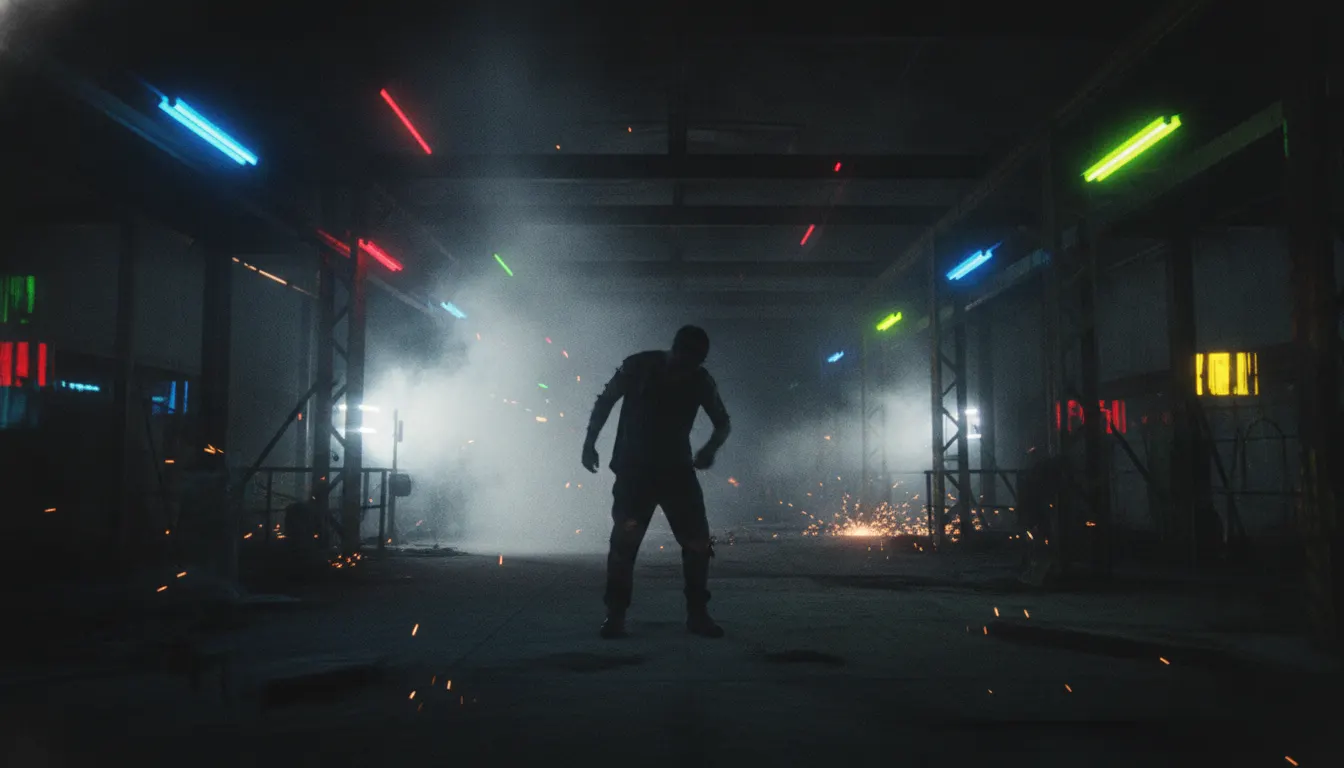
MV ERA · 1990S · USA
MTV 90s Flash-Cut Cuts
Mid-90s MTV flash-cut editing. Industrial sets, color-flash inserts, kinetic jump cuts, NIN and Prodigy energy, contrast-blasted skin tones.
flash-cutindustrialkineticalt-90s
LUT mtv-90s-flash-contrast
WHEN TO USE
- Alternative, indie, or rock music content that benefits from the raw, anti-commercial aesthetic
- Content referencing 1990s alternative culture: flannel, combat boots, suburban anomie
- Nostalgia content for Gen X and older Millennial audiences remembering 120 Minutes and Headbangers Ball
- Narrative video content that uses surreal or dissonant imagery to comment on suburban normalcy
- Content where grain, desaturation, and energetic editing signal authenticity over polish
- Horror or psychological thriller content that benefits from the black-hole-sun uncanny approach
WHEN NOT TO USE
- Pop, R&B, or hip-hop content with different visual vocabularies
- Commercial or brand content where the anti-glamour aesthetic reads as low production value
- Content for audiences without the generational reference to read the aesthetic as intentional
- Upbeat, positive content where rapid cuts and desaturation create tonal mismatch
SIGNATURE TECHNIQUES
How the look is made.
The moves a human crew would use to get here. Cue applies them for you, and knowing their names is how you ask for a change.
- 0116mm film pushed 1
2 stops for visible grain structure and lifted blacks
- 02Rapid intercutting at 12
24 frames per cut, tempo-matched or deliberately syncopated to music
- 03Desaturated cool color grade with blue
green cast; crushed or lifted blacks
- 04Extreme wide
angle lenses (14-24mm) on close subjects for paranoid compression
- 05Surreal or uncanny imagery inserted without narrative logic
distorted faces, suburban horror
- 06Jump cuts and match
cut rhythms treating editing errors as expressive choices
- 07Performance footage degraded by smoke, low light, or strobe rather than theatrical lighting
- 08Typography and graphic elements cut in as staccato punctuation (Pellington method)
HISTORY & CONTEXT
Where it comes from.
MTV 90s Flash-Cut Aesthetic
The early-to-mid 1990s MTV aesthetic represented a deliberate reaction against the polished spectacle of 1980s music video. Where the 80s had given the world 'Thriller' and Russell Mulcahy location extravaganzas, the 90s alternative explosion produced a different visual grammar: grain-heavy 16mm film, rapid intercutting, surreal imagery disconnected from narrative logic, and a studied anti-glamour that matched the music's rejection of arena rock excess.
The Grunge Generation: 1991-1994
Nirvana's 'Smells Like Teen Spirit' (1991), directed by Samuel Bayer, is the zero-point of the aesthetic. Shot in two days at GMT Studios in Los Angeles on film stock pushed for grain, it presents a high-school pep rally in a state of collapse: cheerleaders with anarchy symbols, a janitor dancing, Kurt Cobain barely engaging with the performance. The desaturated, smoke-filled imagery defined the look of alternative video for the next five years.
Soundgarden's 'Black Hole Sun' (1994), directed by Howard Greenhalgh, took the dissonance principle further using extreme wide-angle fish-eye lenses and digital distortion effects to warp suburban American imagery into nightmare form - perfect lawns and station wagons rendered alien and threatening. Pearl Jam's 'Jeremy' (1992, dir. Mark Pellington) brought a graphic, edit-heavy approach with typography and archival imagery cut against performance.
The Directors: Bayer, Pellington, Romanek
Three directors shaped the 90s MTV look most distinctively. Samuel Bayer combined rough performance aesthetics with precision editing. Mark Pellington brought graphic design sensibility and jarring cut rhythms. Mark Romanek produced the most conceptually ambitious videos of the era - Nine Inch Nails 'Closer' (1994) is a black-and-white surrealist nightmare of found footage and theatrical staged imagery that television censors famously labeled 'this video contains scenes that some viewers may find disturbing.' Romanek's 'Scream' for Michael and Janet Jackson (1995) is the most expensive music video ever made at approximately $7 million, a counterpoint that showed the flash-cut aesthetic could coexist with spectacle.
Editing Rhythm and Film Language
The defining characteristic of the 90s MTV cut is the edit itself: 12-24 frames per cut, matching or mismatching action on the beat, using jump cuts that would have been rejected as errors in earlier decades. The 16mm film format, frequently pushed one to two stops for additional grain, gave the footage a texture that contrasted with the crisp Betacam look of 80s video. Color timing leaned toward desaturation with cooler blue-green casts, the inverse of the warm orange-push that had defined 80s video.
NOTABLE WORKS
Where you have seen it.
Mark Pellington dir., Pearl Jam 'Jeremy', 1992
Howard Greenhalgh dir., Soundgarden 'Black Hole Sun', 1994
Mark Romanek dir., Nine Inch Nails 'Closer', 1994
Mark Romanek dir., Michael and Janet Jackson 'Scream', 1995
Floria Sigismondi dir., Marilyn Manson 'The Beautiful People', 1996
Samuel Bayer dir., Green Day 'Basket Case', 1994
Mark Pellington dir., Alice in Chains 'Would?', 1992
THE RECIPE
The exact knobs
the renderer turns.
A Look is not a filter. It is a set of stored decisions the pipeline reads before it makes a single frame, so two videos in the same Look actually match.
SettingValue
GradeColour LUT applied to every frame
mtv-90s-flash-contrastTransitionHow one shot becomes the next
hard cuts · 60ms · linearKen BurnsCamera move applied to stills
Static framesTypographyDisplay / body / mono pairing
Bebas Neue · Inter · JetBrains MonoMusic moodWhat the bed under the voice sounds like
industrial-rock · big-beat-electronicaPrompt suffixAppended to every shot prompt in this Look
1990s MTV music video flash cut editing, industrial set, color flash inserts, NIN Prodigy kinetic energy, high contrastPALETTE
Primary
#16A34A
Secondary
#1A1A1A
Accent
#F59E0B
Text/Light
#0A1A0F
Text/Dark
#F1FAE5
BG 900
#080808
BG 800
#141414
RELATED LOOKS
Next to it on the shelf.
Your first cut
is on us.
+ New videoFree plan · no card · 1080p export