MV ERA · 1980S · USA
MTV 80s Music Video Saturated
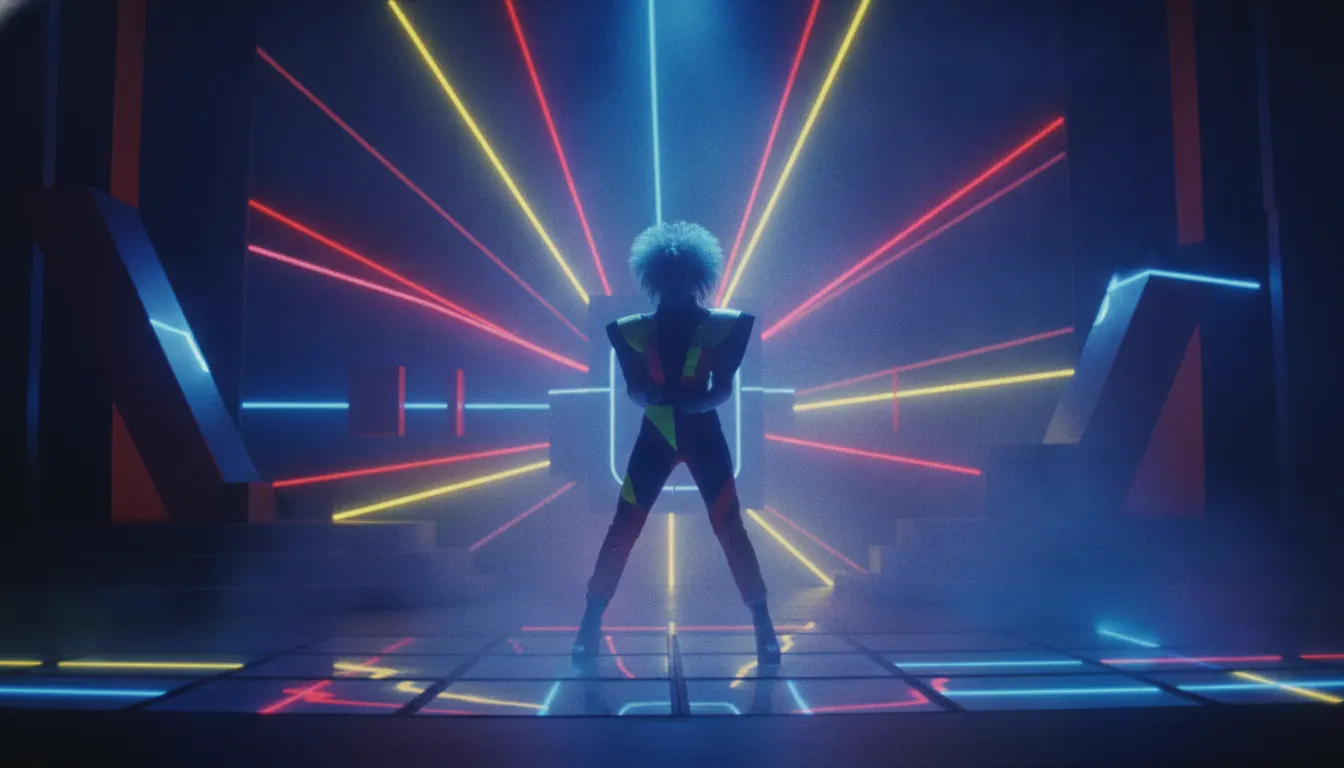
Original MTV era saturation. Neon gel-lit stages, shoulder pads, Aqua Net hair, primary-color synth backdrops, hand-painted set pieces.
neonsynthsaturatedretro-pop
LUT mtv-80s-neon-saturate
WHEN TO USE
- Nostalgia content referencing 1980s popular culture, fashion, or music
- Retro-styled commercial or editorial work invoking synthwave, neon noir, or vaporwave-adjacent aesthetics
- Music content with theatrical or narrative ambition that benefits from the MTV golden-era association
- Fashion editorial referencing 80s silhouettes, shoulder pads, or day-glo color palettes
- Content that celebrates visual excess and saturated spectacle as virtues rather than liabilities
- Brand content targeting Gen X or older Millennial audiences through deliberate nostalgia
WHEN NOT TO USE
- Content seeking contemporary minimalism or muted color palettes
- Documentary or journalistic content where artificiality would undermine credibility
- Content for post-2010 musical genres with their own distinct visual cultures
- Product work where color accuracy is critical and saturation would distort
SIGNATURE TECHNIQUES
How the look is made.
The moves a human crew would use to get here. Cue applies them for you, and knowing their names is how you ask for a change.
- 01Theatrical gel lighting in purple, teal, orange, and primary colors against dark backgrounds
- 02Haze and fog machine atmosphere creating depth and light beam visibility
- 03High color saturation pushed beyond photographic realism
skin tones warm to orange
- 04Neon signage integrated into production design or used as practical lighting source
- 05Mixed live
action and animation (rotoscope, a-ha method) for hybrid storytelling
- 06Cinematic location shooting in unexpected settings
exotic, architectural, or surreal
- 07Wind machine and dry ice effects for artificial movement and drama
- 08Rack focus pulls and dolly moves telegraphing cinematic ambition in a TV format
HISTORY & CONTEXT
Where it comes from.
MTV 80s Saturated Music Video Aesthetic
When MTV launched on August 1, 1981, it triggered a rapid evolution in the visual language of popular music. The early years of music video - 1981 through 1989 - produced one of the most visually distinctive aesthetics in recorded entertainment history: high saturation, theatrical lighting, bold primary colors, and a willingness to mix narrative ambition with sheer spectacle that has rarely been matched.
The Pioneers and the New Language
The 80s music video aesthetic was established by a handful of watershed productions. Michael Jackson's 'Thriller' (1983), directed by John Landis, was the first music video to function as a genuine short film, running 14 minutes with a full narrative arc, professional choreography, and prosthetic makeup effects on par with theatrical horror films. Its streetlight yellows and horror-green gels against nighttime blue established a saturated color palette that became decade-defining.
a-ha's 'Take On Me' (1985), directed by Steve Barron, combined live-action footage with pencil-sketch rotoscope animation to create a hybrid that won the Video of the Year at the 1986 MTV Video Music Awards. The rotoscope technique - animating over film frame by frame - required 16 weeks of production and created a visual grammar that no other contemporary video had attempted.
Theatrical Saturation and Visual Invention
Cyndi Lauper's 'Girls Just Want to Have Fun' (1983, dir. Edd Griles) established the day-glo, found-fashion, deliberately theatrical performance aesthetic. Duran Duran's 'Hungry Like the Wolf' (1982, dir. Russell Mulcahy) brought location production and cinematic scope to what had been studio-bound performance clips - shot in Sri Lanka with a 35mm crew, it represented the ambition that production budgets suddenly enabled. A-ha aside, Russell Mulcahy is perhaps the decade's most important music video director: he also shot Bonnie Tyler's 'Total Eclipse of the Heart' (1983), a masterclass in fog, wind machines, and overlit sports halls turned gothic.
Color and Lighting Grammar
The 80s video look was defined by specific lighting and color choices: theatrical gels in purple, teal, and orange lit performers against black cyc stages; haze machines created atmospheric depth; neon sign culture bled into production design; and the video format itself (U-matic and Betacam) had a specific chroma response that pushed saturation differently than film. Directors of photography working in this period developed techniques to maximize color pop within the format's limitations.
NOTABLE WORKS
Where you have seen it.
Steve Barron dir., a-ha 'Take On Me', 1985 (rotoscope pencil animation hybrid)
Russell Mulcahy dir., Bonnie Tyler 'Total Eclipse of the Heart', 1983
Russell Mulcahy dir., Duran Duran 'Hungry Like the Wolf', 1982 (Sri Lanka location)
Edd Griles dir., Cyndi Lauper 'Girls Just Want to Have Fun', 1983
Brian Grant dir., Tina Turner 'What's Love Got to Do with It', 1984
Mary Lambert dir., Madonna 'Like a Virgin', 1984 (Venice canal setting)
Tim Pope dir., The Cure 'Close to Me', 1985 (claustrophobic box concept)
THE RECIPE
The exact knobs
the renderer turns.
A Look is not a filter. It is a set of stored decisions the pipeline reads before it makes a single frame, so two videos in the same Look actually match.
SettingValue
GradeColour LUT applied to every frame
mtv-80s-neon-saturateTransitionHow one shot becomes the next
wipe cuts · 280ms · ease-in-outKen BurnsCamera move applied to stills
Slow push · 0.05 · centerTypographyDisplay / body / mono pairing
Audiowide · Inter · JetBrains MonoMusic moodWhat the bed under the voice sounds like
synth-pop · gated-reverb-snarePrompt suffixAppended to every shot prompt in this Look
1980s MTV music video, saturated neon gel lighting, Aqua Net hair, shoulder pads, primary color synth backdrop, painted setPALETTE
Primary
#FF2E93
Secondary
#5B2EFF
Accent
#22D3EE
Text/Light
#1A0A2E
Text/Dark
#FFE5F4
BG 900
#0F0820
BG 800
#1F0E3A
RELATED LOOKS
Next to it on the shelf.
Your first cut
is on us.
+ New videoFree plan · no card · 1080p export