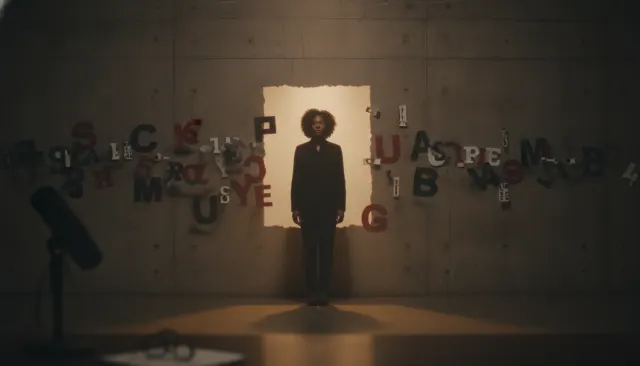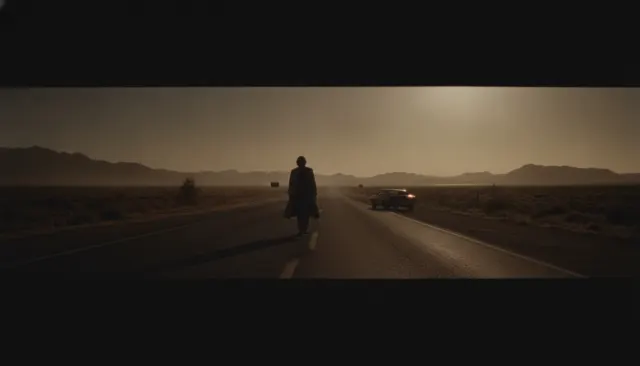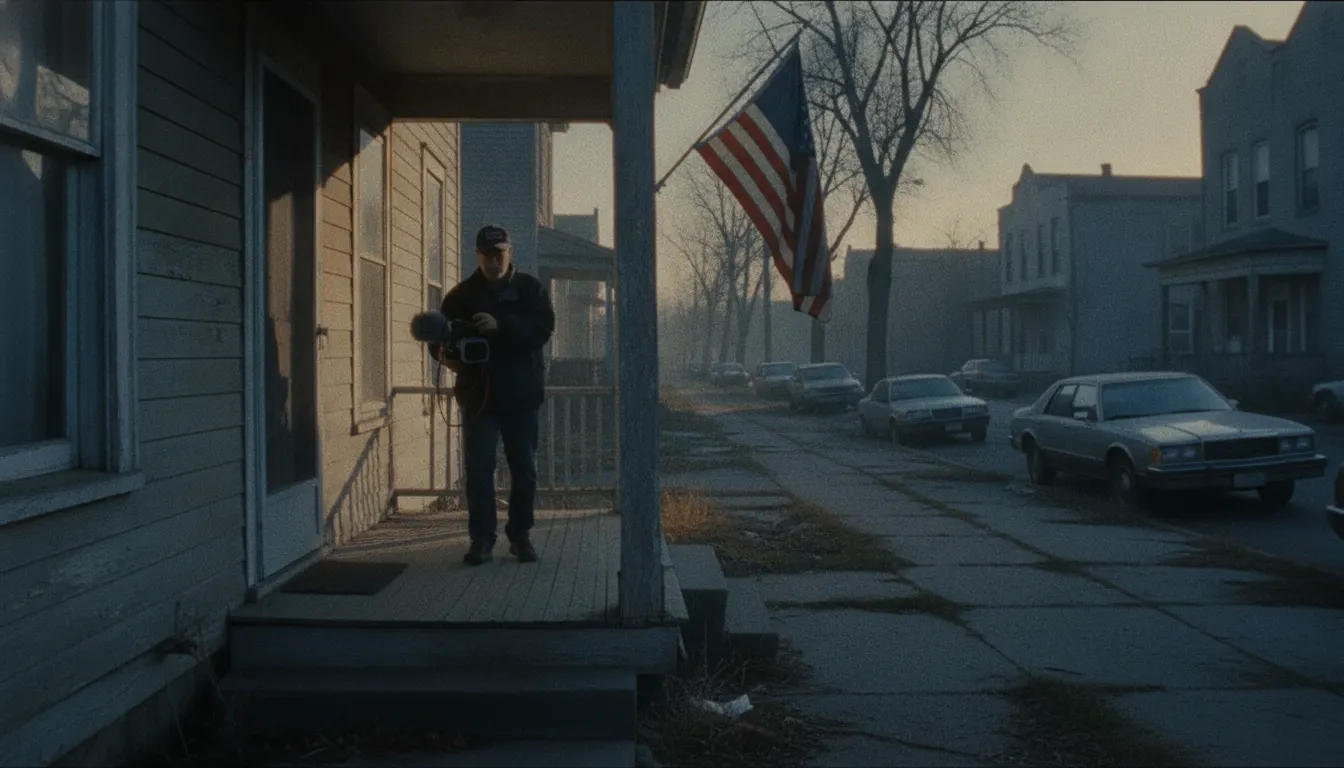
Roger and Me
Michael Moore · 1989
Debut feature documenting Moore's years-long pursuit of GM CEO Roger Smith as Flint's factories closed, establishing the confrontational pursuit structure
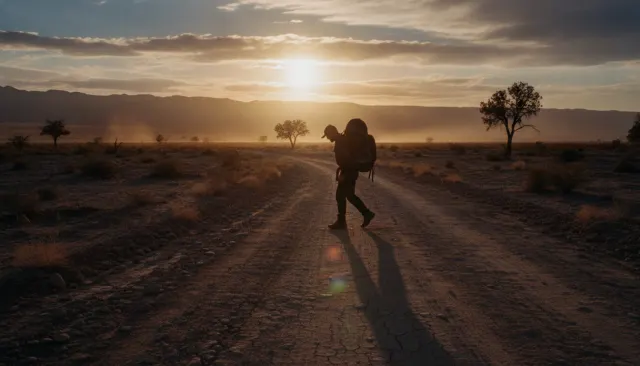
Michael Moore agitprop handheld. Bowling for Columbine confrontation doorknock, Fahrenheit 911 archival cut-in, Detroit working-class wide, ironic VO.
The moves a human crew would use to get here. Cue applies them for you, and knowing their names is how you ask for a change.
Showing up at institutional locations with a camera and attempting access, documenting whatever response occurs.
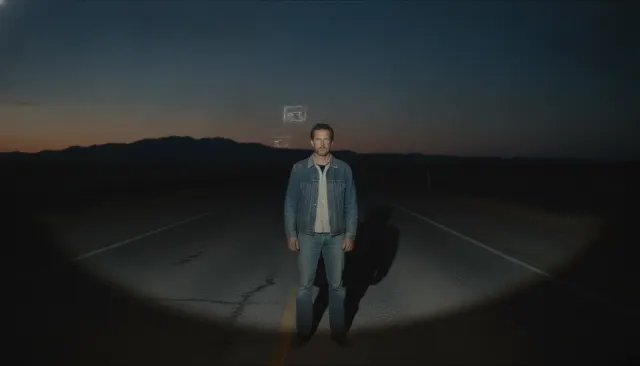
The filmmaker appearing on camera as a participant-observer, wearing their class identity (baseball cap, jeans) as visual argument.
Utilitarian handheld work that signals real-time documentation rather than aesthetic choice.
Period footage, promotional films, or news clips edited against contemporary material to expose historical contradiction.
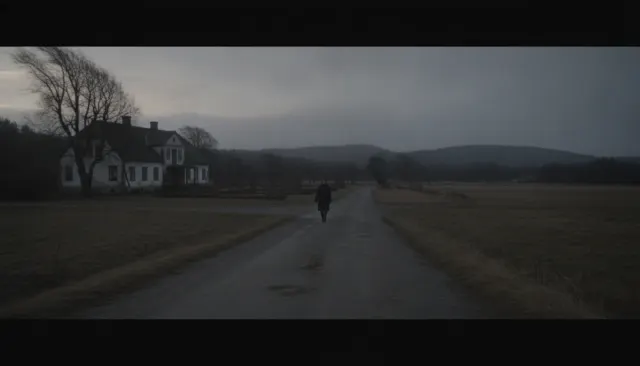
Wide shots of post-industrial or economically deprived locations that carry systemic critique without narration.
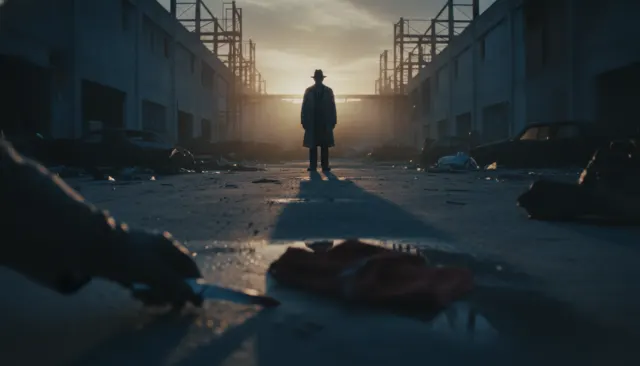
Text cards deployed as rhetorical weapons, stating institutional positions in their own corporate language against the visual evidence.
Close physical proximity to subjects that removes the professional distance of television journalism.
Michael Moore is the most commercially successful documentary filmmaker in American history. Bowling for Columbine (2002) and Fahrenheit 9/11 (2004) both became the highest-grossing documentary films of their respective years, and Moore's formal approach - first-person confrontation, agitprop handheld cinematography, ironic archival cut-ins, and working-class Midwestern location work - defined a template for politically engaged documentary filmmaking that persists across YouTube, streaming, and social media.
Moore's signature move is the doorstep confrontation: the filmmaker arrives with a camera crew at the headquarters of a corporation, the home of a political figure, or the site of an injustice, and attempts to gain entry or ask questions. The camera documents whatever happens. In Roger and Me (1989), Moore spent years attempting to interview General Motors CEO Roger Smith about the closure of factories in Flint, Michigan. The pursuit itself became the documentary's structure and argument.
The handheld camera in Moore's films is not the aesthetic handheld of art cinema - it is the handheld of news gathering and protest documentation. Wobbly, responsive to events, occasionally caught in the wrong position. This quality is deliberate: it signals that the camera is present at real events as they unfold, not constructing a pre-planned visual argument. The contrast with the polished corporate video it critiques is part of the documentary's rhetorical strategy.
Moore's editing technique, developed with editor Kurt Engfehr, uses archival footage, news clips, and historical film material in a sardonic counterpoint to the present-day material. A cheerful 1950s corporate training film is cut against footage of factory workers being laid off. A politician's speech is placed next to footage contradicting its claims. This ironic archival montage became one of the dominant modes of political documentary in the internet era, influencing The Daily Show, Last Week Tonight, and a generation of YouTube political commentators.
Moore's films are visually inseparable from their locations. Flint, Michigan - where Moore grew up - appears repeatedly across his filmography: its empty lots, shuttered factories, and economic desolation become a visual argument for systemic failure. The wide shots of Flint's industrial landscape carry the same weight as Moore's verbal arguments. Similarly, the suburban Detroit streets, the working-class diners, and the institutional architecture of schools, gun shops, and corporate headquarters function as a visual sociology of American inequality.
Moore's approach was explicitly political, and his influence on documentary form is matched by his influence on political filmmaking as a genre. Errol Morris, Werner Herzog, and Agnès Varda were already practicing first-person documentary when Moore emerged, but Moore's commercial success demonstrated that the mode could reach mass audiences.
Michael Moore · 1989
Debut feature documenting Moore's years-long pursuit of GM CEO Roger Smith as Flint's factories closed, establishing the confrontational pursuit structure
Michael Moore · 2002
Highest-grossing documentary of its year, using the Columbine shootings to examine American gun culture with ironic archival technique
Michael Moore · 2004
The highest-grossing documentary in film history at time of release, examining the Bush administration's response to 9/11
Michael Moore · 2007
Investigation of the American healthcare system using personal testimonies and international comparisons
Michael Moore · 2009
Post-2008 financial crisis examination using the confrontational approach and ironic corporate archival cut-in technique
Michael Moore · 1992
Various television work that extended the Flint investigation and refined Moore's first-person citizen-journalist approach
A Look is not a filter. It is a set of stored decisions the pipeline reads before it makes a single frame, so two videos in the same Look actually match.