The Thin Blue Line
Errol Morris · 1988
The foundational work - reenactments and direct interview that freed Randall Adams from wrongful imprisonment
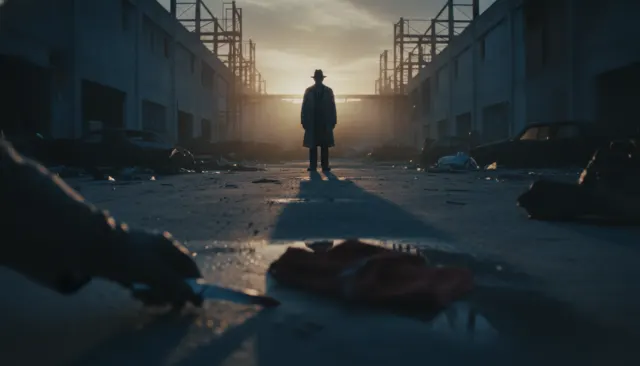
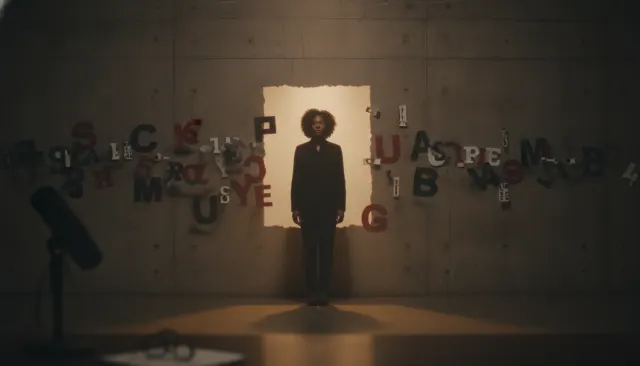
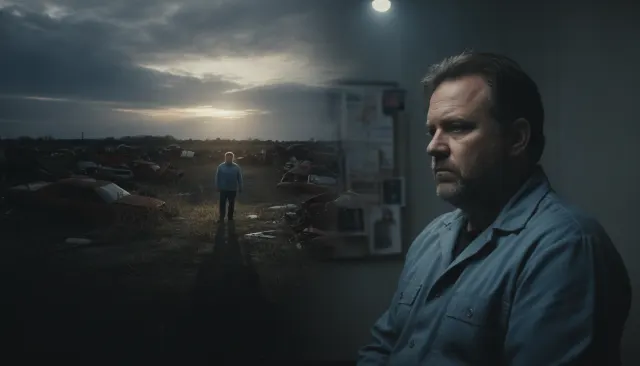
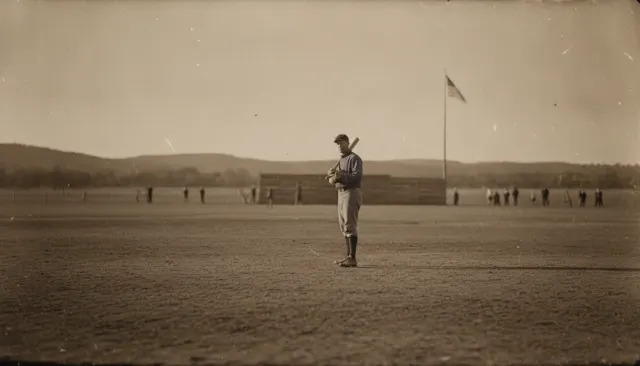
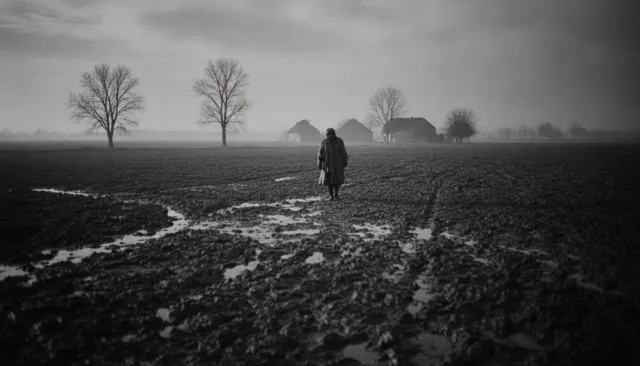
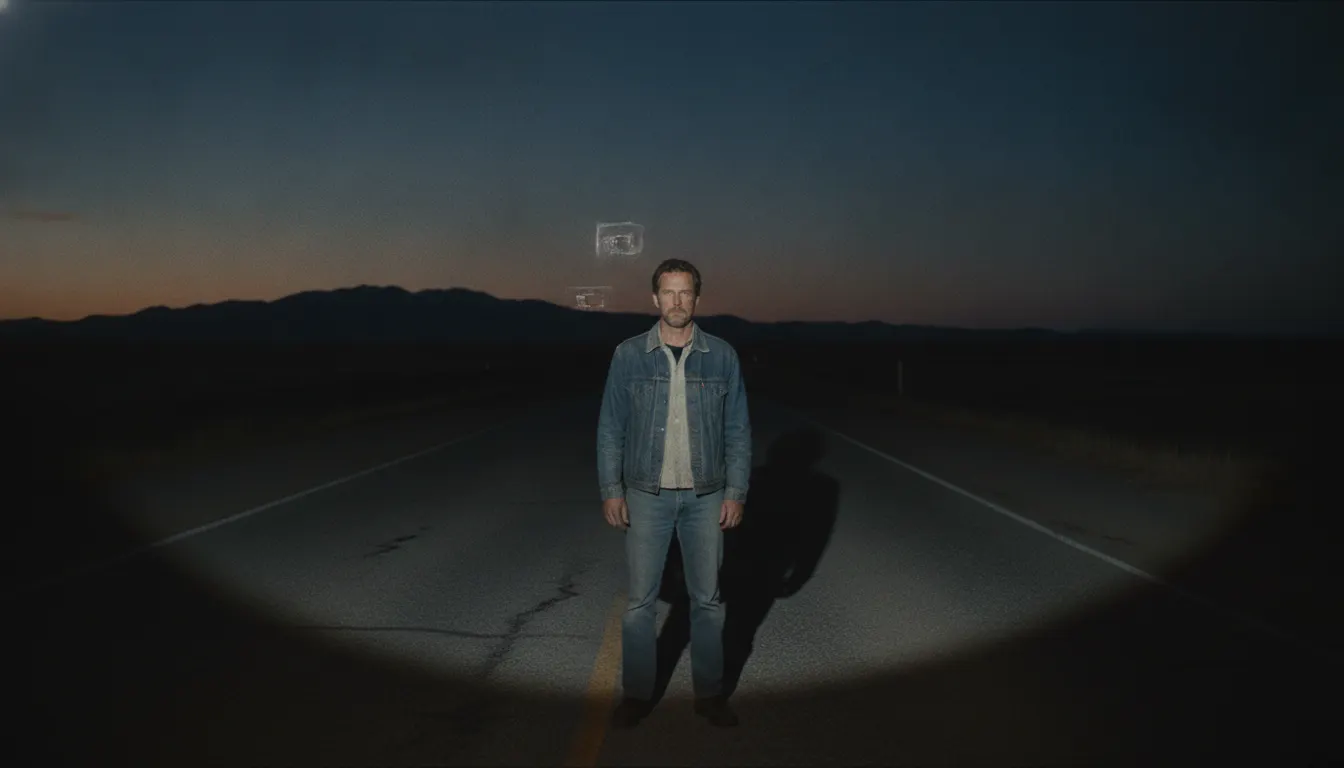
Errol Morris Interrotron direct-address. Subject looks straight into the lens via teleprompter mirror, Thin Blue Line stylized reenactment.
The moves a human crew would use to get here. Cue applies them for you, and knowing their names is how you ask for a change.
Half-mirror placed over the camera lens reflects interviewer's face, allowing subject to make simultaneous eye contact with interviewer and lens.
Subject gazes into the lens and therefore directly at the audience, replacing eavesdropping with moral confrontation.
Minimalist repeated arpeggiated figures provide emotional context without narrative direction, holding the viewer in a state of attention.
Physical evidence items (a glass, a gun, a document) are shot in slow motion as isolated fetish objects, not illustrative inserts.
Single soft key with deep background separation creates a psychological interview space that feels both intimate and severe.
Imperceptibly slow zoom into the subject's face over the course of an answer builds the subjective sensation of proximity and intimacy.
Errol Morris invented the Interrotron in 1992 while preparing to shoot The Thin Blue Line follow-up interviews. The device - whose name Morris coined himself - is a variation on the teleprompter principle: two beam-splitter mirrors are aligned so that the interviewer's face appears superimposed directly over the camera lens. The subject looks at the interviewer's reflected face while simultaneously looking directly into the camera. For the first time in documentary history, subjects could make direct eye contact with both the interviewer and the viewer simultaneously.
Traditional documentary interviews place the camera operator and the interviewer side by side, producing the slightly off-axis eyeline that is the universal sign language of a documentary interview. The subject's gaze is aimed slightly to the left or right of the lens. Morris found this evasion philosophically unsatisfying - the off-axis eyeline puts the audience in the position of eavesdroppers rather than interlocutors. The Interrotron eliminated the evasion. The subject is now speaking directly to the viewer, which changes the moral contract of the exchange.
Morris developed his interview technique before the Interrotron's invention in The Thin Blue Line (1988), which investigated the wrongful murder conviction of Randall Adams in Texas. The film's reconstructed reenactments - shot in slow motion with a noir palette, fetishizing physical evidence objects (a milkshake, a gun, a police badge) - were as significant as the interview technique. Philip Glass scored the film with his characteristic arpeggiated repetition, creating a score that functions as an emotional modulator rather than a narrative cue. The film directly caused Adams's conviction to be overturned in 1989.
The Fog of War (2003), an 11 Lessons from the Life of Robert S. McNamara, is the Interrotron's masterpiece. The elderly McNamara looks directly into the lens - and therefore directly at the viewer - as he confesses to, justifies, and reflects on decisions that caused the deaths of hundreds of thousands of people in Vietnam. The eye contact is not incidental; it is the film's moral instrument. McNamara cannot look away from the viewer, and the viewer cannot look away from McNamara. The film won the Academy Award for Best Documentary Feature.
Morris continued the Interrotron format in Standard Operating Procedure (2008, Abu Ghraib), Tabloid (2010, Joyce McKinney), and American Dharma (2018, Steve Bannon). Each film uses direct address to place the viewer in a morally uncomfortable position - not merely watching subjects but being watched by them in return. Philip Glass scored The Thin Blue Line, The Fog of War, and several other Morris films, and the Glass-Morris collaboration created a sonic identity as distinctive as the visual one.
Errol Morris · 1988
The foundational work - reenactments and direct interview that freed Randall Adams from wrongful imprisonment
Errol Morris · 2003
Interrotron masterpiece - McNamara's direct lens address as moral confrontation across 11 confessional lessons
Errol Morris · 2008
Abu Ghraib testimony with Interrotron direct address and stylized reenactment of photographic evidence
Errol Morris · 2010
Joyce McKinney interview demonstrating the Interrotron's comic as well as tragic register
Errol Morris · 2018
Steve Bannon direct address in Morris's characteristic studio setup, testing the Interrotron's moral implications with a politically divisive subject
Errol Morris · 1997
Interrotron technique applied to four unconventional subjects whose work reveals overlapping philosophies of control and life
Errol Morris · 1999
Holocaust denier documentary using direct address to test the limits of sympathetic portrait filmmaking
A Look is not a filter. It is a set of stored decisions the pipeline reads before it makes a single frame, so two videos in the same Look actually match.