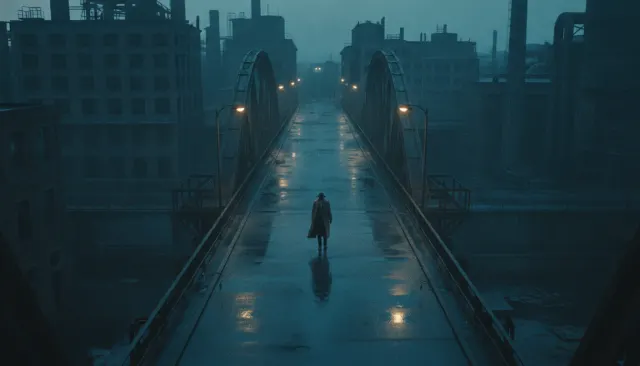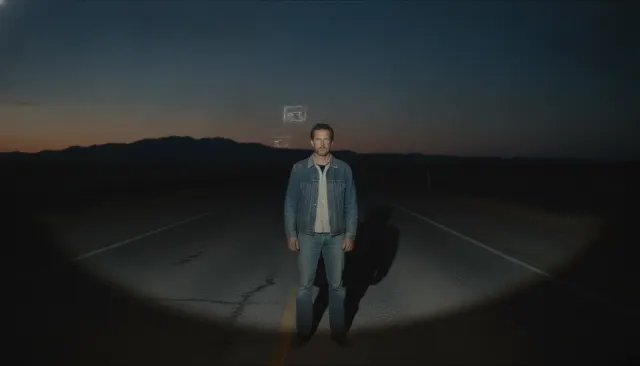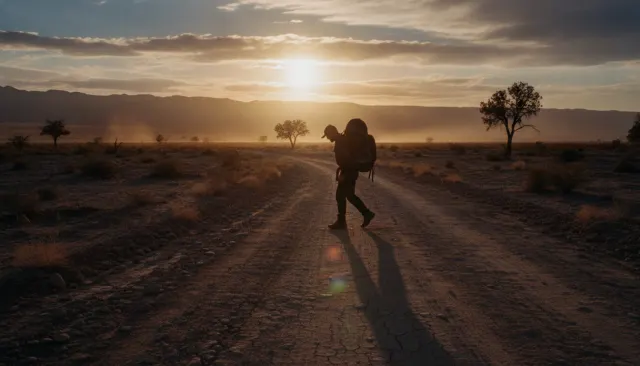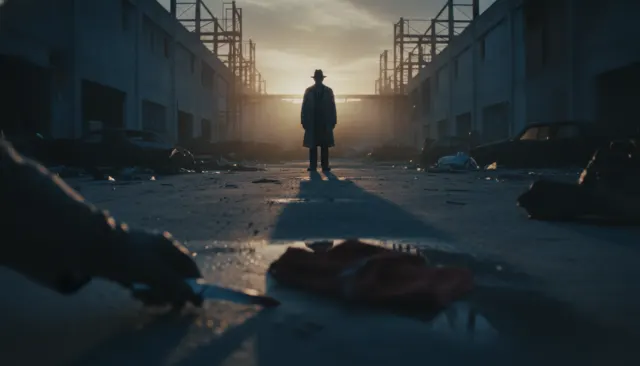
Making a Murderer
Laura Ricciardi & Moira Demos · 2015
Crystallized the Netflix true crime grammar; ten years of Manitowoc County footage edited for maximum narrative tension
Netflix true-crime docuseries aesthetic. Making a Murderer drone-pan establishing, evidence-board zooms, dramatic interview lighting.
The moves a human crew would use to get here. Cue applies them for you, and knowing their names is how you ask for a change.
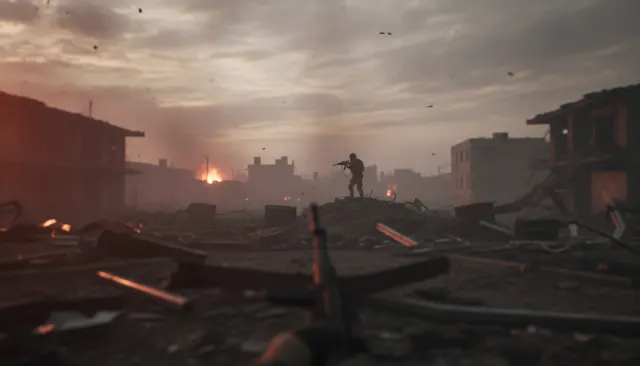
Wide aerial shot that pulls back from a location to establish geography and isolation, often under overcast skies, opening each episode.
Slow Ken Burns push into archival photographs, documents, or crime scene images with restrained sound design underscoring weight.
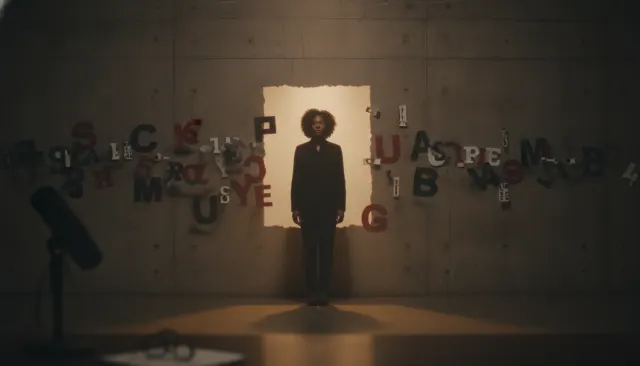
Subjects filmed slightly off the lens axis, allowing near-direct eye contact that communicates personal address and intimacy.
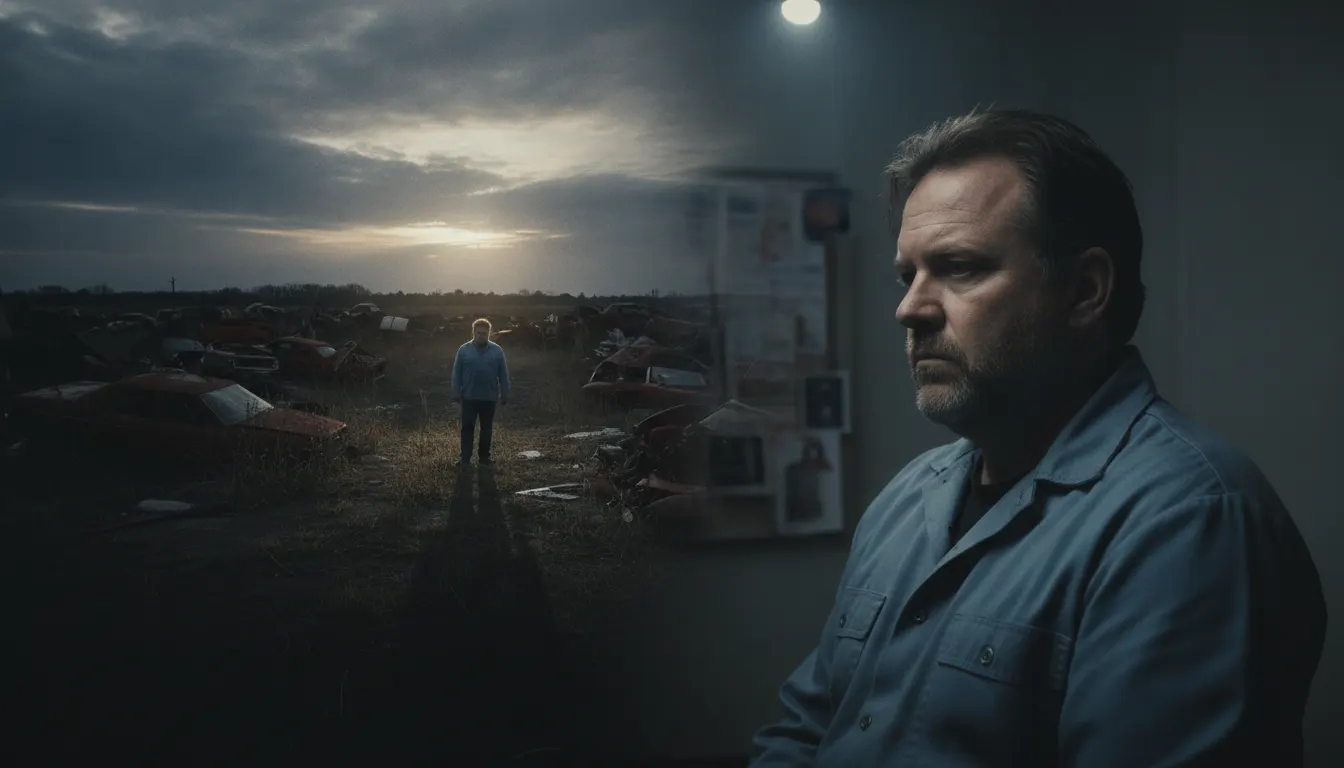
Slow push toward pinned photographs and evidence strings, treating investigative materials as visual narrative artifacts.
Present-day footage graded with lowered saturation and slightly lifted blacks, communicating weight and institutional drabness.
Period-accurate archival footage or photographs intercut with present-day testimony, creating temporal compression and emotional contrast.
The true crime docuseries aesthetic that Netflix popularized beginning with Making a Murderer (2015) has become one of the most legible and widely-imitated documentary visual grammars of the past decade. It borrows from observational documentary, news magazine television, and procedural drama, fusing them into a signature style that communicates institutional credibility, investigative rigor, and narrative tension simultaneously.
Laura Ricciardi and Moira Demos's Making a Murderer (2015) crystallized the aesthetic. Shot over ten years with small crews in Manitowoc County, Wisconsin, the series used drone aerials for atmospheric establishing shots, archival courtroom footage, and controlled interview setups. The interview lighting - a motivated key from one side with a slightly underexposed background, often the subject's home or office - communicates authenticity without artifice. The editorial rhythm moved between talking-head testimony, courtroom footage, and evidence photography at a cadence designed to sustain hourly narrative tension across multiple episodes.
The true crime Netflix look is assembled from a consistent vocabulary. Drone pan-and-pull establishing shots open episodes, orienting the viewer geographically and atmospherically (gray skies over rural communities are preferred). Evidence photography - crime scene stills, police reports, newspaper front pages - appears as slow zooms (the "Ken Burns effect" applied to forensic material) with motivated sound design. Interview subjects sit in controlled environments with moderate depth of field; backgrounds are identifiable but not distracting. Case-board sequences (photographs and strings connecting suspects) are filmed in slow push-ins that treat investigation as visual spectacle.
Interviews in true crime Netflix productions follow a recognizable protocol. Subjects are filmed slightly off-axis (a technique borrowed from Errol Morris's Interrotron, which allows direct eye contact through the lens). Key light is soft and directional, with a slight backlight rim. The interview subject's emotional state is communicated through sustained close framings during key revelations. Edit rhythm slows during testimony to allow visible emotion to register.
The look favors muted, slightly desaturated palettes for present-day footage, while archival material is either left at its original color temperature or pushed further toward period-appropriate tones (warm 1980s video, blue-green 1990s VHS). Winter and overcast locations are preferred, reinforcing the genre's emotional register of unresolved grief and institutional failure. Titles use clean sans-serif typography (frequently Helvetica variants) over landscape aerials.
The sonic texture of the true crime Netflix look - low bass drones, sparse piano motifs, archival tape hiss beneath interview audio - is inseparable from the visual grammar. The look anticipates an audio environment of controlled, portentous quiet.
Laura Ricciardi & Moira Demos · 2015
Crystallized the Netflix true crime grammar; ten years of Manitowoc County footage edited for maximum narrative tension
Andrew Jarecki · 2015
HBO precursor that pioneered the interview-revelation structure now standard across the genre
Rod Blackhurst & Brian McGinn · 2016
Interview-forward structure with Italian location drone work defining the international true crime visual
Ryan White · 2017
Institutional abuse investigation using the evidence-zoom and off-axis interview grammar
Maclain Way & Chapman Way · 2018
Archival-heavy approach demonstrating how cult of the case-board aesthetic applies to sociological subjects
Barbara Schroeder · 2018
Bank robbery and murder investigation using an evidence-rich case-board aesthetic throughout
Mark Lewis · 2019
Social media investigation that extended the grammar to digital evidence - screenshots, usernames, video thumbnails
A Look is not a filter. It is a set of stored decisions the pipeline reads before it makes a single frame, so two videos in the same Look actually match.