The Thin Blue Line
Errol Morris · 1988
The origin text - parallel reenactments of a 1976 Dallas murder that freed Randall Adams from death row
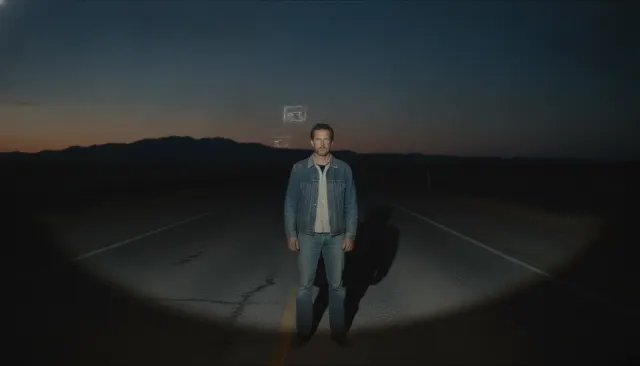
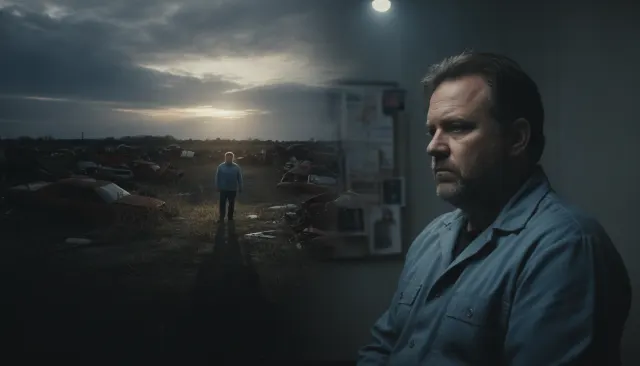
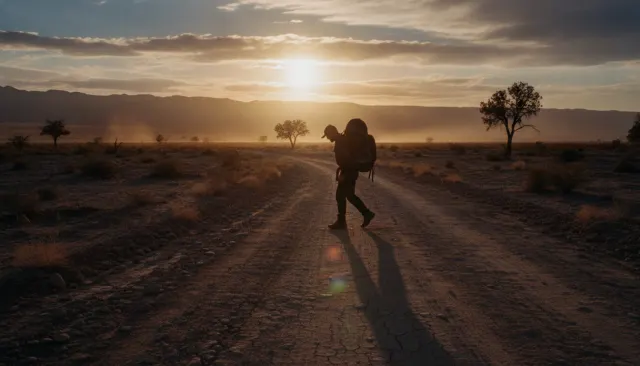
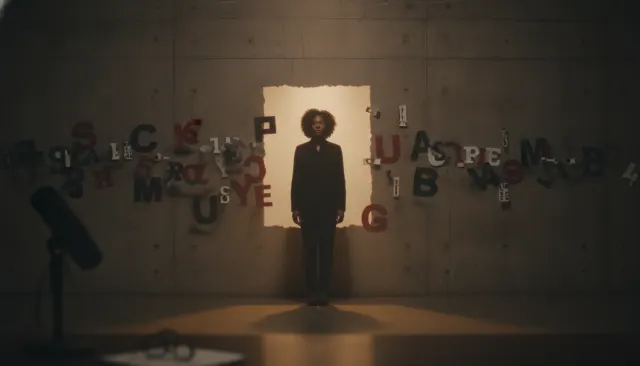
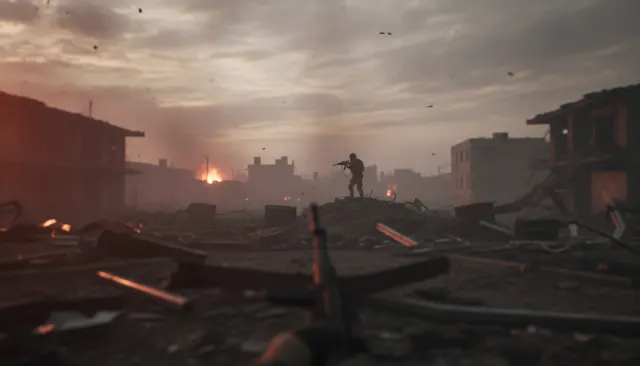
Errol Morris Thin Blue Line stylized reenactment. Slow-motion crime detail loop, Philip Glass score, locked Interrotron interview, noir-shadow recreation.
The moves a human crew would use to get here. Cue applies them for you, and knowing their names is how you ask for a change.
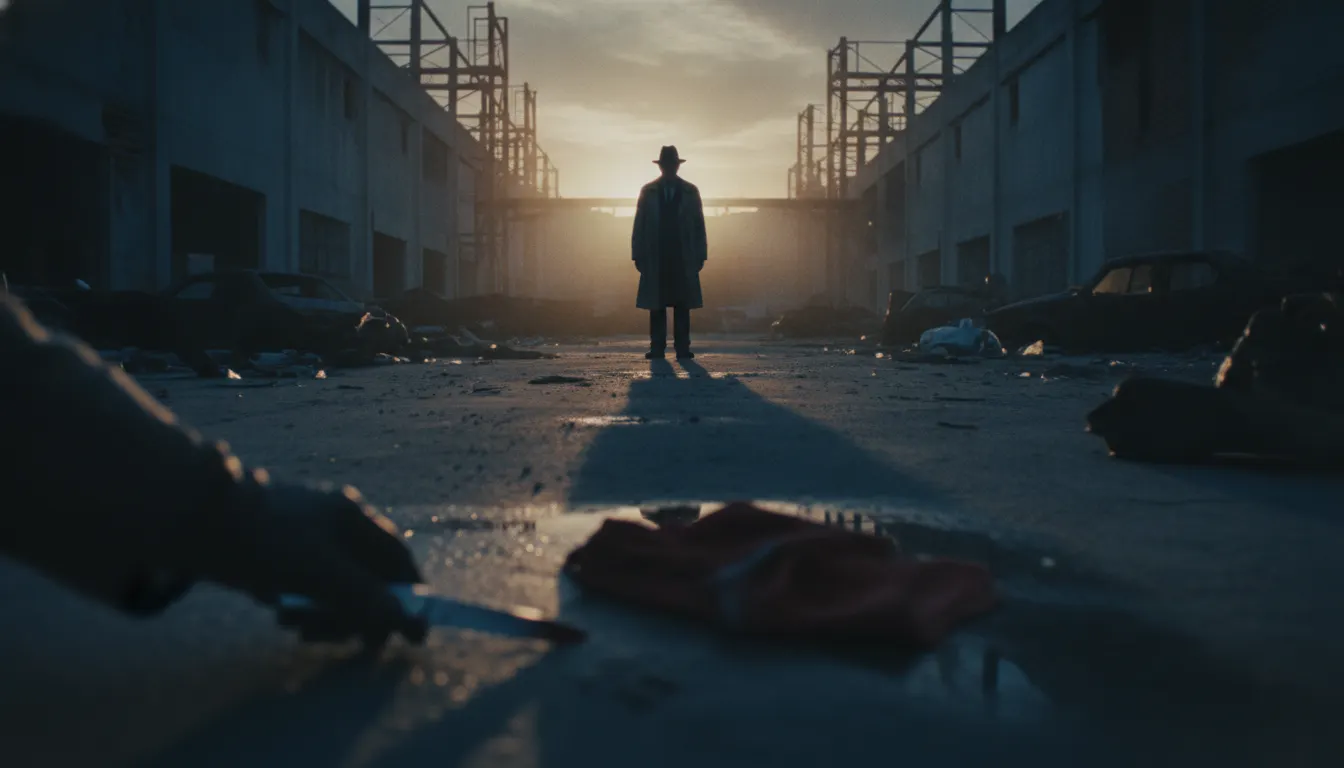
Physical objects (cup, gun, badge) are shot in extreme close-up at high frame rate, removed from narrative flow into contemplative stasis.
The same event is staged multiple times from different witnesses' accounts, each equally cinematic, demanding viewer judgment.
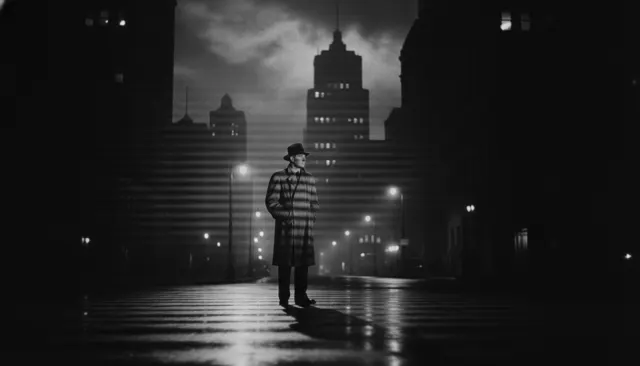
Hard single key with deep shadow and a single red practical accent replicates 1940s noir grammar in color.
Arpeggiated minimalist music that repeats without resolving provides emotional continuity across contradictory visual accounts.
Witnesses speak directly into the lens, implicating the viewer as active assessor of competing truth claims.
Court document and case record typography appears over footage, bridging the reenactment world and the official-record world.
Errol Morris's The Thin Blue Line (1988) established the stylized documentary reenactment as a serious filmmaking tool. Before Morris, reenactments were considered a compromise - a cheap substitute for footage that didn't exist. Morris inverted the logic: his reenactments were the argument. By shooting contested crime evidence in extreme close-up, slow motion, and with a deliberate noir palette, Morris was not illustrating testimony but interrogating it. Each witness gave a different account of the same night; Morris shot each account as if it were equally cinematic and equally suspect.
The central event of The Thin Blue Line - the 1976 murder of Dallas police officer Robert Wood - is reenacted five or six times in the film, each iteration corresponding to a different witness's version of events. Morris does not tell the viewer which version is true; he presents them in parallel with Philip Glass's score providing emotional continuity across contradictory accounts. The viewer is not a passive audience but an active assessor. This structure influenced every subsequent true-crime format from Serial to The Jinx to Making a Murderer.
Morris's reenactment palette was drawn from film noir: hard single key light, deep crushed shadows, practical red-brake-light accents in night exterior shots, and slow-motion insert shots of objects. A milkshake cup, a police badge, a gun holster, a car door handle - these objects received the kind of extreme close attention normally reserved for religious iconography. The slow motion removed them from the narrative flow and placed them in a contemplative register. Philip Glass's arpeggiated minimalism complemented this approach: repeated notes that don't resolve, circling the evidence without concluding.
The Thin Blue Line directly caused the release of Randall Adams, who had been on death row. The Texas Court of Criminal Appeals reversed Adams's conviction in 1989, one year after the film's release. No documentary film had previously produced a comparable direct judicial consequence. The film's approach inspired Nick Broomfield (Kurt and Courtney, Aileen), Kirby Dick, and the entire procedural-reenactment school of documentary that dominates streaming platforms today.
The Thin Blue Line style differs from Morris's Interrotron work in its relationship to the past. Interrotron films interview subjects in present tense about their memories and beliefs. Thin Blue Line reenactments stage past events with deliberate artificiality - actors standing in for subjects who are still alive and giving contradictory testimony. The artificiality is the truth. The film argues that any attempt to represent the past is a construction, and that acknowledging the construction is more honest than pretending to neutral documentation.
Errol Morris · 1988
The origin text - parallel reenactments of a 1976 Dallas murder that freed Randall Adams from death row
Errol Morris · 2008
Abu Ghraib reenactment expanding the grammar to photographic torture evidence in slow motion
Andrew Jarecki / HBO · 2015
Direct stylistic descendant - reenactments, direct address, and a real-world legal consequence
Laura Ricciardi / Monika Dee · 2015
Netflix true-crime phenomenon applying the parallel-testimony structure Morris invented
Joshua Oppenheimer · 2012
Most radical extension of Morris's reenactment logic - perpetrators restage their own crimes on camera
Nick Broomfield · 2003
Direct Morris descendant using interview and partial reenactment to construct contested criminal biography
Andrew Jarecki · 2003
Home-movie-as-evidence applying the Morris epistemological structure to found footage of a family in collapse
A Look is not a filter. It is a set of stored decisions the pipeline reads before it makes a single frame, so two videos in the same Look actually match.