MV ERA · 1970S · USA
Music Video 1970s Archival BW
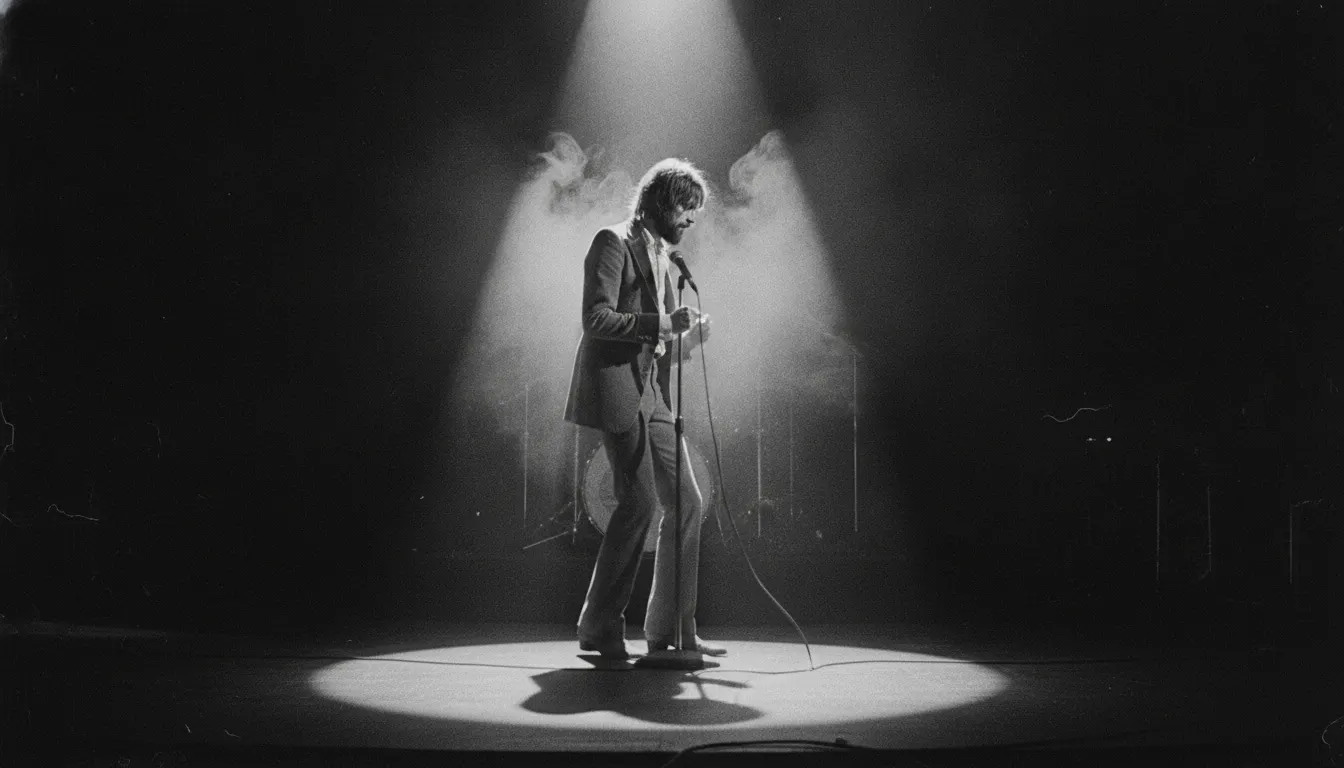
Pre-MTV 1970s archival promo film. Black-and-white 16mm performance film, single stage source, smoke and beards, Bowie and Patti Smith era.
1970sarchivalbwpromo-film
LUT archival-70s-bw-16mm
WHEN TO USE
- Documentary content about musical artists or scenes from the 1960s and 1970s
- Music content by artists whose work deliberately references classic rock, blues, soul, or jazz heritage
- Found-footage or archival aesthetic projects where pre-digital texture signals historical authenticity
- Content about social or cultural history where music was the soundtrack - civil rights, counterculture
- Biographical or portrait content where gravitas and historical weight are appropriate
- Content where the absence of commercial polish is itself an artistic statement
WHEN NOT TO USE
- Contemporary pop, R&B, or hip-hop content with modern visual expectations
- Content where the black-and-white archival look would be mistaken for low production budget
- Upbeat, aspirational brand content where historical associations compete with the message
- Content for very young audiences without a frame of reference for the era
SIGNATURE TECHNIQUES
How the look is made.
The moves a human crew would use to get here. Cue applies them for you, and knowing their names is how you ask for a change.
- 0116mm film with visible grain structure, especially in shadow areas
- 02High
contrast black-and-white processing with strong shadow areas and specular highlights on instruments
- 03Available or practical stage lighting
no fill, harsh backlights, dramatic source angles
- 04Tight close
ups of hands on instruments, faces in concentration, feet and body movement
- 05Multi
camera documentary grammar: reactive pans, missed moments, imperfect framing as authenticity
- 06Ambient sound bleed in interview footage suggesting the actual acoustic environment
- 07Archival countdown leader, splice marks, and physical damage artifacts if referencing found footage
- 08Letterbox or 4
3 aspect ratio framing referencing the television format of the era
HISTORY & CONTEXT
Where it comes from.
1970s Archival Black-and-White Music Performance Aesthetic
Before MTV and the modern concept of the promotional music video, the visual record of popular music was built through concert films, television performance programs, and documentary footage. The 1970s aesthetic of music performance on film - particularly the black-and-white and desaturated archival material that survives from this era - has become a distinct visual language in its own right, carrying associations of authenticity, historical weight, and artistic seriousness that color video rarely achieves.
Concert Documentary: The Foundational Texts
The early 1970s produced several concert films that remain benchmarks of the form. 'Woodstock' (1970, dir. Michael Wadleigh) was shot by a team that included Martin Scorsese as an editor and Thelma Schoonmaker doing some of the cutting; its split-screen 16mm documentary footage of Jimi Hendrix, Janis Joplin, and The Who established a grammar of multi-camera chaos and intimacy simultaneously. 'Gimme Shelter' (1970, dir. Albert and David Maysles with Charlotte Zwerin) documented the Rolling Stones' 1969 Altamont concert with a journalistic directness that made it one of cinema's most discussed documents of cultural collapse.
D.A. Pennebaker's work defined the decade's observational concert aesthetic: his 'Ziggy Stardust and the Spiders from Mars' (filmed 1973, released 1983) preserved David Bowie's final Ziggy performance at Hammersmith Odeon with a cinematic intimacy that theatrical release amplified. Martin Scorsese's 'The Last Waltz' (1978), documenting The Band's farewell concert at Winterland in San Francisco with Robbie Robertson, Van Morrison, Joni Mitchell, Neil Young, and Bob Dylan, represents the apex of concert film as art object: 35mm, lavish production, Boris Leven set design borrowed from a theatrical production.
Television Performance and the BBC Aesthetic
In Britain, the BBC's 'Old Grey Whistle Test' (1971-1988) and 'Top of the Pops' (1964-2006) created archives of music performance that constitute the visual record of British popular music for two generations. Whistle Test in particular, hosted by Bob Harris, favored a stripped-back studio aesthetic - bare sets, minimal lighting, camera on the performer - that suits the American singer-songwriter and British progressive rock acts it championed.
NOTABLE WORKS
Where you have seen it.
Albert Maysles, David Maysles, Charlotte Zwerin dir., 'Gimme Shelter', 1970
D.A. Pennebaker dir., 'Ziggy Stardust and the Spiders from Mars', filmed 1973
Martin Scorsese dir., 'The Last Waltz', 1978 (The Band farewell concert)
D.A. Pennebaker dir., 'Don't Look Back', 1967 (Bob Dylan UK tour)
BBC Old Grey Whistle Test, 1971-1988 (Bob Harris era performance archive)
Sydney Pollack dir., 'The Tuskegee Airmen', Aretha Franklin 'Amazing Grace' documentary (filmed 1972)
Bert Stern dir., 'Jazz on a Summer's Day', 1959 (archival reference preceding the 70s era)
THE RECIPE
The exact knobs
the renderer turns.
A Look is not a filter. It is a set of stored decisions the pipeline reads before it makes a single frame, so two videos in the same Look actually match.
SettingValue
GradeColour LUT applied to every frame
archival-70s-bw-16mmTransitionHow one shot becomes the next
dissolve cuts · 460ms · ease-in-outKen BurnsCamera move applied to stills
Slow push · 0.02 · rule-of-thirdsTypographyDisplay / body / mono pairing
Cormorant · Lora · CourierMusic moodWhat the bed under the voice sounds like
glam-rock · art-rock-stringsPrompt suffixAppended to every shot prompt in this Look
1970s pre-MTV promo film, black and white 16mm performance, single stage spot, smoke and beards, Bowie Patti Smith eraPALETTE
Primary
#1A1A1A
Secondary
#4A4A4A
Accent
#E8DDB5
Text/Light
#0A0A0A
Text/Dark
#F1E9D2
BG 900
#050505
BG 800
#141414
RELATED LOOKS
Next to it on the shelf.
Your first cut
is on us.
+ New videoFree plan · no card · 1080p export