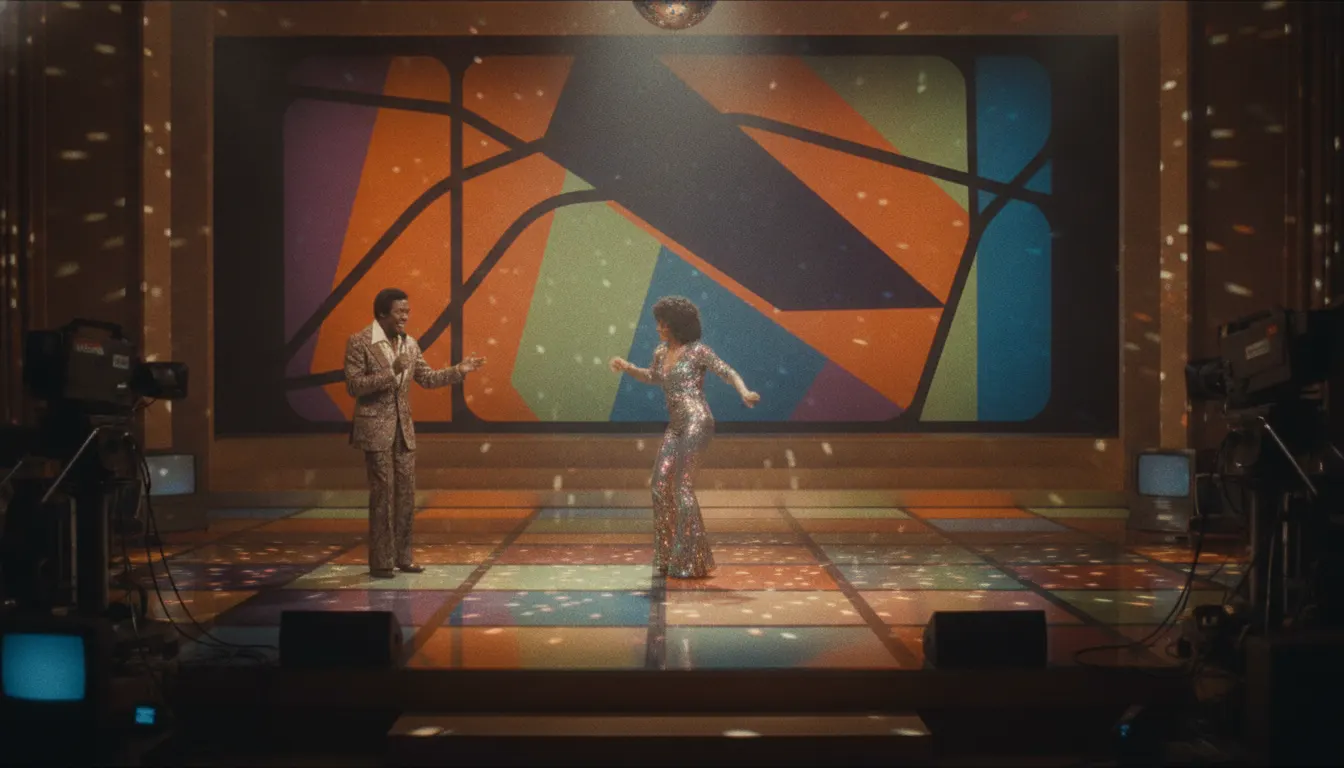
GENRE HIPHOP RB · 1970S · USA
Soul Train 1970s Stage
Soul Train 1970s broadcast stage. Bell-bottom Soul Train Line, sequined disco lights, Don Cornelius MC, color-block geometric backdrop.
soul-train1970sdiscobroadcast
LUT soul-train-broadcast-70s
WHEN TO USE
- R&B, soul, funk, or hip-hop content that draws on the Black American popular music tradition
- Content referencing 1970s fashion, culture, or the Civil Rights-era-to-disco transition
- Dance content that celebrates improvisation and community expression over choreographed precision
- Brand content for music platforms, fashion, or cultural organizations that want authentic connection to the tradition
- Content where collective joy, stylish self-presentation, and musical celebration are the primary values
- Nostalgia content for audiences who grew up watching Soul Train on Saturday mornings
WHEN NOT TO USE
- Rock, pop, or country content where the Soul Train visual vocabulary is a cultural mismatch
- Contemporary hip-hop content with its own distinct visual culture that does not reference this era
- Content that needs high-contrast modern production values rather than warm archival aesthetic
- Serious or documentary content where the celebration and joy read as tonally inappropriate
SIGNATURE TECHNIQUES
How the look is made.
The moves a human crew would use to get here. Cue applies them for you, and knowing their names is how you ask for a change.
- 01Warm tungsten lighting at 3200K
flattering, rich, slightly amber overall tone across studio
- 02Soul Train Line camera position
end-of-corridor view looking down two rows of dancers
- 031970s fashion shimmer
metallics, polyester, platform shoes reflecting warm tungsten light
- 04Audience as performer
camera finds standout individuals in the crowd whose style is content
- 05Lip
sync performance mode: artists performing to pre-recorded track with full physical commitment
- 06Don Cornelius reverse
shot: host close-up introducing acts, then cut to stage arrival
- 07Video format texture
2-inch quad or 1-inch videotape artifacts as archival visual signature
- 08Afro and natural hairstyle framing
hair as visual shape and cultural statement
HISTORY & CONTEXT
Where it comes from.
Soul Train 1970s Stage Aesthetic
Soul Train, created and hosted by Don Cornelius, ran from its Chicago origins in 1970 through its Los Angeles peak (from 1971) until 2006, making it the longest-running first-run syndicated music program in American television history. The show's visual aesthetic - the 'Soul Train Line', the dimly lit but warmly lit studio stage, the fashion, and above all the audience - created a visual archive of Black American popular music, dance, and style across four decades that remains one of television's most distinctive bodies of work.
Don Cornelius and the Visual Philosophy
Don Cornelius, who created Soul Train while working as a DJ and reporter at WVON Chicago, brought a specific visual philosophy to the show: the music and the people who love it are the spectacle, not the set. Soul Train's studio set was intentionally modest - a stage, a dance floor, a crowd, and Don Cornelius with his distinctive baritone narration. The visual complexity came entirely from the performers and audience. This philosophy was both economic necessity and aesthetic statement: it put the culture front and center and kept the production apparatus invisible.
The Soul Train Line
The Soul Train Line - two rows of audience members forming a corridor through which one or two dancers travel, improvising to the music - is the show's defining visual invention. The camera position is typically from the end of the line, looking down its length, so the viewer sees the two rows of dancers and the performance space between them. The performers who emerge from the line and dance are self-selected for maximum skill and showmanship, creating an unscripted competition that the show never had to manufacture.
Visual Grammar of the Studio
Soul Train's studio aesthetic is defined by warm tungsten lighting that flatters skin tones in a way cooler contemporary television lighting does not; the shimmer of 1970s fashion - polyester, metallics, platform shoes, afros - catching that warm light; and the energy of a studio audience that is genuinely performing for each other rather than for the camera. The video format of the era (2-inch videotape, then 1-inch, then Betacam) produces a specific visual texture that is now read as archival warmth rather than technical limitation.
NOTABLE WORKS
Where you have seen it.
Marvin Gaye Soul Train performance, 1973 ('Let's Get It On' era)
James Brown Soul Train performance, 1973
Michael Jackson and The Jacksons, Soul Train 1974 (early network-era appearances)
Tina Turner Soul Train performance, 1972
Aretha Franklin Soul Train performance, 1975
Donna Summer Soul Train performance, 1977 (disco-era)
Don Cornelius Memorial tribute, 2012 (late-era compilation of the show's visual archive)
THE RECIPE
The exact knobs
the renderer turns.
A Look is not a filter. It is a set of stored decisions the pipeline reads before it makes a single frame, so two videos in the same Look actually match.
SettingValue
GradeColour LUT applied to every frame
soul-train-broadcast-70sTransitionHow one shot becomes the next
wipe cuts · 280ms · ease-in-outKen BurnsCamera move applied to stills
Slow push · 0.05 · centerTypographyDisplay / body / mono pairing
Bungee · Inter · CourierMusic moodWhat the bed under the voice sounds like
disco-funk · philly-soulPrompt suffixAppended to every shot prompt in this Look
Soul Train 1970s broadcast stage, bell bottom Soul Train Line, sequined disco light, Don Cornelius MC, color block geometric backdropPALETTE
Primary
#F59E0B
Secondary
#7C2D12
Accent
#EC4899
Text/Light
#2A1408
Text/Dark
#FFE6CC
BG 900
#1A0808
BG 800
#2A1010
RELATED LOOKS
Next to it on the shelf.
Your first cut
is on us.
+ New videoFree plan · no card · 1080p export