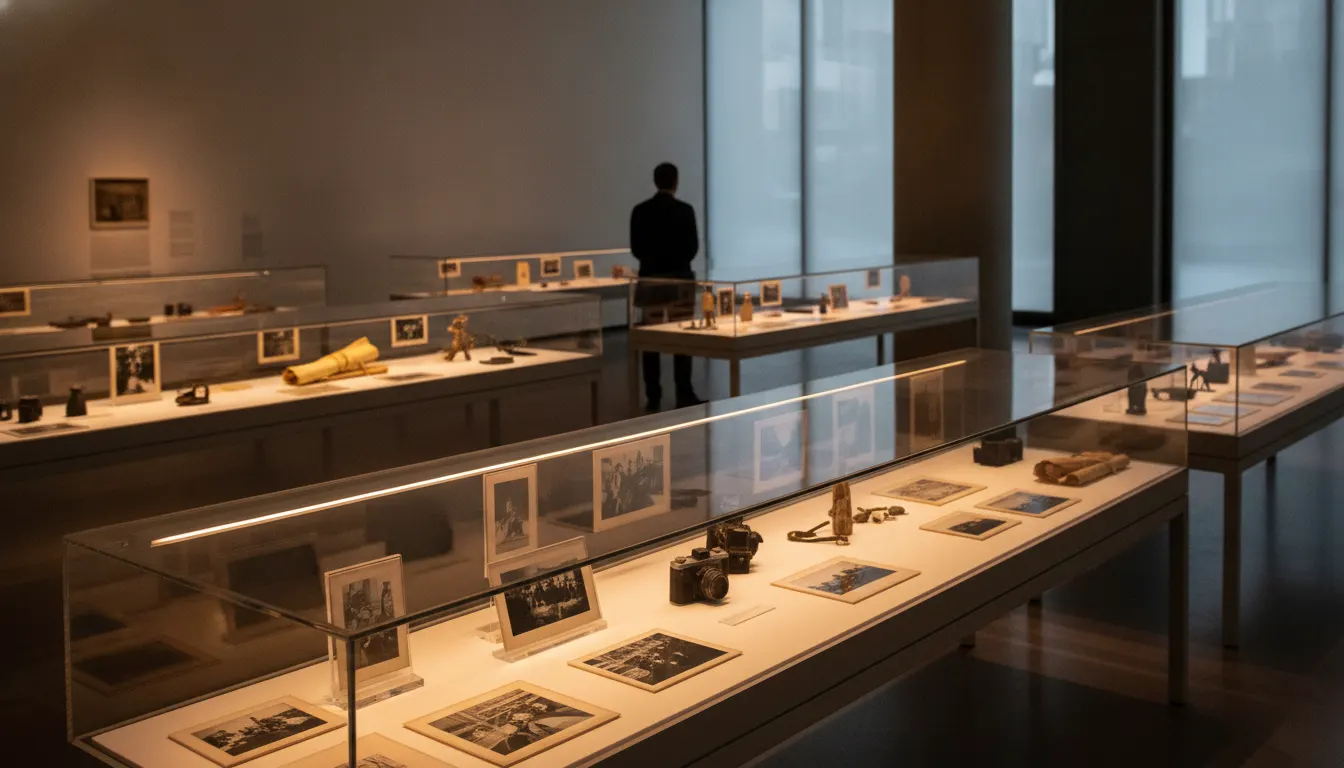
Bernd and Hilla Becher
Typologies of Industrial Buildings (1969–2009)
Museum archival display case mixing photographs and physical objects. Vitrine-style glass cases, archival mounts, foam-core stands, conservation-grade lighting, MoMA installation poise.
The moves a human crew would use to get here. Cue applies them for you, and knowing their names is how you ask for a change.
toned color grading with fine, consistent grain
tape corners, push-pin shadows, or board edge
panel annotation
The museum display archival print mix is a visual language that borrows the curatorial authority of natural history and fine art institutions. It combines archival photographic prints – silver gelatin, albumen, cyanotype, or large-format black-and-white – with the typographic conventions of the museum wall: serif caption fonts, object numbers, thin-rule borders, and muted cream-and-ivory matte surrounds. The result carries an implicit endorsement of scholarship and permanence.
The aesthetic traces directly to 19th-century exhibition culture. The Great Exhibition of 1851 at Crystal Palace established conventions for presenting objects alongside explanatory text. By the 1880s, institutions like the Natural History Museum in London and the Smithsonian in Washington had codified wall-panel typography – dense, justified text in small serif faces, mounted on board. Photographers such as William Henry Jackson and Carleton Watkins supplied large-format albumen prints to museum collections, establishing the archival photograph as an object worthy of display rather than mere illustration.
In the 20th century, photographers Bernd and Hilla Becher brought this museological frame to contemporary art with their typological grids of industrial structures (from the 1960s onward), displayed in strict grid arrangements that recalled natural history specimen cases. Their students – Andreas Gursky, Candida Höfer, Thomas Struth – extended the tradition of large-format prints demanding institutional space.
Key elements include aged paper tones (warm sepia or cool silver), fine-line borders suggesting mat windows, sans-serif object ID numbers in the lower corner, and deliberate asymmetry in text-block placement that implies scholarly annotation rather than designed layout. Archival stamps, collection watermarks, and catalog reference numbers add layers of institutional provenance.
Designers and directors deploy this look for heritage brands, documentary title sequences, museum exhibition films, and editorial spreads where weight of history is the message. Thomas Demand's photographic recreations of archival scenes (2000s) and the exhibition design of Herzog & de Meuron for the Tate Modern both draw on this vocabulary.
Color grading in this style desaturates toward warm ivory or cool silver-grey; grain is fine and consistent, suggesting high-quality enlargement rather than snapshot grain. Composite layering places photographic prints as if pinned or mounted, sometimes with visible tack-points or tape corners.
The Becher school's influence extended into the 21st century through artists like Taryn Simon (A Living Man Declared Dead, 2011) and Wolfgang Tillmans (paper drop series, 2006–present), both of whom use archival display grammar to frame documentary photography within institutional authority structures. For video practitioners, the key is that the archival print mix is always a claim about the status of its imagery: it says these images belong to a permanent collection, they are worth preserving, they document something of lasting significance. Applying this grammar to content that does not warrant that claim reads as pretension; applying it to content that genuinely carries historical weight amplifies that weight measurably.
Typologies of Industrial Buildings (1969–2009)
Libraries (2004 photobook, Schirmer/Mosel)
Museum Photographs series (1989–2001)
USGS Survey photographs (1870s, Smithsonian collections)
Yosemite albumen prints (1860s, displayed at Paris Exposition 1867)
2012
Pacific Sun and archival recreation series
2000
Tate Modern permanent collection display design
A Look is not a filter. It is a set of stored decisions the pipeline reads before it makes a single frame, so two videos in the same Look actually match.
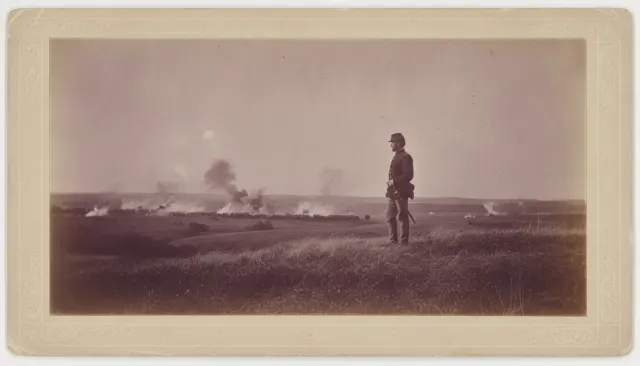 Vintage Formats ExtendedAlbumen Print 1860s Portrait
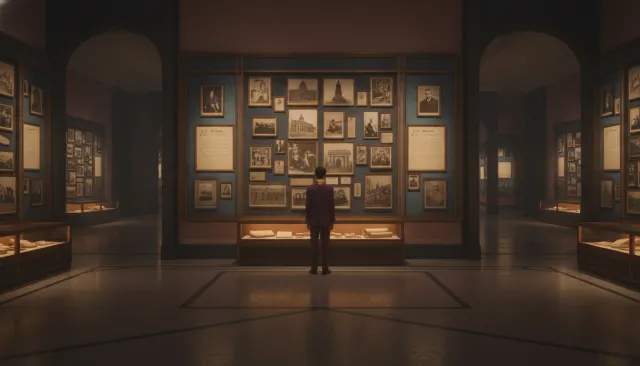 Collage CutoutMuseum Exhibit Info Card Style Mix
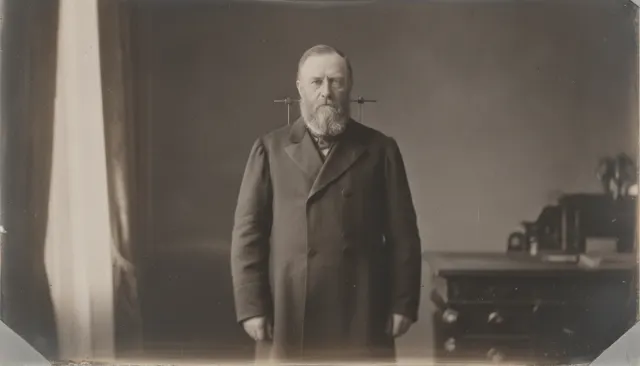 Photographic EraDaguerreotype 1840s Portrait
 Vintage Formats ExtendedCyanotype Blue Print Historical
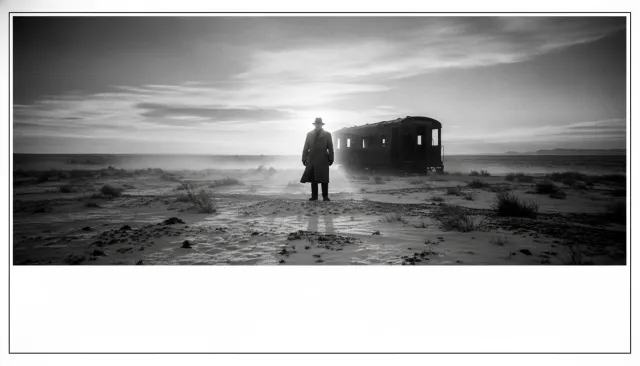 Editorial PublicationLife Magazine Photo Essay Spread
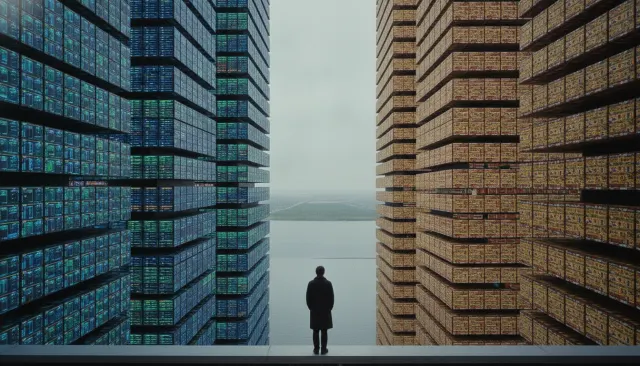 Photographers Fine ArtAndreas Gursky Large Format Monumental