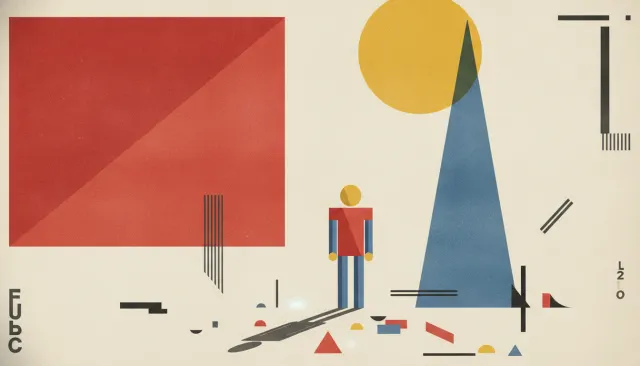
MoMA New York
object label design system (1929–present, refined under Pentagram)
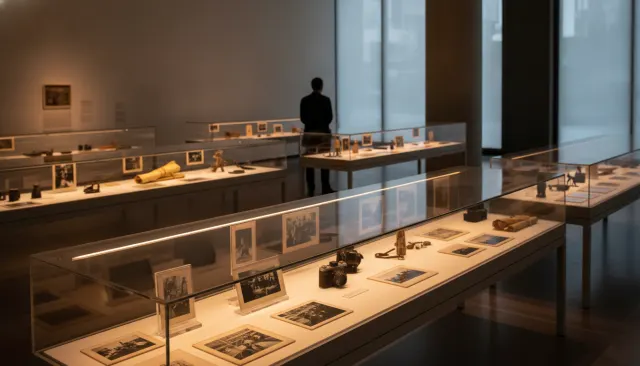
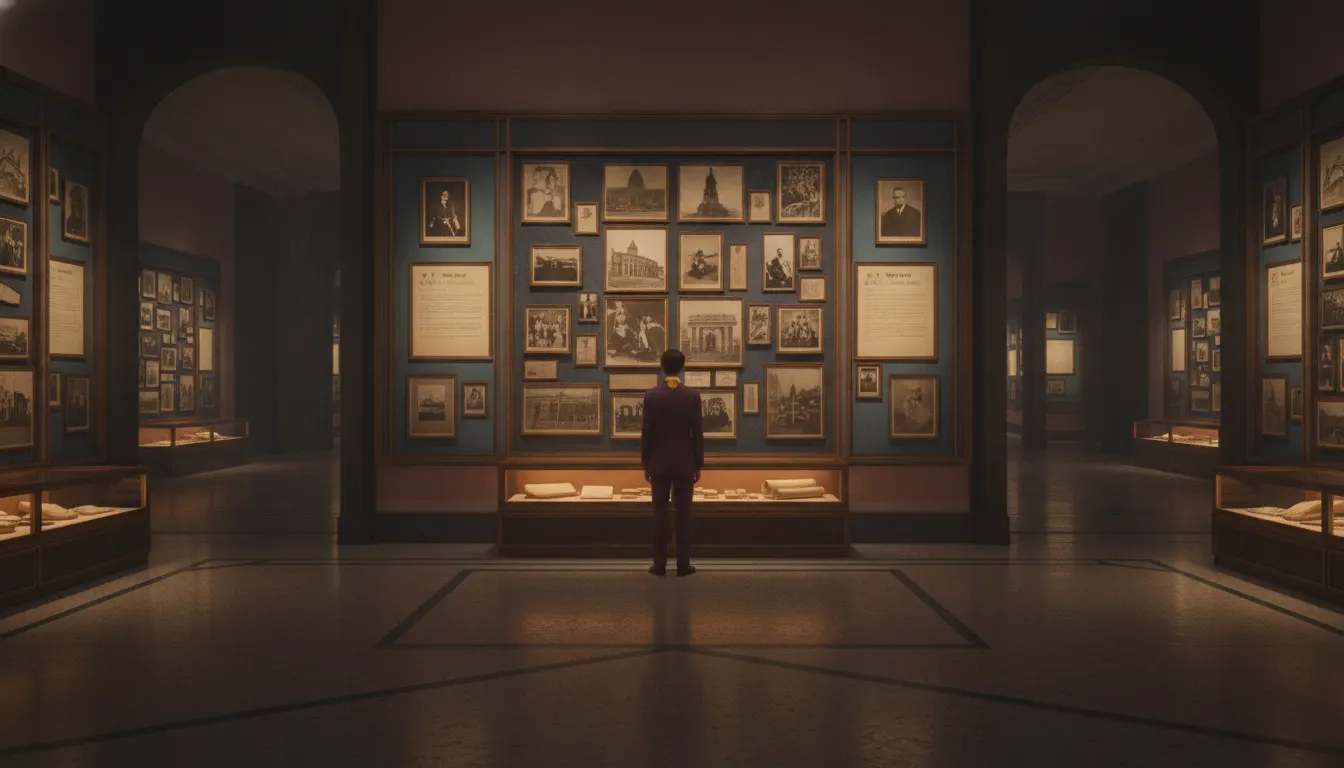
Museum exhibit info-card collage aesthetic. Live photographic artifacts paired with serif typeset wall-label cards, archival display lighting, Wes Anderson Grand Budapest curatorial neatness.
The moves a human crew would use to get here. Cue applies them for you, and knowing their names is how you ask for a change.
title, maker, date, medium, provenance at fixed scale ratios
cream, warm white, or light grey card with single-weight black type
left or bottom-right corner
all visual interest comes from spacing and weight contrast
uncoated or matte-laminate paper feel, sometimes light linen grain
The museum exhibit info card style is the visual language of institutional explanation: the small, typographically controlled cards that appear beside objects in natural history museums, science centers, and contemporary art galleries. Stripped to essentials, the format communicates through hierarchy – object name in large Roman or Grotesque type, medium weight; donor credit or catalog number in smaller italic; a brief explanatory paragraph in a workhorse body face. The palette is determined by the institution: cream cards with black Univers at MoMA, light grey with Helvetica Neue at Tate Modern, warm off-white with Johnston at the V&A.
Museum label typography has a long institutional history shaped by legibility research rather than aesthetic fashion. In the 1970s, Philip Hughes at the Science Museum London formalized guidelines around reading distance and type size. The influential 1987 Smithsonian publication Doing It Right codified the hierarchy of wall labels. Contemporary practitioners like Sue Runyard and Beverly Serrell (her 2015 book Exhibit Labels) have continued refining the discipline.
The MoMA object label – a design object in its own right since the museum's 1929 founding – uses a precise grid: object title flush-left in medium weight, artist name and dates below, then medium and dimensions in smaller type, then provenance text. This grammar is so widely recognized it can be deployed ironically (as in contemporary art that critiques institutional framing) or sincerely.
In video, the info-card style appears as lower-thirds with rigid baseline grids, chapter cards with restrained typographic hierarchy, or full-frame interstitial slides that treat each person or object as a specimen being introduced. Directors use it for documentary credibility (Errol Morris adopted stark white-on-black title cards in The Thin Blue Line, 1988), explainer series, and branded content that wants to signal intellectual seriousness.
Key fonts associated with the look: Univers (Adrian Frutiger, 1957), Helvetica (Max Miedinger, 1957), New Johnston (London Transport), Gill Sans (Eric Gill, 1928–1930). Rule lines, object codes, and thin dividers carry the institutional grammar even at small scale.
The info card aesthetic migrated into digital product design as the concept of UI as informational hierarchy: Apple's iOS notification cards (from 2013), Google Material Design's card components (2014), and the data card formats of dashboard applications all derive visual logic from the museum label's information tiering. Designers at Pentagram (who have worked with multiple major museums) have explicitly cited museum label systems as precedents for digital card UI.
In video, the look appears in the lower-third conventions of high-production-value documentary: thin rule, flush-left name in medium sans, role title below in lighter weight, brief description beneath. The BBC's documentary lower-thirds follow a close variant of this grammar. In social media and branded content, the info-card format is used as an interstitial to introduce contributors, products, or statistics with calm institutional authority that contrasts effectively with the surrounding video energy.
object label design system (1929–present, refined under Pentagram)
gallery didactic panel system (since 2000, Cartlidge Levene)
*The Thin Blue Line* title cards (1988, stark info-panel typography)
Johnston-based label system reflecting London Transport heritage
1987
*Doing It Right* label standards publication
*Exhibit Labels: An Interpretive Approach* (2015, AltaMira Press)
Science Museum London legibility research (1970s)
A Look is not a filter. It is a set of stored decisions the pipeline reads before it makes a single frame, so two videos in the same Look actually match.