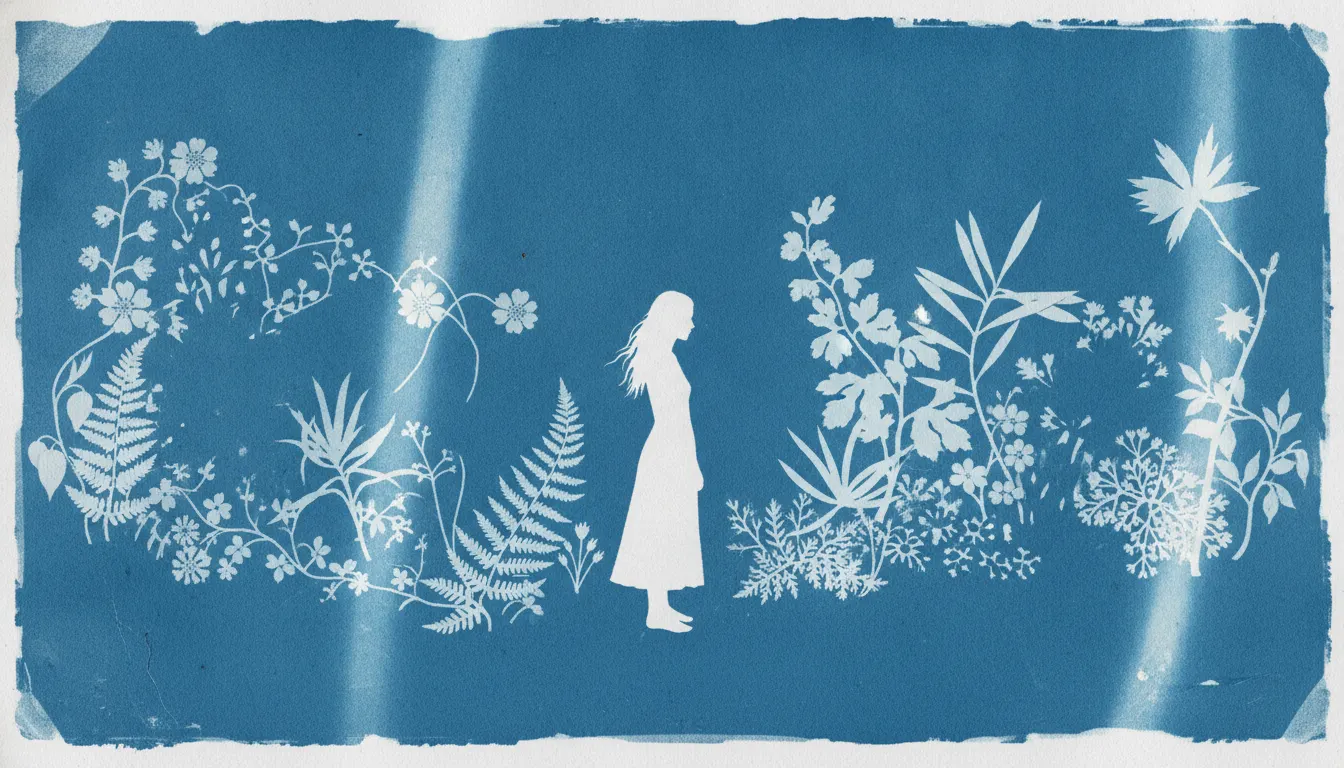
Anna Atkins
*Photographs of British Algae: Cyanotype Impressions* (1843-1853), first photographically illustrated book
Cyanotype Prussian-blue contact print. Anna Atkins botanical, hand-coated paper, sunlight UV exposure, white silhouette on cyan-blue ground.
The moves a human crew would use to get here. Cue applies them for you, and knowing their names is how you ask for a change.
blue highlights - deep blue shadows, bright whites
objects placed directly on sensitized paper for silhouette precision
tones distinct from the crispness of silver-gelatin prints
format negatives or transparent objects for full detail
development toning with tea or tannic acid to shift blue toward purple or green-blue
The cyanotype process was invented in 1842 by British scientist Sir John Herschel, who discovered that ferric ammonium citrate and potassium ferricyanide, when coated on paper and exposed to ultraviolet light, produce a striking Prussian-blue image. Unlike silver-based processes of the era, the cyanotype was inexpensive, required no darkroom for development, and fixed itself simply by rinsing in water.
The process found its first great practitioner in botanist Anna Atkins, who in 1843 produced Photographs of British Algae: Cyanotype Impressions - widely recognized as the first book illustrated with photographic images. Atkins used the photogram variant of the process, placing actual algae specimens directly on sensitized paper to create ghostly, precise white silhouettes on deep cobalt grounds. Her work remains the canonical reference for the aesthetic.
Cyanotypes are defined by their uniform Prussian blue field and the stark, high-contrast inversion of tonal values - shadows read as white, highlights as deep blue. Photograms produce crisp botanical or object silhouettes. Camera-exposed cyanotypes on paper or fabric read as painterly, somewhat grainy, with soft edges compared to silver albumen prints. The blue palette carries associations of scientific exactitude alongside handcrafted intimacy.
Architects and engineers adopted the process wholesale in the mid-1800s, giving us the word "blueprint" for technical drawings. The process fell largely out of mainstream photographic use by the early 20th century but has experienced sustained revival in fine-art printmaking, alternative-process photography workshops, and craft communities since the 1970s.
Contemporary photographers like Christina Z. Anderson and Mike Ware have published extensively on refined cyanotype chemistry, producing richer tonal gradations than classic formulas allowed. The look appears regularly in wedding photography, textile printing (cyanotype on cotton or denim), and conceptual fine-art series.
*Photographs of British Algae: Cyanotype Impressions* (1843-1853), first photographically illustrated book
1853
*Cyanotypes of British and Foreign Ferns* , Victoria and Albert Museum collection
1842
original test prints demonstrating the iron-salt process
2011
*Cyanomicon* , definitive technical treatise on new-process cyanotype
contemporary alternative-process cyanotype fine-art series
the industrial legacy of the process
A Look is not a filter. It is a set of stored decisions the pipeline reads before it makes a single frame, so two videos in the same Look actually match.
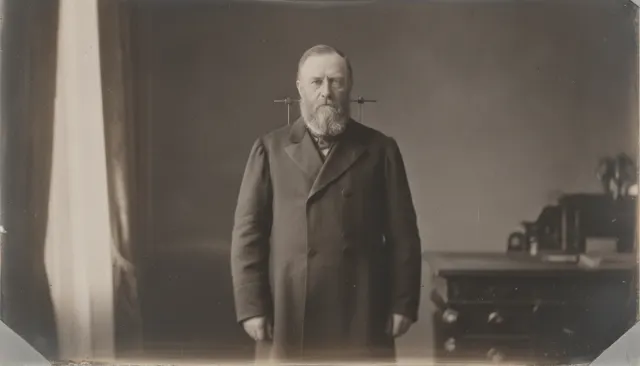 Photographic EraDaguerreotype 1840s Portrait
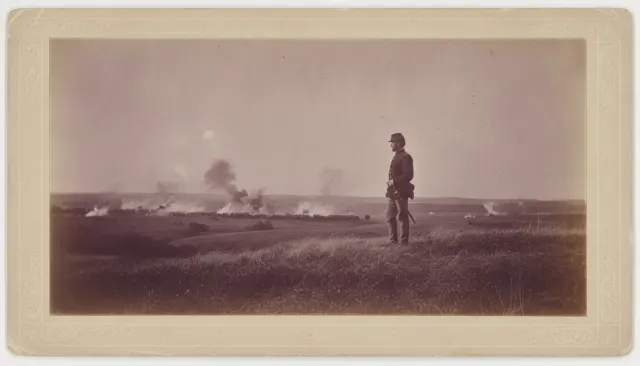 Vintage Formats ExtendedAlbumen Print 1860s Portrait
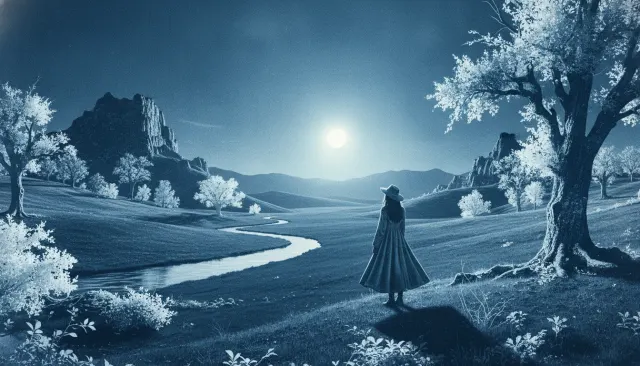 Print Process HybridBlueprint Cyanotype Mix with Photo
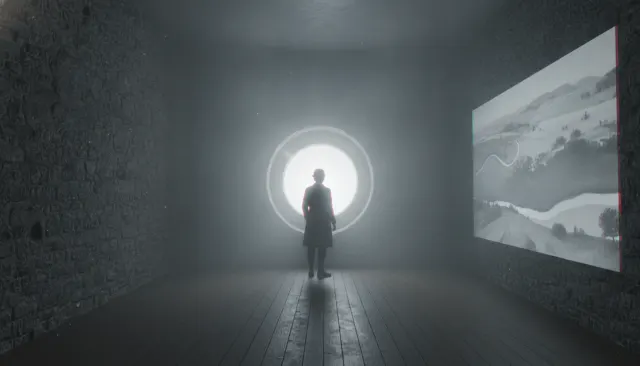 Analog Camera ExtendedCamera Obscura Pinhole Historical Aesthetic
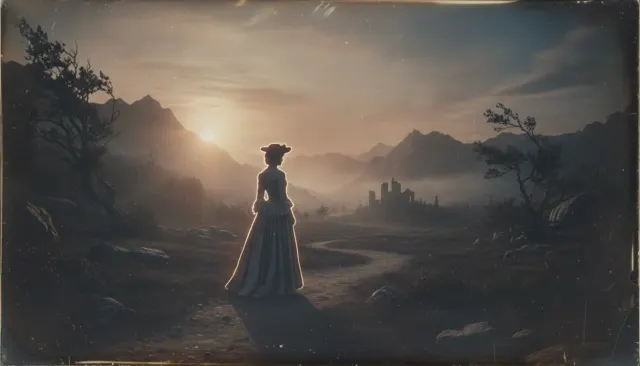 Analog Process ExtendedDaguerreotype Modern Recreation
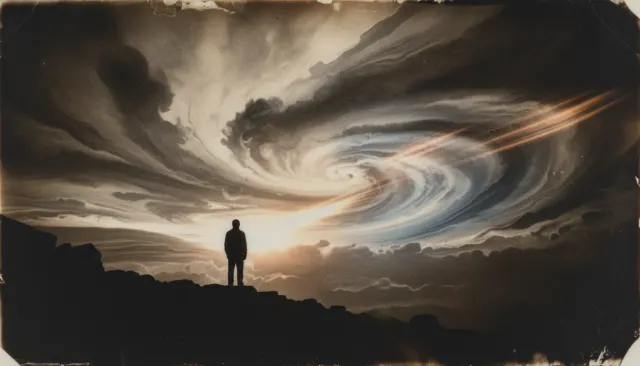 Physical ProcessChemigram Acidic Darkroom