Johannes Vermeer 'The Music Lesson' (c. 1662-1665)
art-historical camera obscura attribution (Philip Steadman, 2001)
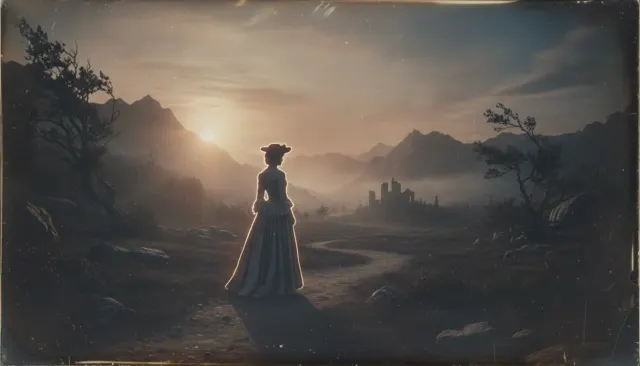
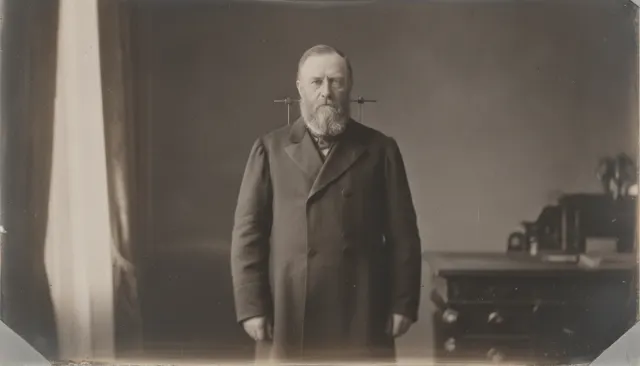
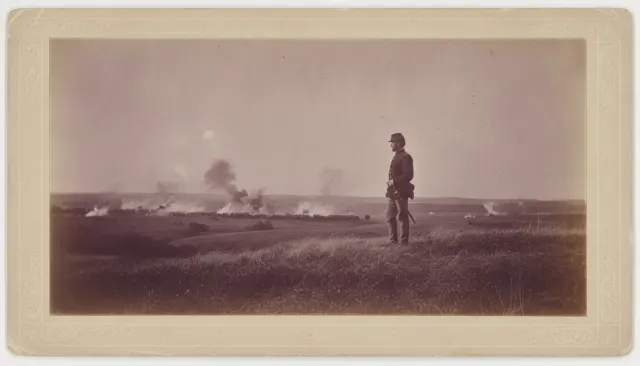
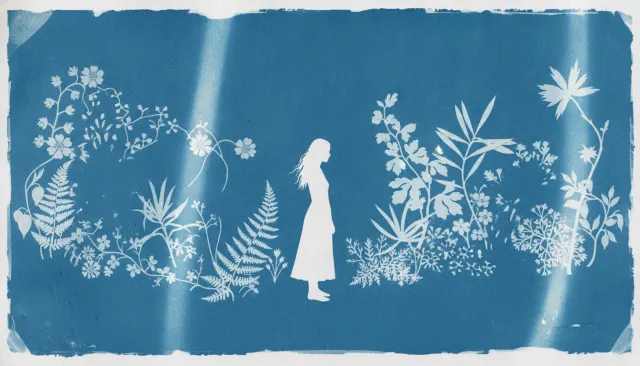
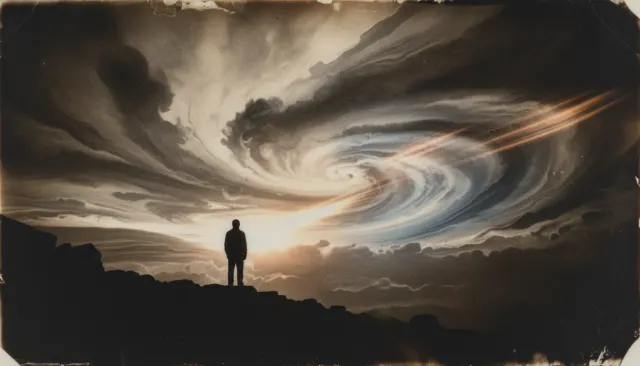
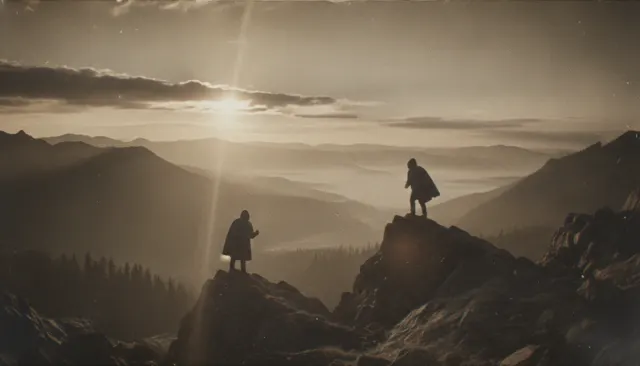
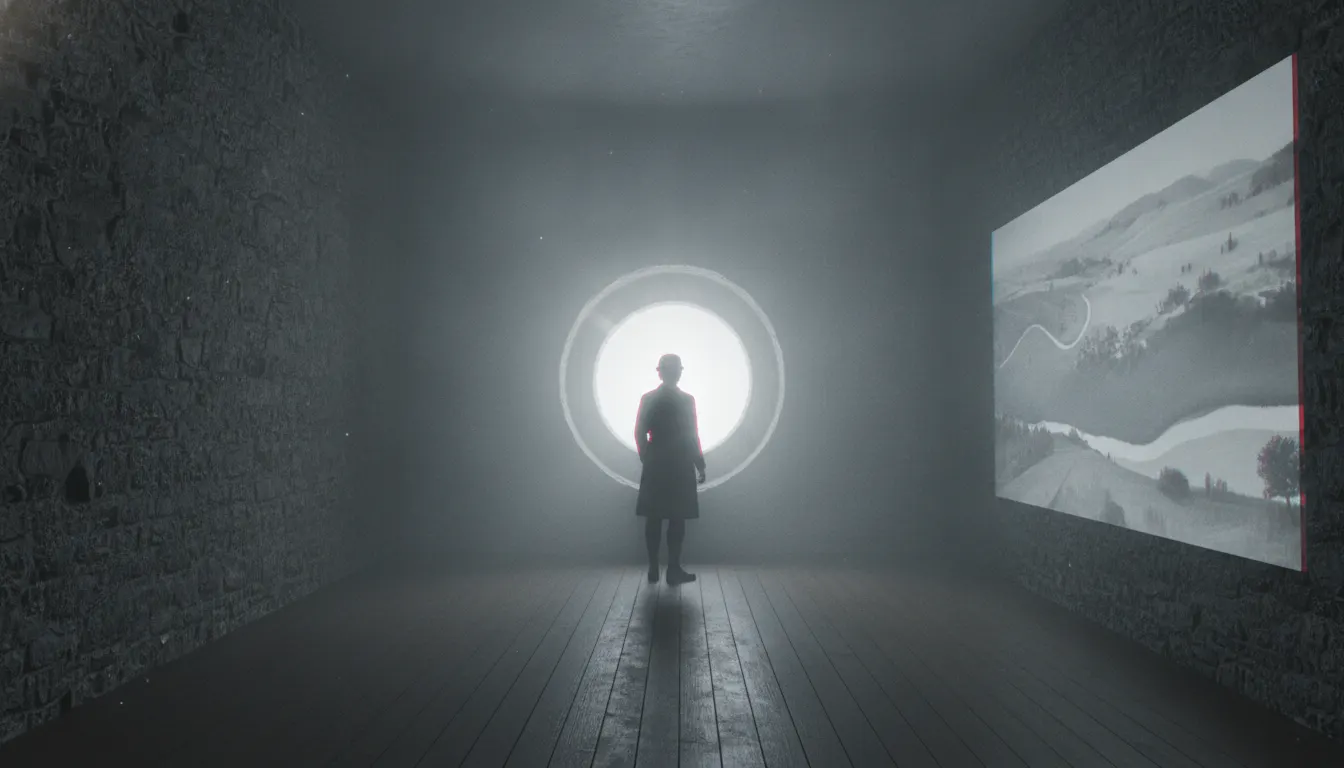
Pre-photographic camera obscura projection aesthetic. Soft inverted scene projected onto matte interior surface, slight chromatic edge, atmospheric haze, historical optical-room mood.
The moves a human crew would use to get here. Cue applies them for you, and knowing their names is how you ask for a change.
every plane equally blurred by diffraction, not aperture
highlights and shadows both retain detail due to slow, cumulative exposure
The camera obscura - Latin for 'dark room' - is the optical principle underlying all photography: light passes through a small aperture into a darkened space, projecting an inverted image of the exterior scene on the opposite wall. Arab polymath Ibn al-Haytham (Alhazen) provided the first systematic optical description in 'Kitab al-Manazir' (Book of Optics, c. 1021 CE), explaining image formation through rays in a pinhole device. By the Renaissance, portable box versions were in use as drawing aids: Giovanni Battista della Porta documented one in 'Magia Naturalis' (1558), and art historians including Philip Steadman have argued from technical-optical evidence that Johannes Vermeer used a camera obscura to achieve his precise perspective and tonal relationships in works like 'The Music Lesson' (c. 1662-1665). Antonio Canaletto's topographical precision in his Venice vedute paintings (1720s-1750s) is similarly attributed to camera obscura use.
Sir David Brewster coined the term 'pinhole camera' in 1856. The pinhole - a sub-millimetre aperture in opaque material, typically 0.2–0.5 mm - produces images with infinite depth of field, soft blur throughout (no lens aberrations), circular diffraction halos around bright sources, and an exposure time measured in seconds to hours in natural light. The resulting image has a distinctive character: everything is soft but not bokeh-blurred in a lens-like way; the blur is uniform, diffuse, and slightly dreamlike. Shadows lack the sharp edges of lens-rendered images.
Room-sized camera obscura installations - where an entire room becomes the dark chamber - have a long history as both public spectacle and artistic medium. The Camera Obscura on Calton Hill, Edinburgh (established 1853) is one of the oldest public science attractions in the world. Abelardo Morell's long-exposure photographs of hotel rooms with camera obscura window projections (1991-present) brought the room-scale tradition into contemporary fine art; his 'Tent Camera' portable tent-camera (2009) allowed him to photograph landscapes with the exterior scene projected onto the ground inside the tent, inverted and overlaid on grass or rock.
Pinhole photography emerged as a fine art practice in the 1970s-80s - Eric Renner founded the Pinhole Resource collection (1985) and journal, documenting the form globally. Contemporary practitioners include David Burnett (press photographer who covered the 2004 Athens Olympics with a pinhole camera), Diane Fenster (digital pinhole composites), and Wayne Martin Belger (titanium pinhole cameras made from anatomical specimens including a human skull). The Worldwide Pinhole Photography Day (WPPD), held annually on the last Sunday of April since 2001, documents thousands of contemporary practitioners globally. The aesthetic signals slowness, pre-technological meditation, and alchemical craft - it has been adopted by luxury watch brands, architectural firms, and documentary filmmakers seeking to invoke historical gravity.
art-historical camera obscura attribution (Philip Steadman, 2001)
camera obscura as topographical instrument
celebrated press photography application
extreme craft framing of the form
long-exposure cinema work using large-format with pinhole-like qualities
adjacent pre-photographic aesthetic
room-sized camera obscura projections photographed
A Look is not a filter. It is a set of stored decisions the pipeline reads before it makes a single frame, so two videos in the same Look actually match.