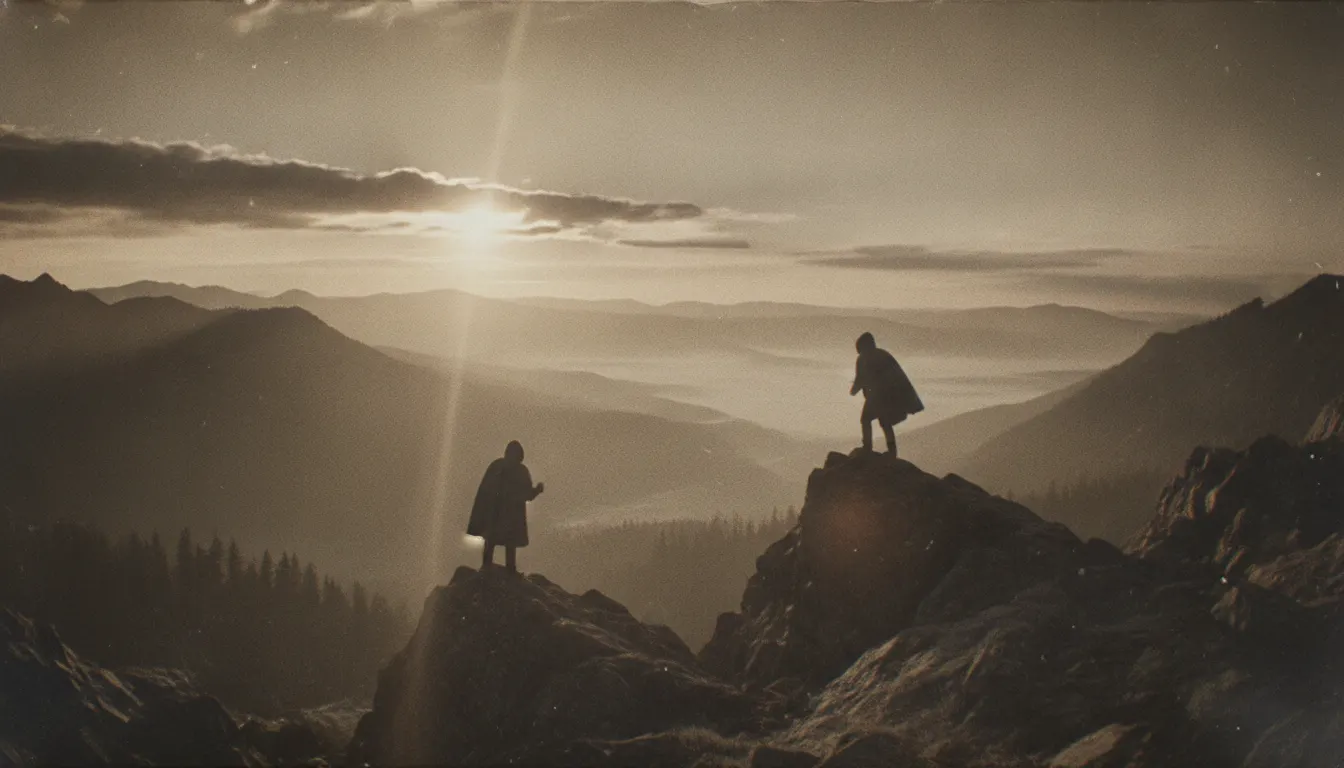
Zero Image ZeroImage 2000 multi-pinhole camera (handcrafted teak body)
accessible fine art double-pinhole tool
Experimental double-aperture pinhole camera. Two ghost-overlaid exposures of the same scene shifted in space, organic chromatic fringing, soft long-exposure halation.
The moves a human crew would use to get here. Cue applies them for you, and knowing their names is how you ask for a change.
two pinholes at 10-60mm lateral separation, both projecting onto the same film/sensor plane
offset geometry: close subjects produce merged images; distant subjects produce clearly doubled laterally offset versions
no single sharp plane - both ghost layers equally diffuse
interference fringe: where the two projected image circles meet, constructive/destructive light interference creates unusual brightness variations
pinhole exposures on the same frame as a temporal variant
Double pinhole photography uses a camera body with two separate pinhole apertures - positioned apart on the same plane - so that both apertures project light onto the same piece of film or sensor simultaneously. The result is a ghosted composite image in which the same scene is recorded twice, offset by the distance and angle between the two pinholes. Depending on aperture separation (typically 10-60mm on a medium format or large format body), subject distance, and the relationship between the two projected image circles, the double pinhole can create stereo pair overlay effects, pronounced ghosting on close subjects, edge-sharpening interference patterns, or bizarre spatial distortions.
Each individual pinhole produces the characteristic universal-focus, soft-diffraction image of a single pinhole (see: Camera Obscura / Pinhole Historical Aesthetic). The double system creates a superimposition that varies dramatically with subject distance: subjects beyond approximately 3 metres appear nearly doubled with a lateral ghost; subjects at 0.5-1 metre appear as merged single entities with edge fringing; subjects very close to the aperture plane show split-image stereo effects. The overlap geometry means no single focus plane exists - the entire spatial field is doubly resolved with offset centers. The Pinhole Resource (founded by Eric Renner, 1985) documented early systematic work with multiple apertures; the Zero Image company produces handcrafted multiple-pinhole cameras in formats from 35mm to 4x5.
Double pinhole cameras are frequently used in process-driven fine art photography where the unpredictability of the overlap is embraced as a generative element. The camera can be moved between two exposures on the same frame (creating temporal double exposure in addition to the spatial doubling), or both apertures can be active simultaneously, recording the same moment from two spatially offset perspectives. Artists working in this domain include David Burnett (who used multiple pinhole cameras for press coverage), Wayne Martin Belger (elaborate handmade cameras including multi-aperture variants), and the broader experimental camera community documented in the annual Worldwide Pinhole Photography Day (WPPD, held annually since 2001).
When the two pinholes are separated by approximately the interpupillary distance (63-65mm), the double pinhole camera produces a stereo pair that can be viewed with a stereoviewer or processed into an anaglyph (red-cyan 3D image). The soft pinhole optics actually help stereo viewing: the lack of sharp depth-of-field artifacts reduces eye strain compared to sharp-lens stereo pairs. Victorian-era stereoviewer culture used lens-based stereo cameras; the pinhole stereo variant is a contemporary experimental revival.
The double pinhole look is characterized by its ghosting duality: two versions of the same subject, slightly offset, creating an impression of temporal uncertainty or perceptual multiplicity. The universal softness of pinhole optics means both ghost images are soft, unlike the sharp-soft contrast of lens bokeh. This produces a meditative, uncertain quality distinct from any lens-based double exposure. Digital simulation of the double pinhole effect uses displacement maps with two offset copies of the base image at low opacity, combined with universal Gaussian blur at equivalent pinhole f/stop softness (typically simulated at f/200-f/600), plus heavy radial vignetting on each aperture's image circle independently.
accessible fine art double-pinhole tool
archive including multiple aperture experimental works
community multiple-pinhole entries
extreme craft object cameras with multiple pinholes
2004
institutional application
related multiple-aperture room installations
technical documentation
multiple-pinhole camera building documented
A Look is not a filter. It is a set of stored decisions the pipeline reads before it makes a single frame, so two videos in the same Look actually match.
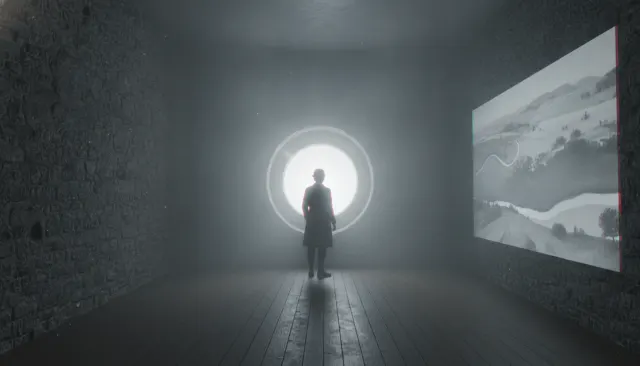 Analog Camera ExtendedCamera Obscura Pinhole Historical Aesthetic
 Photo ExperimentalDouble Exposure Film Overlay
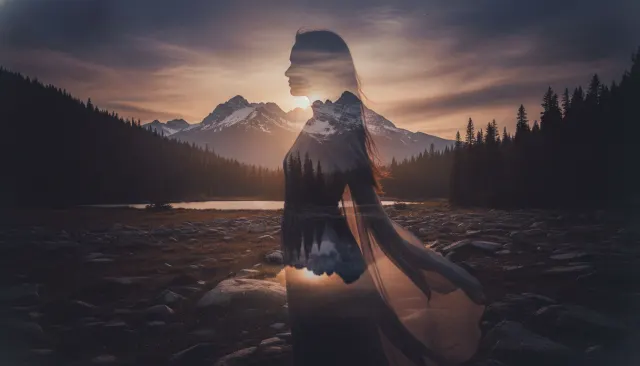 Media Decay PhysicalDouble Exposure Portrait Nature
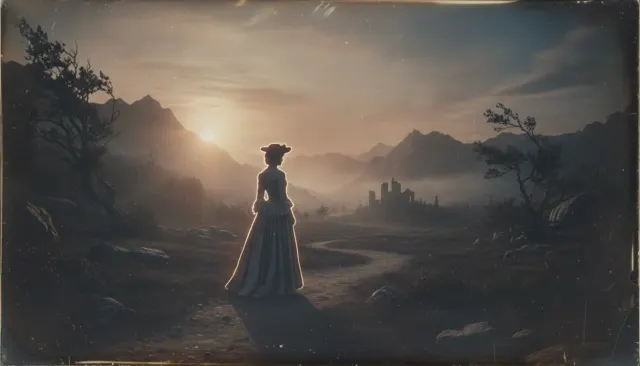 Analog Process ExtendedDaguerreotype Modern Recreation
 Physical ProcessChemigram Acidic Darkroom
 Media Decay PhysicalFilm Burn Edge Light Leak