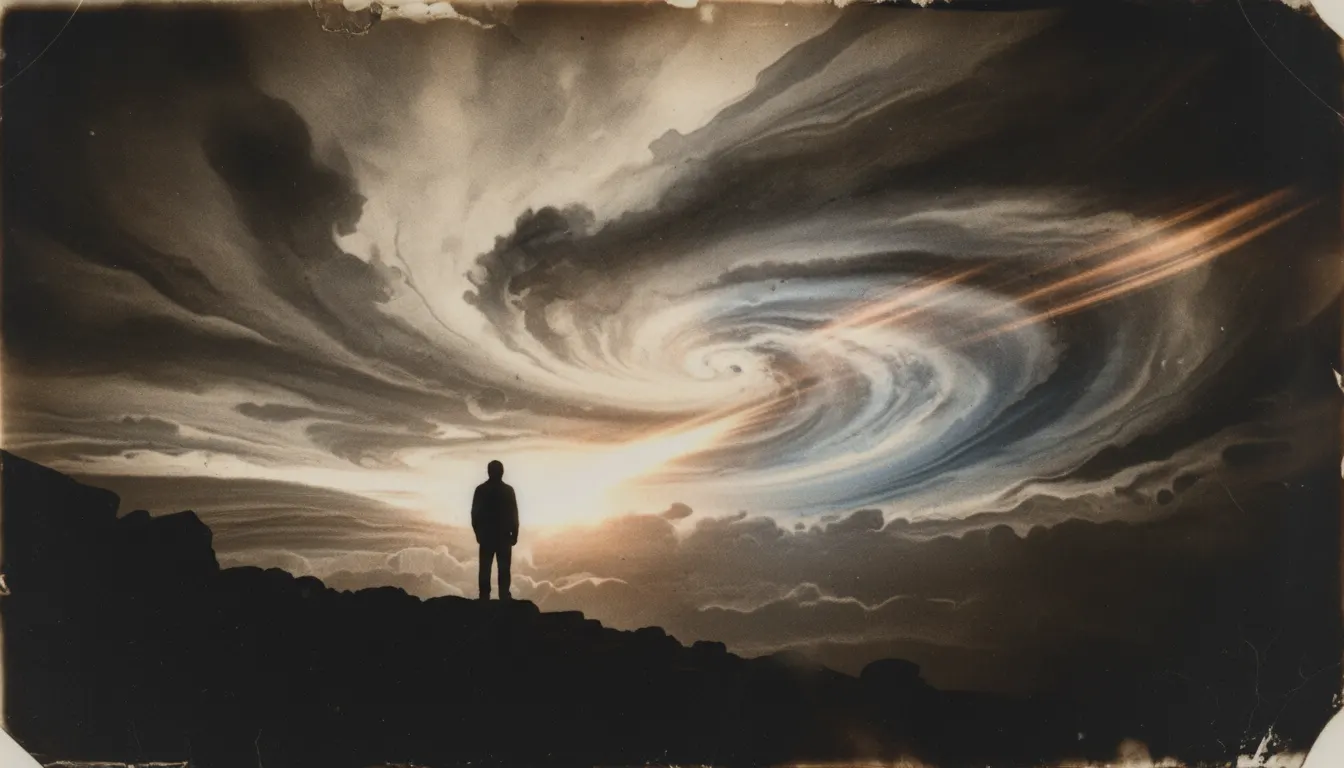
Pierre Cordier 'Chemigram 29/12/56'
1956
first chemigram, origin artifact of the form
Chemigram darkroom aesthetic. Photographic paper painted with resist and dipped in developer and fixer baths, abstract organic stains, no camera involved.
The moves a human crew would use to get here. Cue applies them for you, and knowing their names is how you ask for a change.
defined patterning: blob, streak, and pooled shapes from varnish, oil, or wax application before chemical immersion
texture at resist margins - fractal branching patterns from fixer migration
dense black, warm sepia (#704214), amber (#FFBF00), oxidized cream (#F5E6D0)
mark rings of silver sulfide at the perimeter of resist areas, creating halo effects
and-develop passes on the same sheet
no clean geometric boundaries; all shapes biomorphic and fluid
texture from the paper fiber showing through semi-developed areas
The chemigram is a cameraless photographic technique invented by Belgian artist Pierre Cordier in 1956. Working without a camera, enlarger, or darkroom in the traditional sense, Cordier applied resist materials - varnish, oil, wax, honey, nail polish, petroleum jelly - to the surface of light-sensitive photographic paper, then immersed it in developer and fixer solutions. The resist selectively blocks the chemical action, creating complex gradients of deep blacks, warm sepias, cream whites, and oxidized ambers that resist lens-based photographic description. Cordier coined the term 'chemigram' by combining 'chemo-' (chemistry) and '-gram' (writing/drawing).
Chemigrams produce imagery that looks fundamentally unlike lens photography. The visual field is organized by chemistry rather than optics: crystalline dendritic patterns form where fixer solution migrates under resist edges; tide-mark rings of silver sulfide appear at the margins of resist blobs; areas of complete development produce pure blacks while fully fixed areas produce bright white or cream. The palette is narrow - black, sepia, amber, off-white - but extraordinarily textured, with fractal micro-detail in the crystalline deposits. Multiple resist applications on a single sheet build up geological strata-like layers of pattern.
Cordier developed the form throughout his career, producing works that entered museum collections including the Museum of Modern Art (New York) and the Bibliothèque nationale de France. Christian Schad's 'Schadographs' (1918, placing objects on paper in light) and Man Ray's Rayographs (1921) are adjacent cameraless antecedents, though the specifically chemical-resist mechanism distinguishes Cordier's invention. Contemporary practitioners include Scott McMahon and the global chemigram network documented through the Chemigram Society. Digital interpretations use noise and grain compositing, chemical-stain Photoshop brushes, and oxidation texture overlays to simulate the effect in post-production.
The standard chemigram workflow begins with unexposed, unprocessed photographic paper - typically silver gelatin RC paper - that is first partially immersed in developer to pre-develop the base tone, then pulled, dried, coated with resist (varnish daubed with a brush, oil smeared with fingers, wax crayon rubbed directly), and re-immersed. Developer penetrates the resist partially, creating intermediate tones; fixer clears the resist zones. Multiple cycles build the strata. Advanced practitioners use Lith developer (which produces a warm brown-to-black infectious development pattern distinct from standard black-and-white developer), selenium toner (adding archival stability and a cool purple-brown shift), and food substances including honey, jam, and cooking fat as water-soluble resists that allow partial penetration.
The chemigram sits at the intersection of photogram (cameraless light-based image) and chemical painting. It has inspired a generation of experimental photographers, including those working with expired photographic papers, Lith printing (which exploits infectious development), and bleach-bypass processes. The intentional degradation and chemical unpredictability align it with Fluxus-era process art and the contemporary analog revival. Digital simulations of chemigrams use noise and grain overlay compositing, chemical-stain Photoshop brushes from libraries like RetroSupply, and oxidation/rust texture packs applied on Multiply or Color Dodge blend modes, often combined with desaturation and selective sepia toning to approximate the narrow but richly textured palette.
1956
first chemigram, origin artifact of the form
defining museum-quality examples
adjacent cameraless antecedent using light rather than chemistry
1918
earlier cameraless photographic process
contextualized chemigram in experimental photography
contemporary practitioner network
contextualizing cameraless traditions
A Look is not a filter. It is a set of stored decisions the pipeline reads before it makes a single frame, so two videos in the same Look actually match.
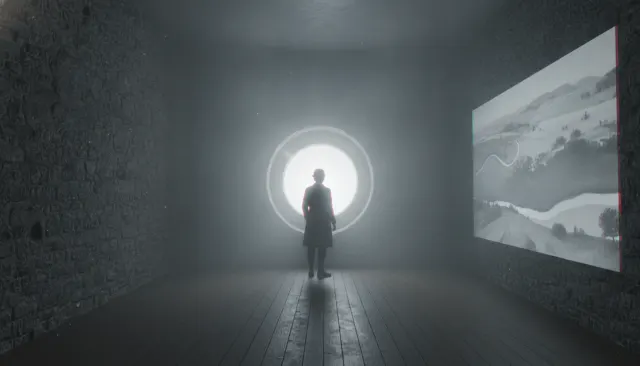 Analog Camera ExtendedCamera Obscura Pinhole Historical Aesthetic
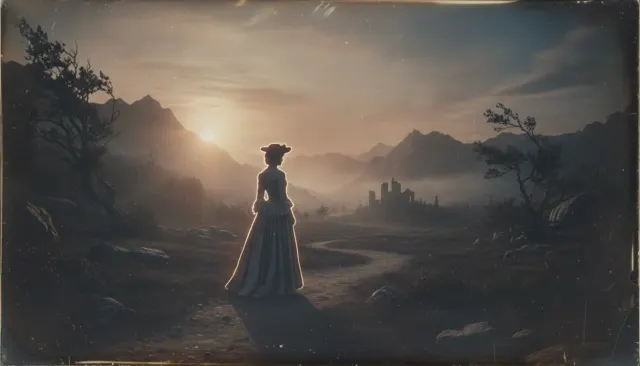 Analog Process ExtendedDaguerreotype Modern Recreation
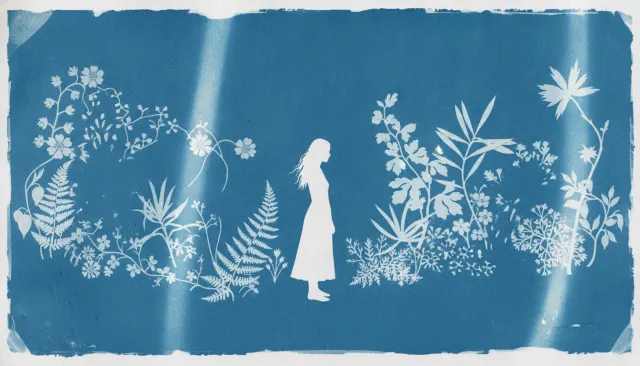 Vintage Formats ExtendedCyanotype Blue Print Historical
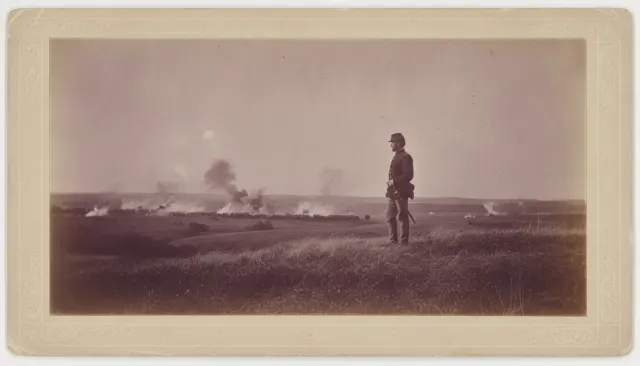 Vintage Formats ExtendedAlbumen Print 1860s Portrait
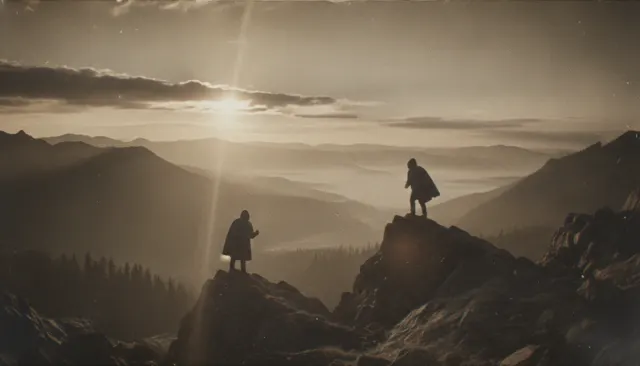 Analog Camera ExtendedDouble Pinhole Experimental
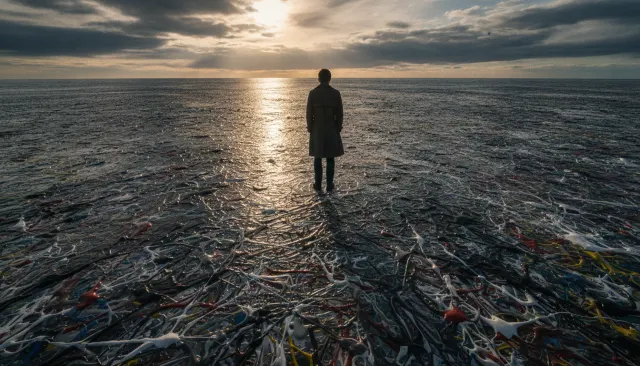 Art Movement ModernAbstract Expressionism Pollock