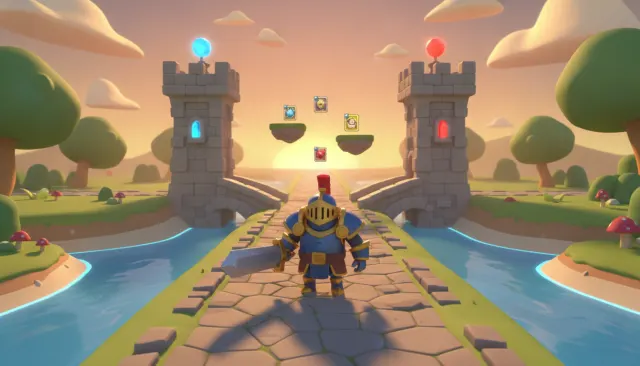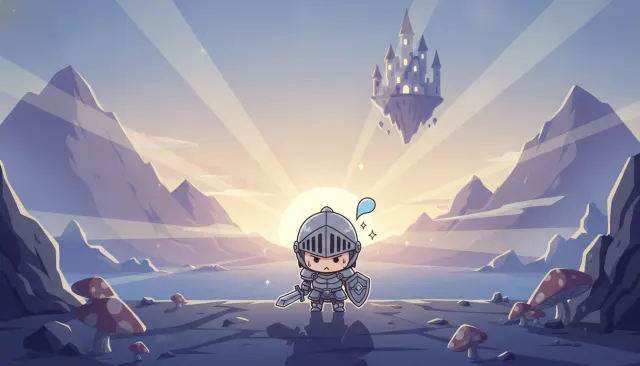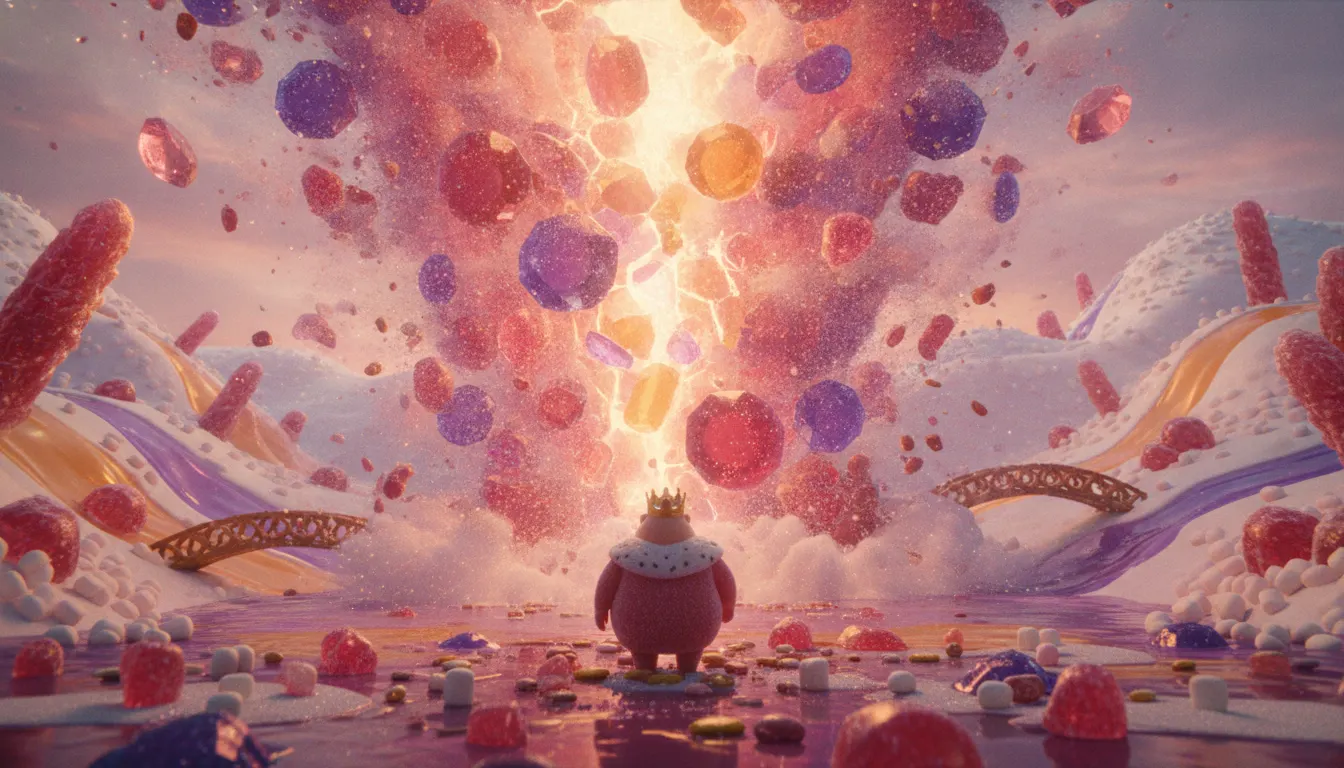
Candy Crush Saga (King, 2012)
the defining reference
Candy Crush Saga King-Activision glossy match-3 aesthetic. Sugar-coated translucent gemstones, cascade explosion juice, bright candy-land color story.
The moves a human crew would use to get here. Cue applies them for you, and knowing their names is how you ask for a change.
layered specular highlights on rounded 3D objects suggesting sugar-glass translucency
no desaturated or muted tones
rounding on all UI elements - pill buttons, circular badges, rounded rectangles
shoot on all interactive feedback
cascading sugar crystals, stars, sparkles
Candy Crush Saga (King, 2012) established the dominant visual template for casual mobile gaming in the 2010s, and its influence extends far beyond games into app UI design, e-commerce product renders, and consumer brand marketing. The art direction - led by King's internal team - prioritized maximum legibility at small screen sizes, instant desirability, and a sense of sweet edible luxury that speaks to the game's confectionery theme while establishing broad appeal.
The defining quality of the Candy Crush aesthetic is its extreme gloss. Every candy piece has multiple specular highlights, soft inner glow, and subsurface translucency suggesting edible sugar or gelatin. Colors are pushed to maximum saturation - pure magentas, electric blues, golden yellows - while being kept soft and rounded enough to avoid harshness. This 'candy coating' shading technique was influential across mobile games of the era.
All interface elements - buttons, badges, progress bars, level icons - follow an extreme rounding convention. Hard corners are eliminated; everything has pill-shapes, circles, or soft rectangles with large corner radii. This communicates approachability, safety, and playfulness - a direct contrast to the sharp geometric UI of productivity apps targeting the same hardware.
Game design term 'game feel' or 'juice' - the satisfying audiovisual feedback from interactions - is maximized in Candy Crush. Elements bounce, pop, shimmer, and cascade in reaction to player inputs. Match animations use scale punch-out effects. This animation philosophy, where UI responds with slight over-shoot and spring physics, became standard in casual mobile design.
The art direction consciously appeals to a predominantly adult casual gaming audience (historically skewing female 25-45 in King's data) by using sophisticated candy-box and patisserie color references rather than primary-color children's toy palettes. This is grown-up candy luxury, not kindergarten primary colors.
the defining reference
extended visual system
parallel casual mobile glossy aesthetic
evolved casual mobile visual language
sister title same art direction
glossy gem match-3 predecessor
casual 3D adjacent in the mobile gaming space
A Look is not a filter. It is a set of stored decisions the pipeline reads before it makes a single frame, so two videos in the same Look actually match.