Super Mario Odyssey
Nintendo EPD, Switch, 2017 (color-per-kingdom world design)
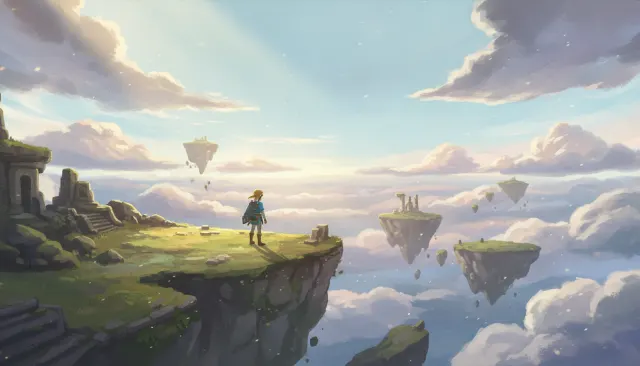
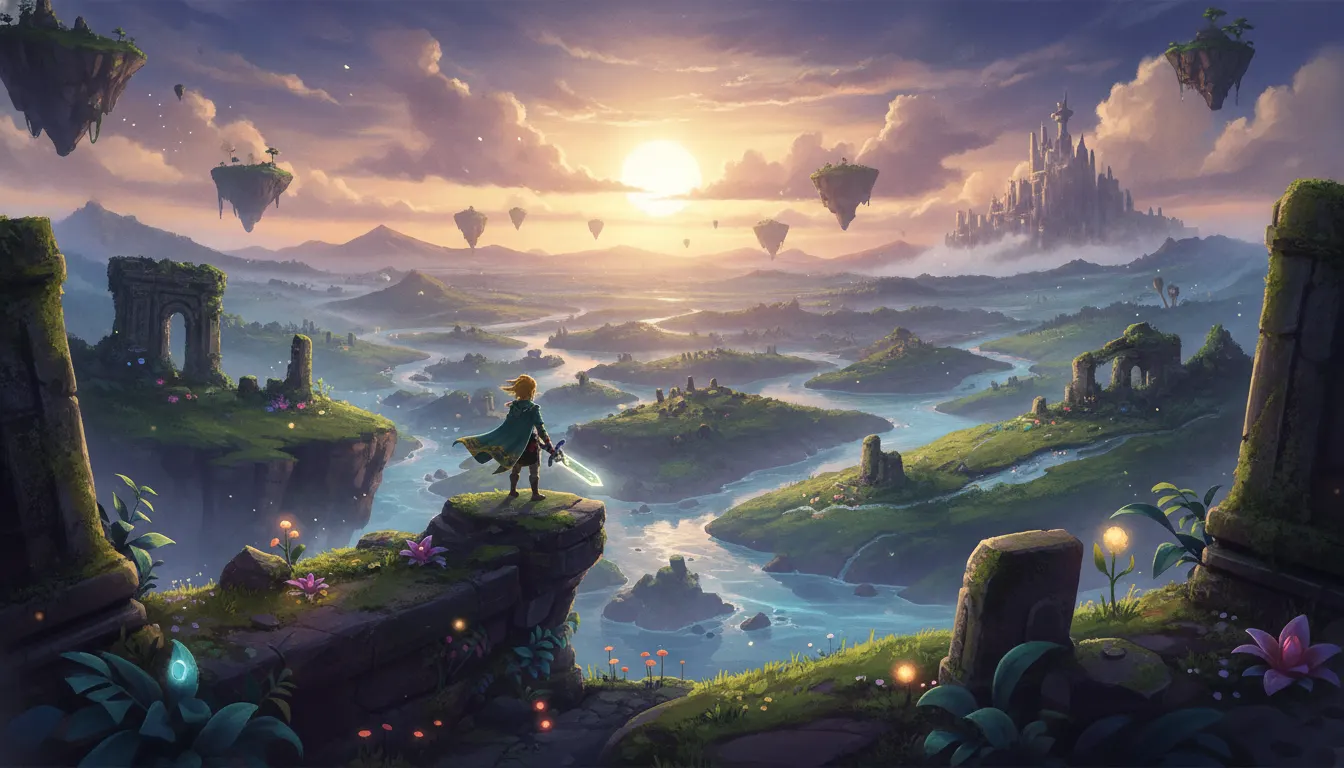
Nintendo Switch stylized era. Breath of the Wild painterly cel-shade, Mario Odyssey vibrant, Hades crisp 2.5D, handheld-friendly design.
The moves a human crew would use to get here. Cue applies them for you, and knowing their names is how you ask for a change.
saturation primary and secondary colors used as kingdom/zone identity markers
frame silhouette readability as character design constraint
to-mid polygon geometry with deliberate texture design over high polygon counts
coded multiplayer visual systems (Splatoon's team ink colors as game mechanic)
like scale relationships between character and environment objects
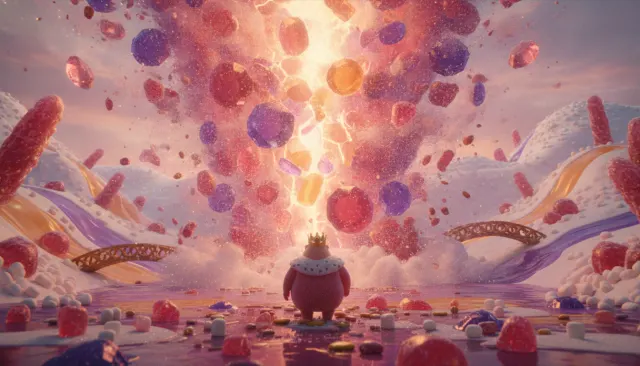
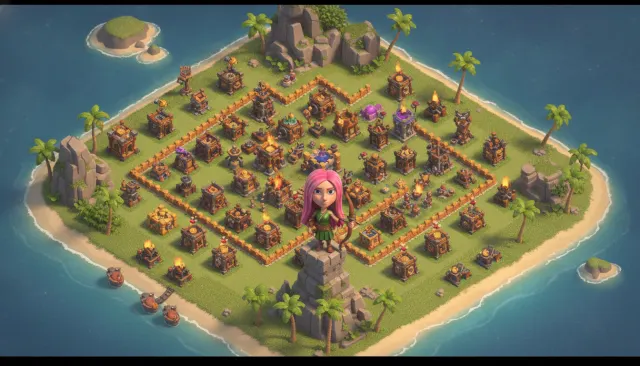
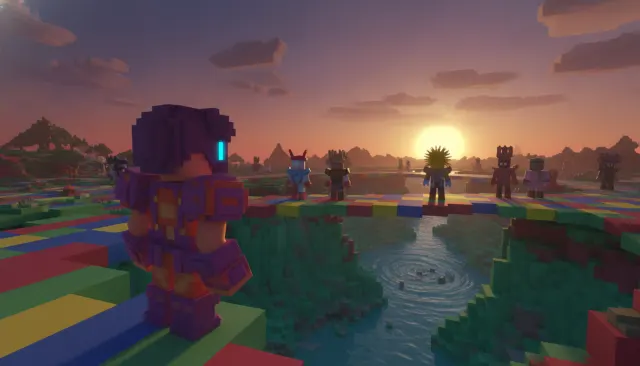
The Nintendo Switch (launched March 2017) established a visual philosophy distinct from Sony's photorealist prestige games or Microsoft's shooter-centric dark palettes. Nintendo's first-party Switch titles use bright, highly saturated colors, clean low-to-mid polygon geometry, and expressive character designs that prioritize immediate emotional readability over technical fidelity.
Nintendo's designers historically approach color as a primary communication tool rather than a material simulation goal. In Super Mario Odyssey (Nintendo EPD, 2017), each kingdom uses a distinct dominant color: New Donk City's blue-grey metropolitan tones, the Seaside Kingdom's aqua-teal, the Wooded Kingdom's greens. This allows players to instantly locate themselves in the world through ambient color even without a minimap.
Splatoon 3 (Nintendo EPD, 2022) takes the color philosophy to its logical extreme: the entire game mechanic is about painting environments with team colors. The visual design can't afford visual noise; every surface must clearly read as either your color, enemy color, or unpainted grey. The result is a game that looks like a neon pop art installation.
Switch first-party characters are designed with what Nintendo designers call 'silhouette readability': each character must be identifiable in one second from a silhouette alone. Mario's round cap, overalls, and mustache; Splatoon's squid-tentacle hair; the Inklings' goggle-eye shapes. This is partly a multiplayer design requirement - you need to recognize teammates from enemies instantly - and partly a brand identity principle.
The Switch runs on Nvidia Tegra X1 hardware - significantly less powerful than PS4. Nintendo's artists respond by investing in art direction rather than raw render detail: clean geometry, deliberate texture design, and expressive animation rather than high polygon counts or complex shading.
Nintendo EPD, Switch, 2017 (color-per-kingdom world design)
Nintendo EPD, Switch, 2022 (color-as-mechanic design pinnacle)
Nintendo EPD, Switch, 2017 (open world with stylized natural color)
Nintendo EPD, Switch, 2020 (pastel-warm daily-life aesthetic)
HAL Laboratory, Switch, 2022 (maximum saturation, soft form language)
Nintendo EPD, Switch, 2023 (miniature-scale stylized natural world)
A Look is not a filter. It is a set of stored decisions the pipeline reads before it makes a single frame, so two videos in the same Look actually match.