Codename: Kids Next Door
Tom Warburton / Cartoon Network Studios · 2002
The canonical work; defined the blocky spy-action children's animation aesthetic
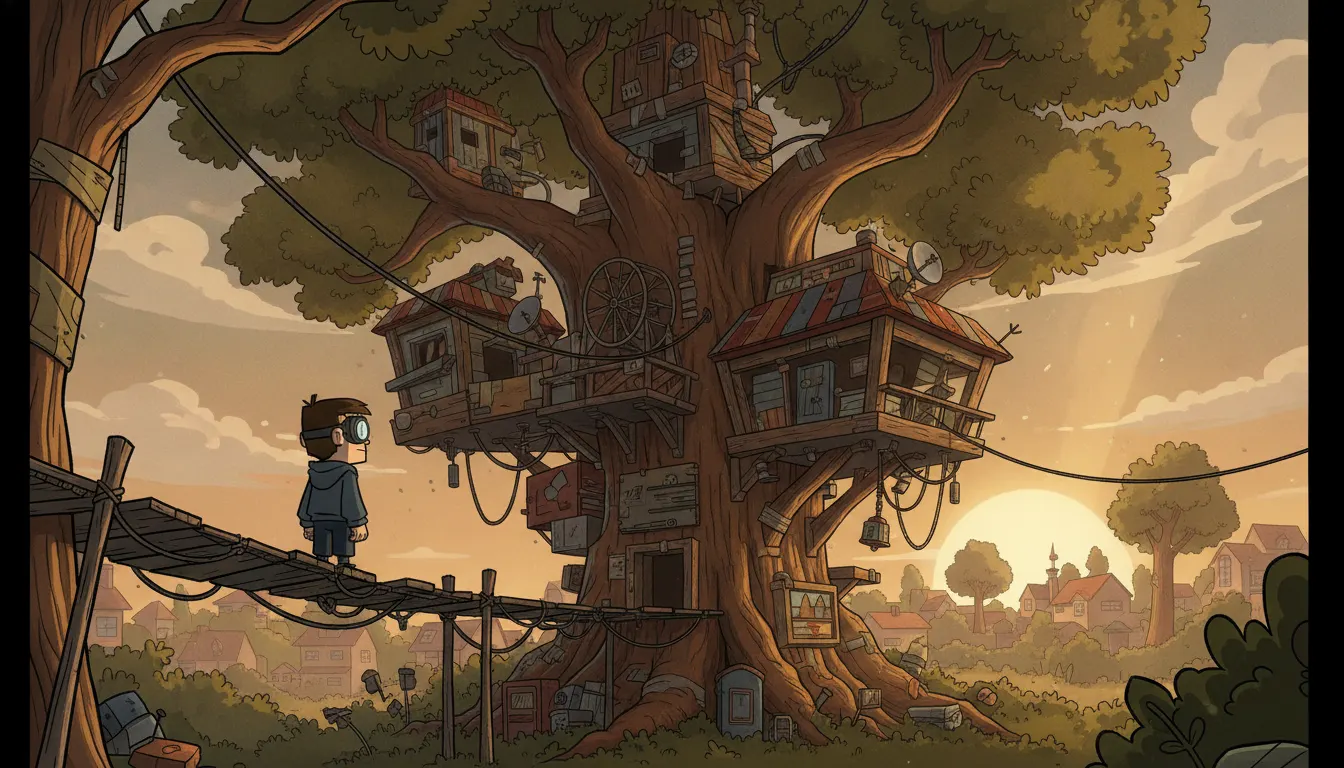
Tom Warburton Cartoon Network blocky-geometric tween secret-agent team. Tree-house HQ, 2x4 technology, candy primary palette, square-jaw character design.
The moves a human crew would use to get here. Cue applies them for you, and knowing their names is how you ask for a change.
Characters are built from rectangular block forms -- torso, limbs, head -- that communicate physical sturdiness and action capability.
Military and spy genre staging conventions are applied wholesale to childhood domestic scenarios for genre-mashup comedy.
All technology is made from repurposed household objects -- toilet plungers, cardboard boxes, soda cans -- drawn with playful mechanical specificity.
Character proportions reference action figure and toy design conventions rather than Disney organic animation traditions.
Bases, lairs, and operational spaces are rendered with serious military-architectural scale that heightens the child-operator comedy.
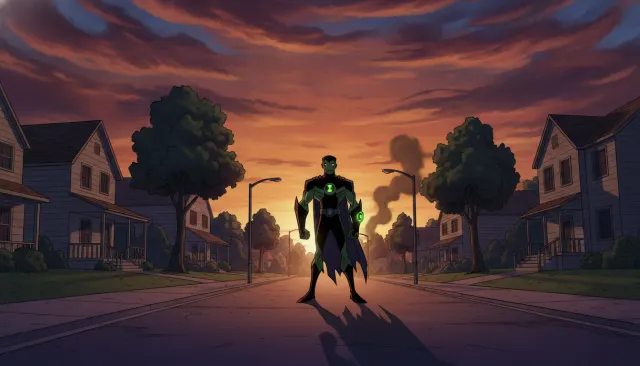
Strong greens, reds, blues, and yellows dominate, reflecting both the action genre and target audience visual preference for bold color.
Codename: Kids Next Door premiered on Cartoon Network on December 6, 2002, created by Tom Warburton (credited as 'Mr. Warburton'), developed from his earlier short 'No P in the Ool.' The show ran through January 21, 2008, produced by Cartoon Network Studios. Tom Warburton served as showrunner and primary visual director, developing a design system that became one of Cartoon Network's most distinctive aesthetic voices of the mid-2000s.
Kids Next Door's visual identity centers on what might be called 'deliberate blockiness': character designs built from simple, chunky geometric blocks rather than the rounded organic forms typical of children's animation. Protagonist Numbuh One (Nigel Uno) has a rectangular torso, block-like limbs, and an oversized round head -- a design vocabulary closer to toy design or action figure aesthetics than Disney character design tradition.
This blocky approach was a deliberate choice by Warburton, who wanted designs that would read as active and physical -- the show's premise (children as anti-adult special forces) required characters who looked capable of action. The blocky, sturdy construction communicates physical durability and kid-action competence.
Kids Next Door systematically applied military and spy genre visual conventions to childhood settings. The Sector V treehouse is designed like a fortified military base. Missions are staged like special forces operations. The visual grammar of SWAT teams, spy gadgets (2x4 technology -- always made from household objects), and combat tactics is applied to problems like getting dessert before dinner.
This genre-mashup visual comedy -- adult spy-action staging applied to pre-teen problems -- was the show's central comedic and visual engine. Background artist Bob Boyle and director Warburton rendered adult-world environments with serious scale and production quality to heighten the comedy of children operating in them.
The show uses a bold, saturated palette -- primary-adjacent greens, reds, blues -- that reflects both the action genre it parodies and the target audience's visual preferences. Environments are drawn with strong geometric architecture: the moonbase (Sector Z), adult villain lairs, and school settings all use blocky architectural design that mirrors the character design philosophy.
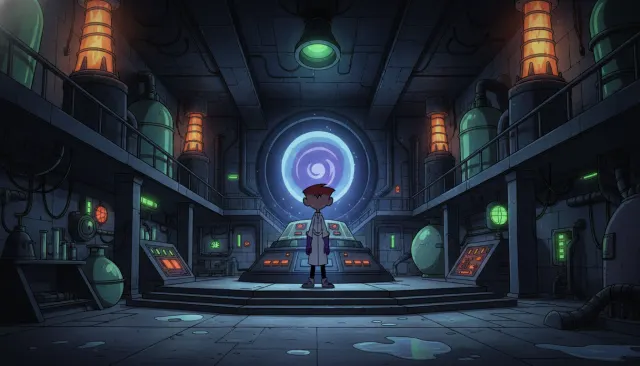
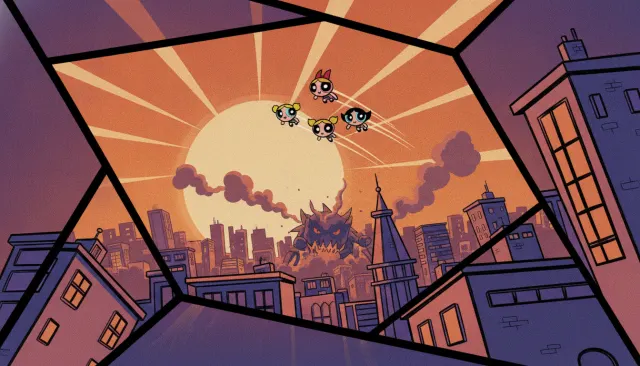
Kids Next Door aired during Cartoon Network's creative peak alongside Dexter's Laboratory (1996), The Powerpuff Girls (1998), and Foster's Home for Imaginary Friends (2004). Together these shows defined a Cartoon Network aesthetic philosophy: genre-savvy, visually bold, willing to parody adult genres for child audiences.
The show was notable for its extensive mythology and serialized storytelling -- an unusually complex narrative structure for a children's action cartoon in the early 2000s. The 2008 finale 'Operation: I.N.T.E.R.V.I.E.W.S.' is considered one of the most ambitious children's animation finales of its era.
Tom Warburton / Cartoon Network Studios · 2002
The canonical work; defined the blocky spy-action children's animation aesthetic
Genndy Tartakovsky / Cartoon Network · 1996
Cartoon Network contemporary with a related geometric-character, genre-parody philosophy
Craig McCracken / Cartoon Network · 1998
Contemporaneous CN show sharing the blocky-geometric character design DNA
Craig McCracken / Cartoon Network · 2004
CN contemporary that extended the geometric-character approach into a fantasy setting
Sam Register / Cartoon Network · 2003
CN contemporary action show sharing the bold-outline action character design tradition
Tom Warburton / Cartoon Network · 2006
Theatrical special that pushed the visual system to its most ambitious scope
A Look is not a filter. It is a set of stored decisions the pipeline reads before it makes a single frame, so two videos in the same Look actually match.