Batman: The Animated Series
Bruce Timm, Paul Dini / Warner Bros. Animation · 1992
The canonical work; the defining achievement of the Dark Deco superhero aesthetic
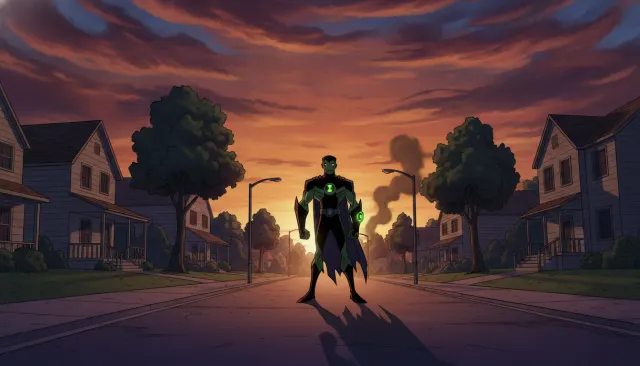
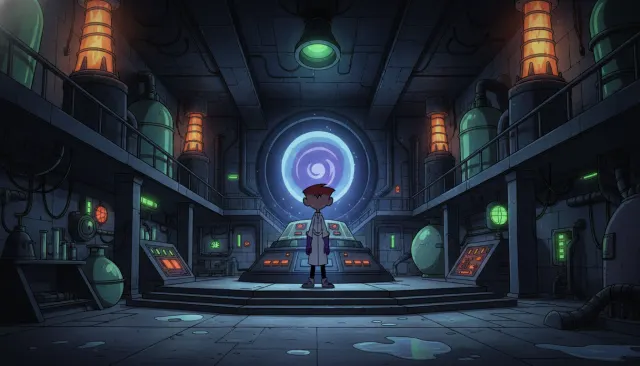
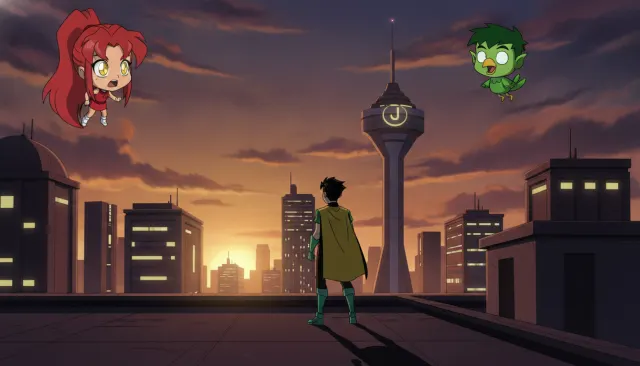
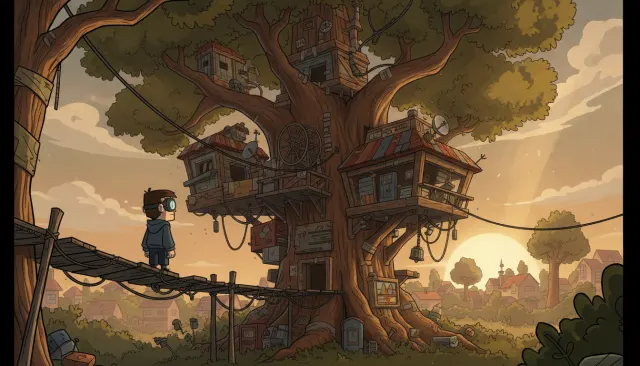
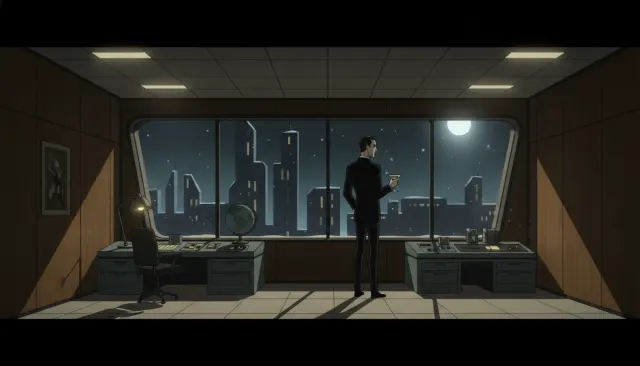
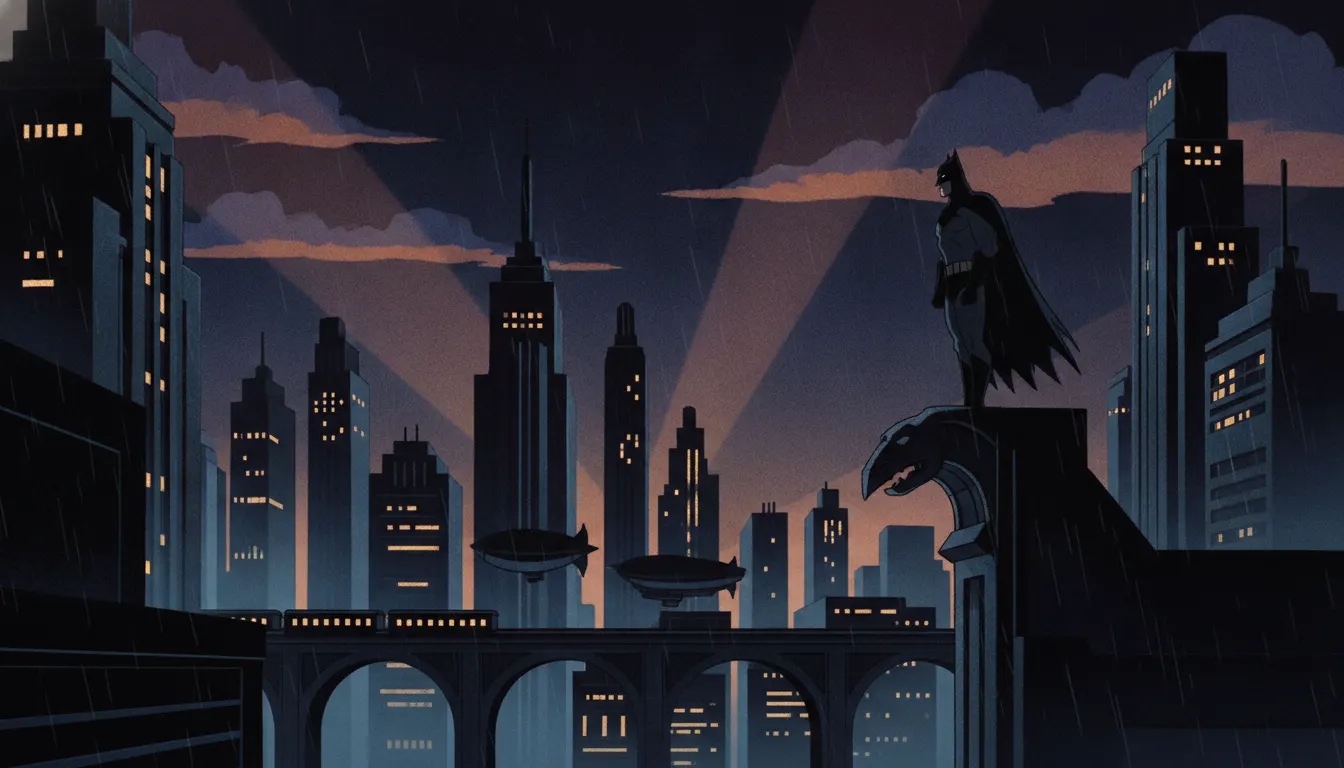
Bruce Timm Batman The Animated Series art-deco noir. Black-paper backgrounds, square-jaw superhero silhouettes, Gotham gargoyle skylines.
The moves a human crew would use to get here. Cue applies them for you, and knowing their names is how you ask for a change.
All backgrounds were painted on black stock, making shadows literal absences of paint and giving night scenes unmatched visual depth.
Gotham City's Art Deco buildings, gargoyles, and infrastructure reference 1930s Fritz Lang and Universal Monster aesthetic.
Every character is reducible to a few geometric shapes without losing identity -- Batman is a triangle, the Joker is elongated verticals.
High-contrast lighting with dramatic shadow patterns, venetian blind shadows, and fog effects reference 1940s film noir cinematography.
Muted purples, cool grays, deep blues, and warm amber streetlights define a night-city palette drawn from Depression-era Deco architecture.
Bruce Timm used held poses and slow zooms deliberately, treating limited TV animation budget as an expressive constraint rather than a limitation.
Batman: The Animated Series premiered on Fox Kids on September 5, 1992, produced by Warner Bros. Animation with Bruce Timm as character designer and producer, Paul Dini as head writer, and Eric Radomski and Bruce Timm as executive producers. The series ran through September 15, 1995 (and continued as The Adventures of Batman & Robin), winning four Emmy Awards including Outstanding Animated Program. Eric Radomski established the show's visual look by having backgrounds painted on black paper rather than white, the most visible single technical innovation in American TV animation of the 1990s.
Bruce Timm's design philosophy was a deliberate synthesis: take the German Expressionist aesthetics of the 1930s-1940s era Universal monster films, combine them with the streamlined geometric design sensibility of Art Deco, filter it through Fleischer Brothers (Superman, 1941) production design, and make it work within a television budget. The result was dubbed 'Dark Deco' by the production team.
Timm's character designs are defined by extreme geometric simplification -- every character can be reduced to a few basic shapes without losing readability. Batman himself is a triangle with pointed ears. The Joker is elongated verticals and diagonals. This shape-based design language allows the characters to read clearly at any scale and enabled the animation to be executed at consistent quality within TV budgets.
Eric Radomski's decision to paint all backgrounds on black paper rather than white is the most technically distinctive element of the show's visual identity. This approach -- unusual or unprecedented in American TV animation -- meant that shadows and darkness were literally the absence of paint rather than applied coloring. Night scenes, fog, and architectural shadow all have a weight and authenticity that painted-on-white can never achieve.
Gotham City's Art Deco architecture -- based on 1930s New York, Chicago, and Fritz Lang's Metropolis (1927) -- was rendered with extraordinary attention to period detail. The city exists in an indeterminate timeframe: 1930s architecture with modern technology, a historical fugue state that became one of animation's most imitated environmental concepts.
Shirley Walker's orchestral score, recorded with a live orchestra -- unprecedented for an American animated TV series at the time -- reinforced the cinematic visual ambition. The combination of orchestral music, black-background visual depth, and film-noir-influenced direction produced a result that critics frequently compared to theatrical animation.
Batman: TAS launched the DC Animated Universe (DCAU), which produced Superman: The Animated Series (1996), Batman Beyond (1999), Justice League (2001), and Justice League Unlimited (2004). Bruce Timm's design language standardized superhero animation aesthetics for over a decade and remains the benchmark against which all subsequent American superhero animation is measured.
Bruce Timm, Paul Dini / Warner Bros. Animation · 1992
The canonical work; the defining achievement of the Dark Deco superhero aesthetic
Bruce Timm, Paul Dini / WB Animation · 1996
DCAU expansion; translated the Dark Deco to the more colorful Superman visual register
Bruce Timm, Alan Burnett / WB Animation · 1999
Future-set DCAU sequel; evolved the Dark Deco into cyberpunk Neo-Gotham
Bruce Timm / WB Animation · 2001
DCAU ensemble series that applied the visual system to a wider hero roster
Bruce Timm, Eric Radomski / WB · 1993
Theatrical film that pushed the Black Deco aesthetic to full cinematic quality
Dave Fleischer / Paramount · 1941
Primary historical influence; the streamlined Art Deco superhero look Bruce Timm consciously extended
Bruce Timm / WB Animation · 2016
Adult animated feature by Timm that returned to the DCAU visual language for a mature story
A Look is not a filter. It is a set of stored decisions the pipeline reads before it makes a single frame, so two videos in the same Look actually match.