Samurai Jack Season 1-4
Genndy Tartakovsky / Cartoon Network · 2001
Original series establishing the cinematic flat-action visual language
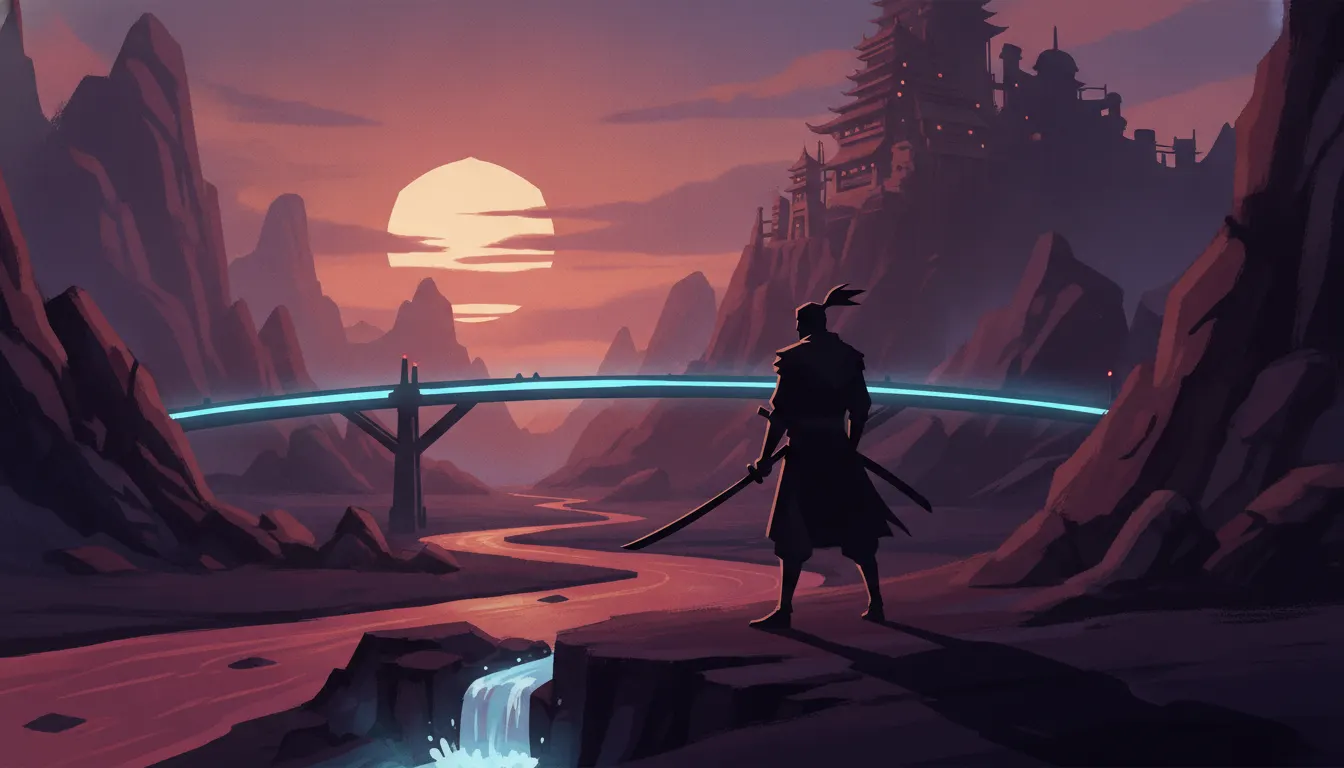
Genndy Tartakovsky Samurai Jack stylized minimalism. Wide cinematic vistas, brushy ink edges, painted futuristic-feudal landscape negative space.
The moves a human crew would use to get here. Cue applies them for you, and knowing their names is how you ask for a change.
Environments rendered as large, solid color zones - sky, ground, horizon - with minimal line detail, achieving depth through color temperature contrast
Characters and objects readable as pure black silhouettes against colored backgrounds, enabling extreme high-contrast compositions with no readable detail
Widescreen crops (often 2.35:1 or more extreme) applied to sequences for cinematic scope, placing characters small within vast environments
Extended fight or travel sequences with no dialog, relying entirely on visual rhythm, staging, and sound design for narrative progress
Camera dwelling on static landscape compositions for multiple seconds - borrowing the contemplative timing of Japanese cinema
Mechanical enemies and abstract foes destroyed via graphic geometric particle explosions rather than anatomical injury - maintaining intensity without gore
No shading or shadow on character figures - pure flat fills with strong outlines, echoing mid-century modernist animation practice
Samurai Jack premiered on Cartoon Network on August 10, 2001, created and directed by Genndy Tartakovsky. The show ran for four seasons through 2004 on Cartoon Network before returning for a fifth and final season on Adult Swim in 2017, concluding the story after a 13-year gap. The series is widely regarded as one of the finest examples of cinematic visual storytelling in American animation.
Tartakovsky drew deeply from film history for Samurai Jack's visual grammar. The influence of Japanese cinema - particularly Akira Kurosawa's Seven Samurai (1954), Yojimbo (1961), and Sanjuro (1962) - is evident in composition, pacing, and the samurai protagonist's stoic physicality. But Tartakovsky equally cited painters and graphic designers: Milton Glaser's geometric poster work, Alex Toth's ultra-minimalist comic storytelling, and the broad flat color fields of UPA's mid-century animation.
The show uses extreme letterboxing in key sequences, wide environmental establishing shots that dwarf the character, and long holds on static compositions - techniques borrowed from Kurosawa and Sergio Leone's spaghetti westerns. Action sequences frequently run with minimal dialog, relying on visual rhythm and sound design.
Samurai Jack's most distinctive formal quality is radical compositional flatness. Characters are simplified to bold graphic shapes: Jack's white gi, black hair, and wooden sandals create an immediately readable silhouette. Environments are divided into large flat color planes - a blue sky, a red sunset gradient, a single tree's black silhouette. Background artists Paul Rudish and Scott Wills developed an approach where perspective depth was achieved through color temperature and saturation shifts rather than line detail.
Shadows are not rendered on characters - figures exist as flat shapes against equally flat backgrounds, creating a graphic poster quality. Violence is abstracted: robot enemies burst into mechanical parts rather than blood, allowing the show to maintain its Cartoon Network intensity while navigating Standards and Practices.
The 2017 return on Adult Swim allowed Tartakovsky to introduce genuine consequence - Jack can bleed, characters die permanently, and the existential weight of Jack's 50-year displacement receives adult-coded treatment. The visual style evolved: desaturated palettes for emotional sequences, anime-influenced extreme speed effects, and deliberate graphic novel framing influenced by Frank Miller's Sin City in certain sequences.
The show's influence on action animation is enormous. Its approach to silent cinematic storytelling and flat graphic composition influenced Avatar: The Last Airbender, Star Wars: The Clone Wars (also Tartakovsky), and countless short films at animation schools worldwide.
Genndy Tartakovsky / Cartoon Network · 2001
Original series establishing the cinematic flat-action visual language
Genndy Tartakovsky / Adult Swim · 2017
Adult-coded conclusion with evolved palette and increased graphic novel influence
Genndy Tartakovsky · 2004
Emmy-winning episode pair showing the origin story - masterclass in silent cinematic animation
Genndy Tartakovsky / Adult Swim · 2019
Tartakovsky's direct successor series - prehistoric wordless action with evolved graphic realism
Genndy Tartakovsky / Cartoon Network · 2003
Applying Samurai Jack's graphic action language to the Star Wars universe - micro-series format
Genndy Tartakovsky / CN · 1996
Earlier Tartakovsky work showing the developing flat-graphic action sensibility
Michael DiMartino + Bryan Konietzko · 2005
Major creative descendant - cited Samurai Jack's cinematic composition as a key influence
A Look is not a filter. It is a set of stored decisions the pipeline reads before it makes a single frame, so two videos in the same Look actually match.
 Cn 90S RevivalDexter's Lab Tartakovsky
 Kids Cn Action ClassicAvatar The Last Airbender Anime-Influenced Western
 Classic Western CelUPA Modernist Mid-Century
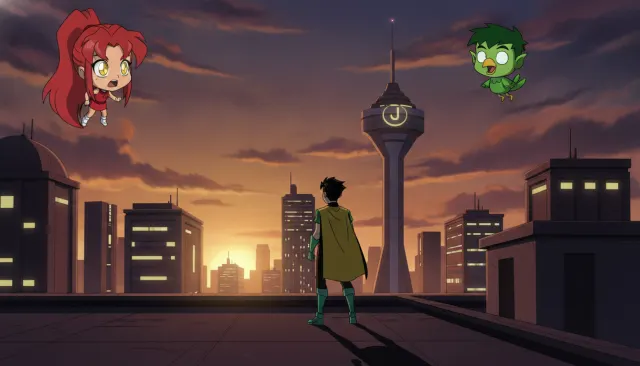 Kids Cn Action ClassicTeen Titans Original Anime-Influenced
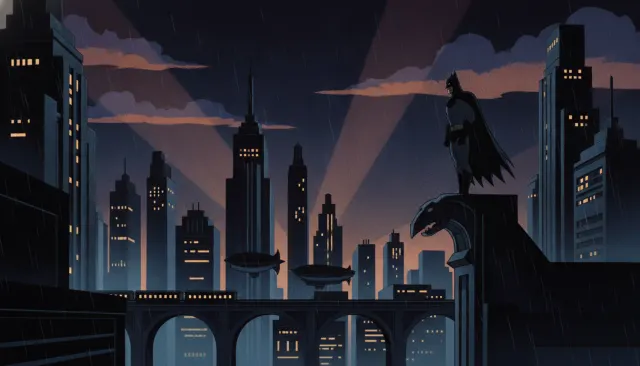 Superhero ActionBruce Timm Batman TAS
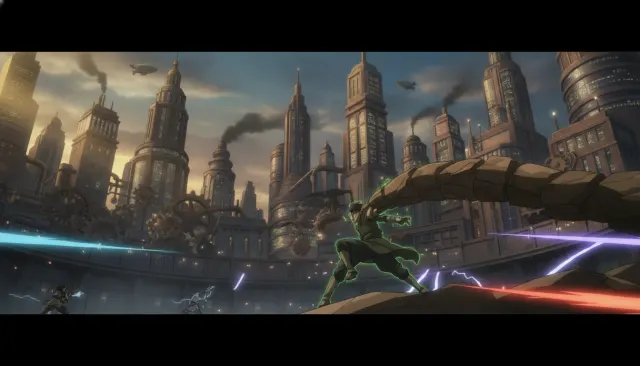 Kids Cn Action ClassicLegend of Korra Art Deco Bending