Avatar: The Last Airbender
Michael DiMartino, Bryan Konietzko / Nickelodeon · 2005
The founding work; the definitive anime-influenced Western animated epic
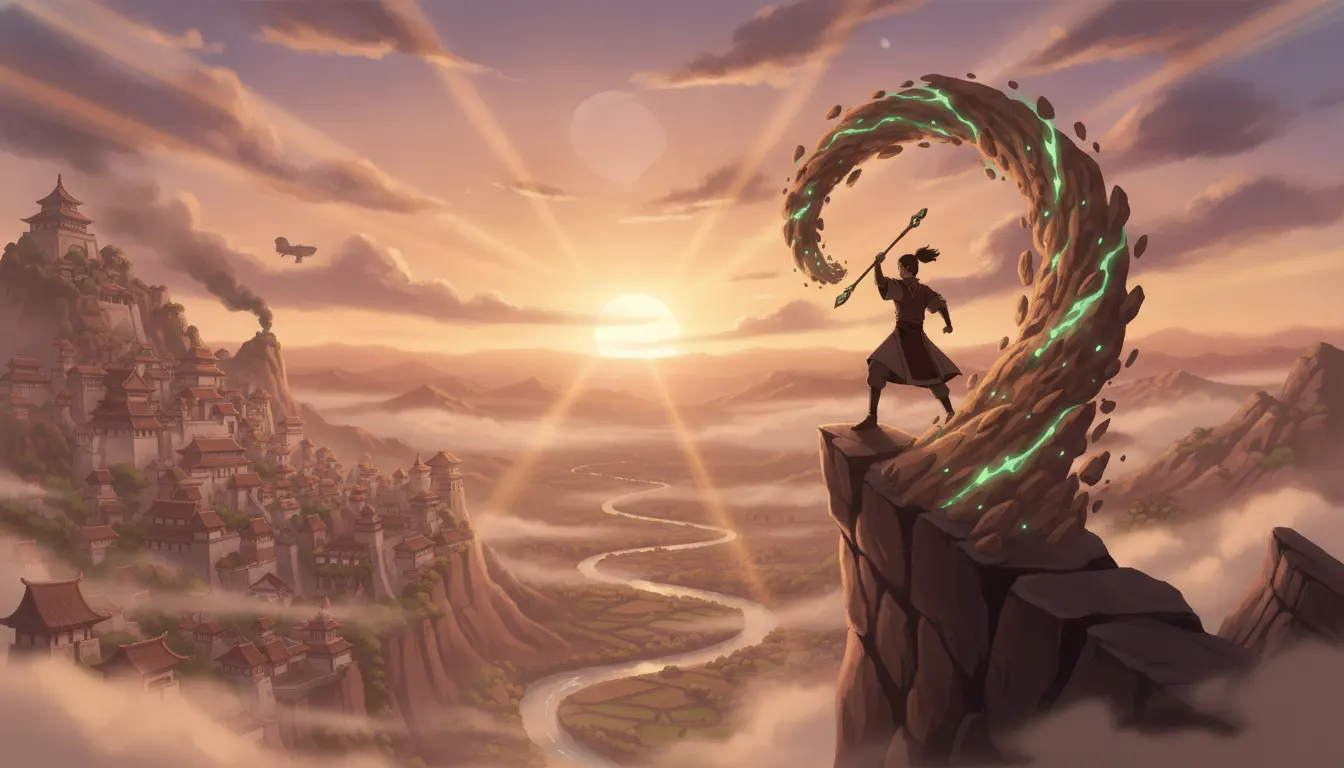
Bryan Konietzko and Michael DiMartino Nickelodeon anime-influenced Western epic. Four-nation Asian-inspired world, bending action choreography, painterly cinematic backgrounds.
The moves a human crew would use to get here. Cue applies them for you, and knowing their names is how you ask for a change.
Each elemental bending style is based on a specific real martial art, giving fight choreography authentic movement vocabulary.
The four nations draw from distinct Asian cultural traditions, rendered with period-specific architectural and material accuracy.
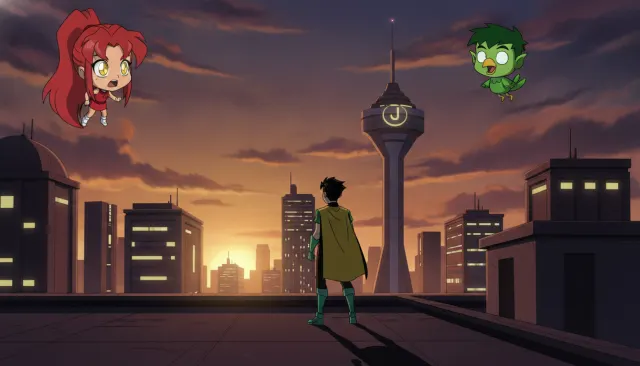
Facial expressions use anime shorthand -- sweat drops, chibified comedy moments, impact frames -- within a Western character design framework.
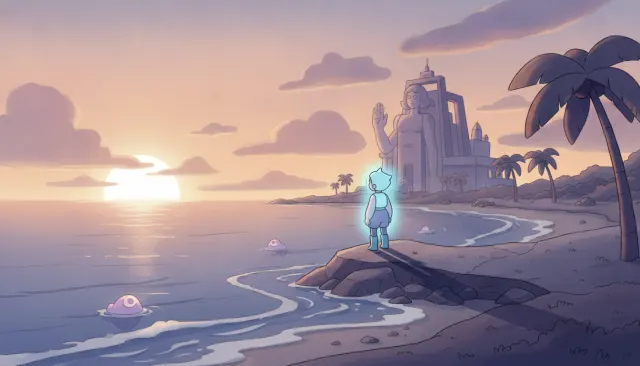
Background art draws from Chinese ink-wash landscape painting traditions, particularly for Air Nomad and mountainous sequences.
Fight scenes are animated to near-theatrical fluidity by Korean studios, with more frames per second than American TV animation norms.
Character design evolves across three books -- costumes, scars, hair -- to show narrative progression in a way rare in episodic animation.
Avatar: The Last Airbender premiered on Nickelodeon on February 21, 2005, created by Michael DiMartino and Bryan Konietzko, who developed the concept after Konietzko sketched a bald man floating in the sky. The series was produced by Nickelodeon Animation Studio in collaboration with animation outsourced to DR Movie and JM Animation in South Korea, with all three books (Water, Earth, Fire) airing through July 19, 2008.
Avatar represents the most technically sophisticated attempt in American television animation to synthesize East Asian animation aesthetics with Western storytelling conventions. DiMartino and Konietzko studied Chinese landscape painting, Japanese animation (particularly the work of Hayao Miyazaki), and East Asian martial arts traditions to create a visual language that felt authentically drawn from multiple source cultures without wholesale appropriating any single one.
Character designs were developed with character designer Giosue Corleo and head of story Giancarlo Volpe with input from South Korean animators who brought genuine anime production fluency. The result is a style that reads immediately to Western audiences as 'anime-influenced' while operating under Western three-act storytelling norms.
Avatar was animated to cinema-quality standards rare in American TV animation. Action sequences -- the bending martial arts that form the show's visual signature -- were choreographed by Sifu Kisu, a martial arts consultant who designed specific bending styles: waterbending based on Tai Chi, earthbending on Hung Gar kung fu, firebending on Northern Shaolin, airbending on Ba Gua Zhang.
These fighting styles were then animated by Korean studios with extraordinary fluidity, producing fight sequences that rival theatrical anime. Season 3's 'Sozin's Comet' arc (2008) in particular contains bending sequences considered among the most technically accomplished in American TV animation.
The four nations draw from distinct Asian cultural and architectural traditions: the Water Tribes from Inuit and Arctic cultures, the Earth Kingdom from Tang Dynasty and colonial-era Chinese architecture, the Fire Nation from Japanese imperial and Meiji-era design, and the Air Nomads from Tibetan Buddhist monasteries. Background artist Jane Wu and the art department rendered these environments with meticulous cultural specificity.
Avatar's success demonstrated that American animation audiences would engage deeply with a serialized epic narrative -- a format previously considered a risk in Western TV animation. The show's combination of anime visual grammar with Western character development influenced an entire generation of animation creators. The Legend of Korra (DiMartino and Konietzko, 2012-2014) built on this foundation, and the Netflix live-action adaptation (2024) attests to the franchise's enduring cultural significance.
Michael DiMartino, Bryan Konietzko / Nickelodeon · 2005
The founding work; the definitive anime-influenced Western animated epic
Michael DiMartino, Bryan Konietzko / Nickelodeon · 2012
Direct sequel series that evolved the aesthetic toward art deco and 1920s urban settings
Albert Kim / Netflix · 2024
Live-action adaptation that demonstrates the visual language's translation to photorealism
Sam Register / Cartoon Network · 2003
Contemporary anime-influenced Western animation with similar East-West visual synthesis
Warren Ellis / Netflix · 2017
Anime-influenced Western animation that pushed the format into adult-horror territory
Dreamworks / Netflix · 2020
Post-ATLA series clearly in the avatar aesthetic lineage
Aaron Ehasz, Justin Richmond / Netflix · 2018
Created by Avatar writer Aaron Ehasz; explicitly continues the aesthetic tradition
A Look is not a filter. It is a set of stored decisions the pipeline reads before it makes a single frame, so two videos in the same Look actually match.