Gravity Falls
Alex Hirsch · 2012
Disney Channel/XD series; mystery-comedy in a supernatural Pacific Northwest town
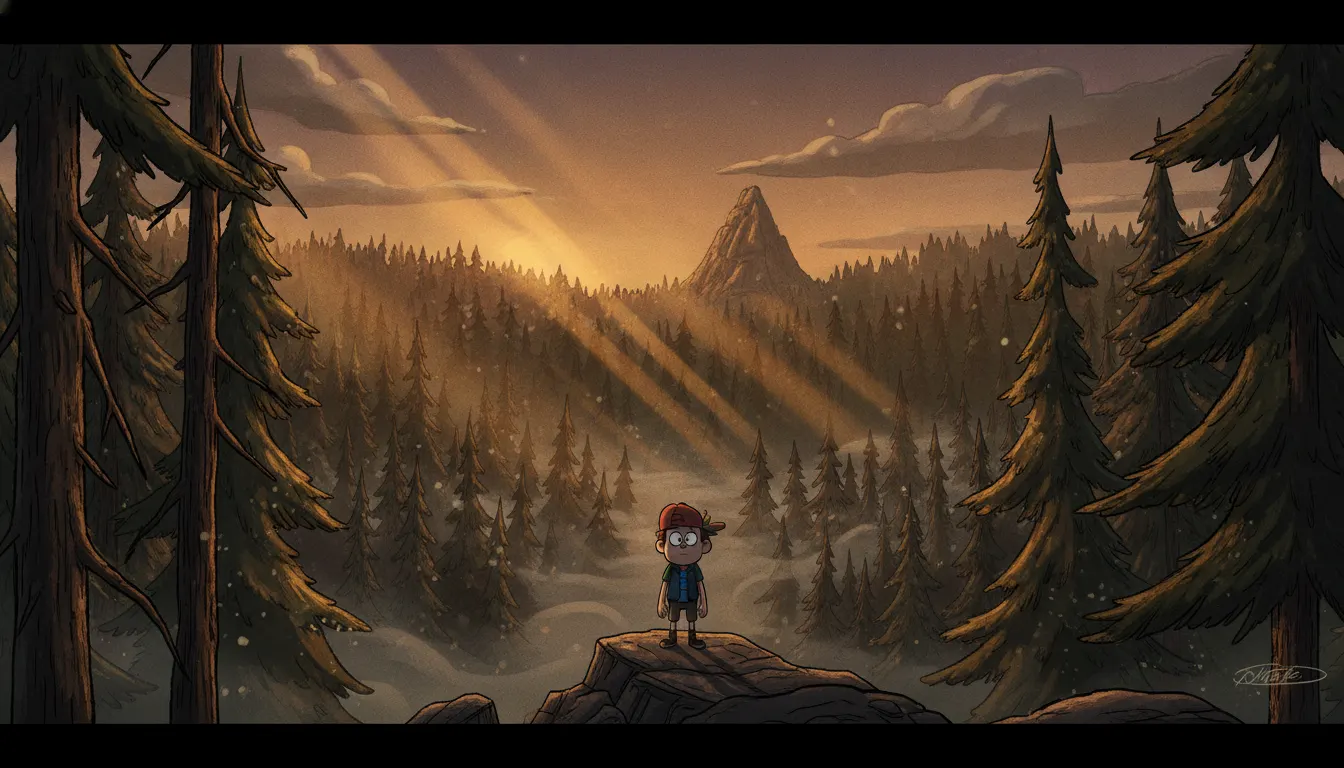
Alex Hirsch Gravity Falls inked Oregon mystery. Pine-forest dust palette, cryptid silhouettes, Disney channel polish with indie mystery edge.
The moves a human crew would use to get here. Cue applies them for you, and knowing their names is how you ask for a change.
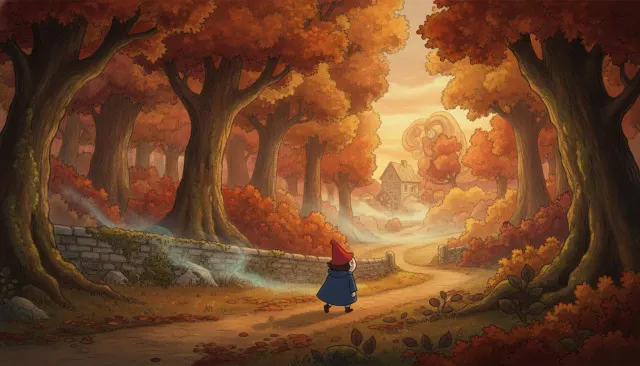
Palette shifts from warm golden exterior light filtered through conifer canopy to cool, shadow-heavy interior conspiracies - weather and time-of-day used for emotional tone.
Variable line weights referencing Charles Schulz and Bill Watterson's expressive comic strip traditions, distinguishing the show from flat Flash animation contemporaries.
Antagonists and supernatural entities use pure geometric forms (Bill Cipher's triangle) that stand apart from the organic character vocabulary.
Backgrounds contain hidden symbols, coded messages, and recurring motifs that reward multiple viewings - environmental storytelling as a mystery-building tool.
Visual grammar built to hold warm family comedy and genuine horror imagery without tonal rupture - staging, color, and silhouette shift without breaking the world.
Townsfolk and supporting characters feature maximum design variety within the show's vocabulary, reflecting a small town's cast of distinct personalities.
Environmental backgrounds frequently use fog, overcast light, and deep forest shadow to establish the Pacific Northwest's specific melancholy beauty.
Gravity Falls is an animated mystery-comedy series created by Alex Hirsch that aired on Disney Channel and Disney XD from June 15, 2012 to February 15, 2016. Despite its 40-episode run, the show achieved a cultural footprint far larger than its broadcast numbers suggested, developing a devoted fanbase drawn to its unusual combination of dense mystery plotting, Pacific Northwest atmosphere, and a visual style that balanced childlike appeal with genuine menace.
Alex Hirsch developed Gravity Falls as a personal project inspired by summers spent in a small coastal Oregon town with his grandmother. The show's visual language was shaped by lead character designer Robert Renzetti and the art department working under Hirsch's close creative control. The primary visual reference was deliberately 'not anime' - Hirsch wanted a look rooted in American newspaper comic strip tradition, specifically the expressive line work of Charles Schulz and Bill Watterson, updated with digital color capabilities.
The show's setting - Gravity Falls, Oregon - is defined by its environment: dense conifer forests, overcast skies, a looming mountain, a persistent sense of fog and shadow beneath a bright exterior. The color palette shifts dramatically between day and night, summer exterior and conspiracy-room interior. Daytime exteriors use warm golden-hour light filtered through green canopy. Interior shots - particularly Stan's Mystery Shack back office and the twin's attic room - use deeper, cooler shadows that suggest hidden depth.
Character designs use a simplified but expressively varied approach. Dipper and Mabel Pines are drawn in a broadly appealing, age-appropriate style with round heads and short limbs - readable instantly as twelve-year-olds. Adult characters like Stan and Soos use bulkier proportions and more angular features to suggest age and mass. Antagonist characters like Bill Cipher (a sentient triangle) use pure geometric forms that stand apart from the organic character vocabulary, marking them as supernatural.
Line weights are notably dynamic: primary character outlines use consistent weights but secondary and environmental linework varies, creating a hand-drawn texture that distinguishes the show from Flash-heavy contemporaries.
The show pioneered a specific blend of family-comedy visual lightness with genuine horror imagery. Episodes routinely transition between warm, comedic staging and deeply unsettling imagery - government agents, demonic rituals, alternate dimensions - without tonal rupture, because the visual grammar is built to hold both simultaneously. This was influential on later Disney animated series and the broader wave of 'adventure cartoons' that followed.
Gravity Falls directly influenced Steven Universe (2013), Star vs. the Forces of Evil (2015), The Owl House (2020), and the broader 'indie animation' aesthetic that dominated Tumblr and later Twitter/Instagram in the 2010s. Hirsch's success as a solo creator-showrunner model inspired a generation of animation creators.
Alex Hirsch · 2012
Disney Channel/XD series; mystery-comedy in a supernatural Pacific Northwest town
Dana Terrace · 2020
Disney Channel successor in adventure-cartoon tradition; Dana Terrace was a Gravity Falls alumnus
Matt Braly · 2019
Disney animated adventure series from a Gravity Falls crew member
Patrick McHale · 2014
Cartoon Network miniseries with adjacent woodland-mystery aesthetic
Daron Nefcy · 2015
Disney show citing Gravity Falls as visual influence
David Lynch & Mark Frost · 1990
Live-action Pacific Northwest mystery TV precedent Hirsch consciously referenced
A Look is not a filter. It is a set of stored decisions the pipeline reads before it makes a single frame, so two videos in the same Look actually match.