Foster's Home for Imaginary Friends
Craig McCracken · 2004
Cartoon Network series; mid-century modernist pastels applied to imaginary friend sitcom
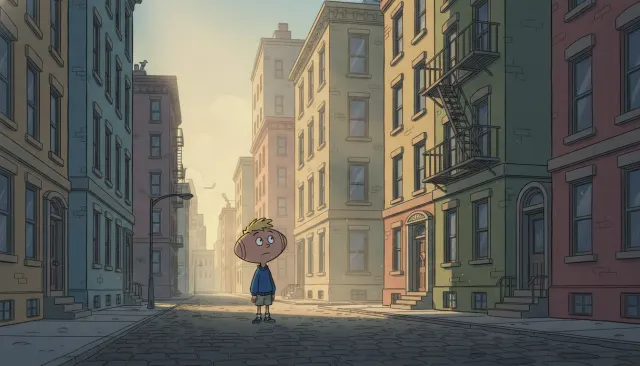
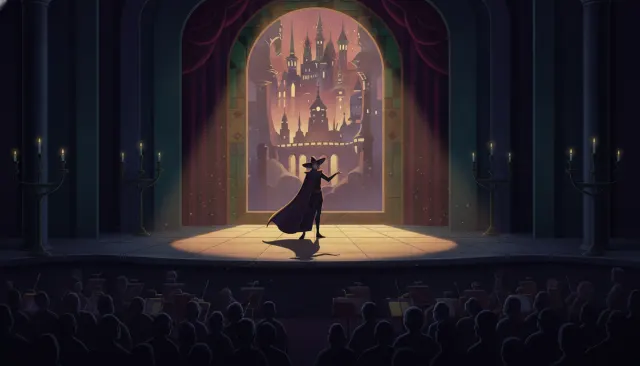
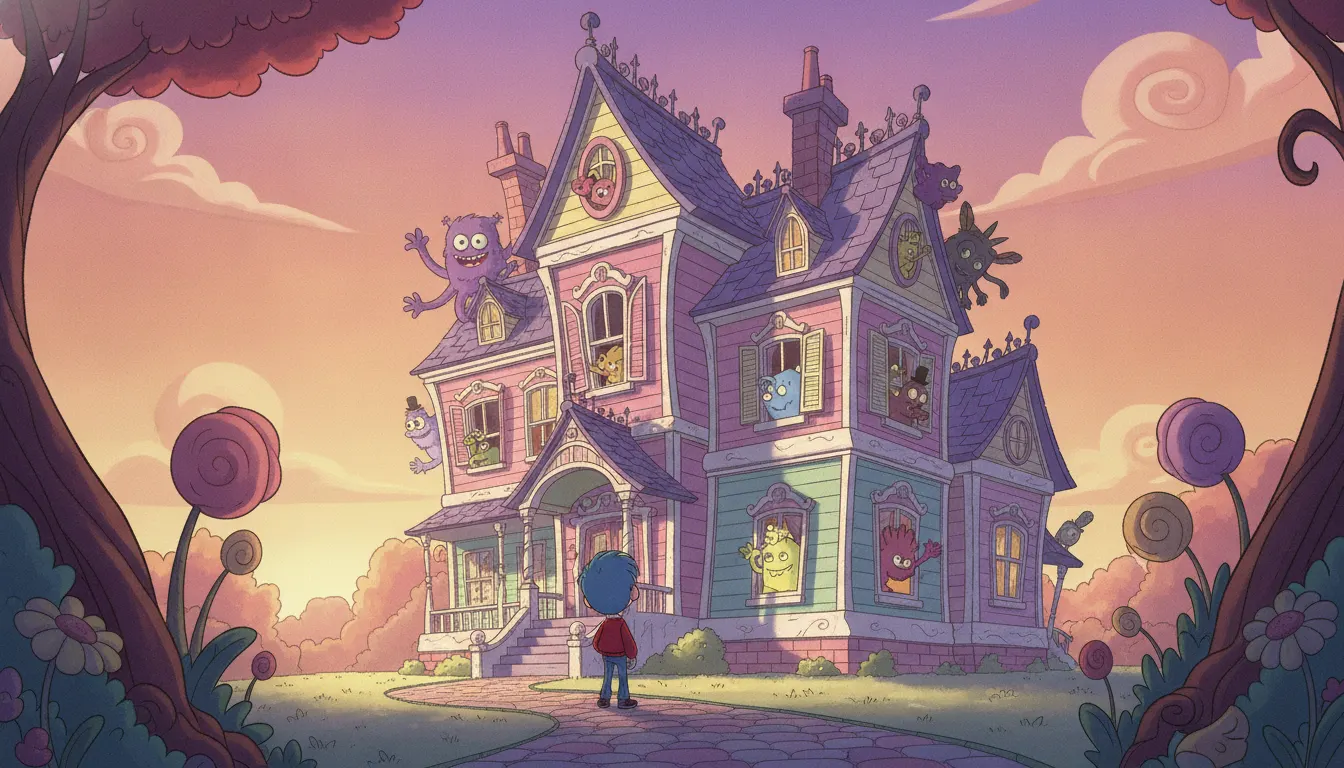
Craig McCracken Cartoon Network Victorian boarding house for imaginary friends. Sherwood Foster's mansion exteriors, pastel candy palette, oddball cast silhouettes.
The moves a human crew would use to get here. Cue applies them for you, and knowing their names is how you ask for a change.
Characters built from pure geometric shapes - cylinders, ovals, rectangles - with minimal surface detail, inspired by UPA modernist character design of the 1950s.
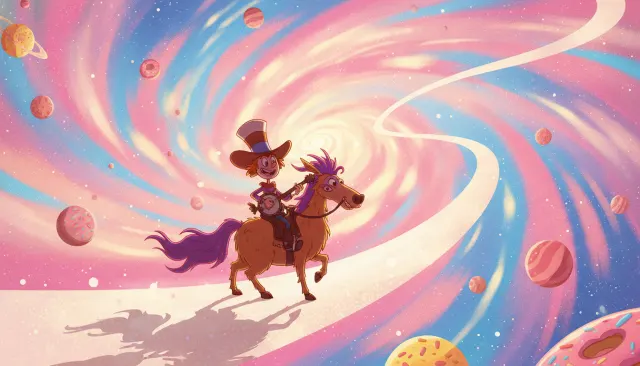
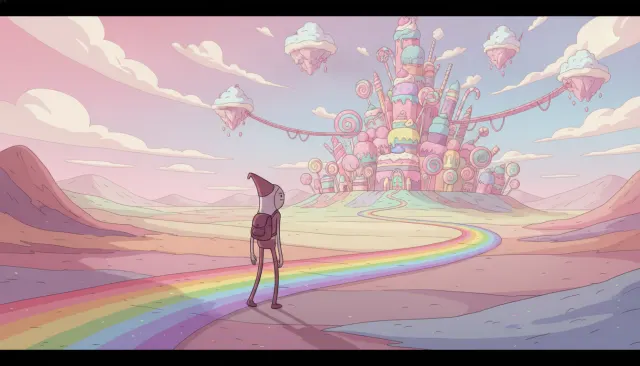
Dusty pinks, mint greens, lavenders, and cream whites applied consistently across characters and environments, evoking 1950s-60s children's book illustration.
Flat-colored architectural backgrounds with geometric furniture and patterned floors - designed rather than painted, referencing Eames-era graphic design.
Characters carry consistent-weight black outlines that make them pop cleanly against pastel backgrounds without competition.
Generous white and cream negative space in backgrounds creates breathing room and emphasizes the show's modernist design sensibility.
Geometric patterns on floors, wallpaper, and clothing reference mid-century American domestic design - stripes, dots, and simple repeating motifs.
Emotional expression conveyed through shape deformation and scale rather than detailed facial musculature - bodies warp, stretch, and compress for comedic effect.
Foster's Home for Imaginary Friends is an animated television series created by Craig McCracken that aired on Cartoon Network from 2004 to 2009. The show is set in a mansion that houses abandoned imaginary friends after children grow up, blending mid-century modern design with pastel color theory and a deliberately retro visual sensibility that set it apart from its contemporaries.
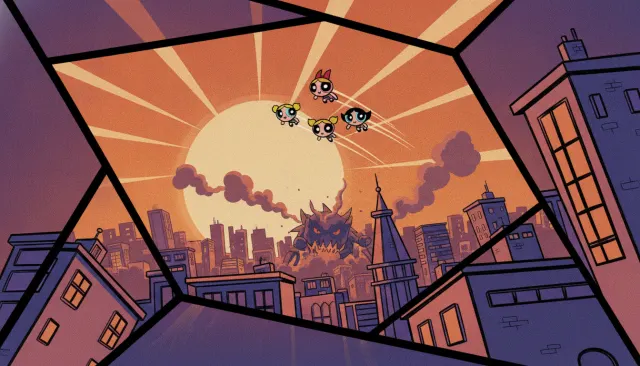
Craig McCracken previously created The Powerpuff Girls (1998-2005), which established his signature: simple geometric character designs, bold flat colors, and heavy UPA-influenced modernist aesthetics. Foster's Home pushed these tendencies further, building an entire visual world around 1950s-60s design principles - the kind of geometry, palette, and illustration style found in mid-century American children's book illustration and Eames-era architecture.
The show's color palette centers on warm pastels - dusty pinks, mint greens, lavender purples, cream whites, and muted teals - applied across both characters and environments. Characters are designed as pure geometric shapes: Bloo is a simple blue cylinder with stacked circles; Mac is oval-bodied with round glasses; Wilt is an elongated red form with a single eye. The shapes are immediately readable and deliberately toylike, referencing the UPA studio's mid-century modernist character design philosophy.
Background design is the show's visual crown jewel. Foster's Home mansion is a masterpiece of mid-century illustration: flat-colored architectural planes, geometric furniture, patterned floors, and carefully placed negative space. The backgrounds feel like enlarged children's book spreads - more illustrated than painted, suggesting the hand of a designer rather than a painter.
The UPA (United Productions of America) studio's 1950s output - particularly Gerald McBoing-Boing (1950) and Mr. Magoo - pioneered the use of flat, abstract backgrounds and simplified character designs as a counter to Disney's naturalistic style. McCracken cites UPA as a foundational reference, and Foster's Home represents the most direct revival of this sensibility in 21st-century television animation.
Pastel palettes are psychologically associated with safety, childhood memory, and gentle humor - qualities perfectly suited to a show about abandoned imaginary friends navigating questions of belonging and growing up. The warmth of the palette creates tonal contrast with the show's occasional melancholy themes, making the emotional beats land harder against the sweet visual environment.
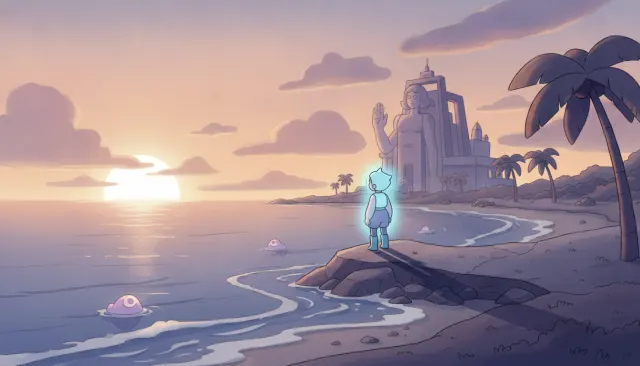
The show influenced a wave of Cartoon Network productions and anticipated the broader pastel-modernist trend that later characterized Adventure Time (2010), Steven Universe (2013), and Tumblr illustration culture of the 2010s. McCracken's approach proved that deliberately retro design sensibilities could feel fresh rather than derivative.
Craig McCracken · 2004
Cartoon Network series; mid-century modernist pastels applied to imaginary friend sitcom
Craig McCracken · 1998
McCracken's prior series; established geometric character + UPA aesthetic template
UPA / John Hubley · 1950
UPA short; foundational flat-background, simplified character design precedent
Pendleton Ward · 2010
CN successor series building on Foster's pastel-modernist influence
Rebecca Sugar · 2013
Cartoon Network series further developing the gem-and-pastel aesthetic lineage
Craig McCracken · 2013
McCracken's second CN series; further refines geometric character design approach
A Look is not a filter. It is a set of stored decisions the pipeline reads before it makes a single frame, so two videos in the same Look actually match.