
Hilda (Netflix series)
Silvergate Media / Luke Pearson / Vinnie Auerbach · 2018
Primary animated reference, three seasons adapting Pearson's graphic novels with flat-shaded Nordic storybook aesthetic
Hilda Netflix series feel as 3D. Storybook flat-shaded look, Scandinavian folk-tale palette, bold simple shapes.
The moves a human crew would use to get here. Cue applies them for you, and knowing their names is how you ask for a change.
Forest greens, slate greys, twilight blue-purples, and soft yellows as the base register, with warm red-and-blue character accents as focal points
One or two discrete shadow fills per object, never airbrushed -- maintaining the hand-illustrated simplicity of the source graphic novels
Outline strokes with subtle hand-drawn irregularity resisting the too-perfect vector cleanliness of lower-budget digital animation
Magical, dangerous, or supernatural elements receive the palette's only fully saturated hues, making magic visually distinct within the muted base
Trolls, elves, and spirits designed with a simultaneously threatening-and-charming balance referencing Nordic children's literature traditions
Subtle grain or brush-texture overlays on flat digital backgrounds preserving the impression of watercolor paint without per-frame hand rendering
Hilda began as Luke Pearson's graphic novel series published by Nobrow Press starting in 2010, and the Netflix animated adaptation (Silvergate Media, 2018-2023, lead director Vinnie Auerbach) translated Pearson's delicate storybook watercolor sensibility into a flat-shaded animated form that became one of the decade's most distinctive children's animation aesthetics.
Pearson's graphic novels use a soft, Nordic folk-illustration vocabulary: gentle colour washes, simple but expressive character faces, and backgrounds that suggest fjords, trolls, and deep forests with economic line work. The books draw from Scandinavian children's literature illustration traditions and the quiet fantasy of Tove Jansson's Moomin books. Every page feels like it could hang as a print.
Silvergate's adaptation team converted Pearson's watercolor-wash backgrounds into digital flat-colour zones with subtle texture passes -- maintaining the impression of paint without the expense of hand-painted frames. Character outlines use a slightly irregular, slightly loose stroke quality that resists the too-perfect vector cleanliness of cheaper productions. Shadow passes are minimal: one or two steps of flat fill, never airbrushed gradients.
The palette centers on muted Nordic naturals -- forest greens, slate greys, soft yellows, and the blue-purple of twilight fjords -- punctuated by the warm red of Hilda's scarf and blue coat as the human focal point in every frame. Magical or dangerous elements receive slightly more saturated hues (the red of a Marra's glow, the deep void-black of a Void). The restraint makes those accents powerful.
Hilda herself is rendered in Pearson's simplified naturalist style: round head, large expressive eyes, and the slightly chunky limbs of a Nordic children's book character. Trolls, elves, and spirits follow creature-design logic that is simultaneously threatening and charming -- never purely scary, never purely cute. This tonal balance is central to the storybook flat-shaded register.
The Hilda movie (2021), a feature-length Netflix arc, proved the aesthetic scales to feature runtime without needing upgrade. The series' visual language influenced subsequent Nordic-adjacent animated productions globally.
Hilda's visual register draws from a rich heritage of Scandinavian children's illustration: Elsa Beskow's early 20th-century Swedish nature fairy tales, Tove Jansson's Moomin watercolors (Finland, 1945+), and the flat-painted forest scenes of Danish illustrated children's books. Pearson's visual literacy in this tradition is evident in how Hilda's elves, trolls, and spirits feel simultaneously European in origin and freshly designed -- they sit within a recognizable folk tradition rather than Disney's American fairy-tale vocabulary.
A consistent visual strategy in Hilda is scale contrast: the small, round-headed Hilda against the enormous scale of the Norwegian-fjord-inspired landscape. Single-panel compositions frequently show her tiny figure against vast sky, cliff face, or forest canopy. This scale contrast -- readable in flat-shaded form precisely because the color zones are clear enough to read the compositional weight at a glance -- is central to the series' emotional tone of childhood adventure in a world made for things much larger than you.
Silvergate Media / Luke Pearson / Vinnie Auerbach · 2018
Primary animated reference, three seasons adapting Pearson's graphic novels with flat-shaded Nordic storybook aesthetic
Silvergate Media / Luke Pearson · 2021
Feature-length arc demonstrating the aesthetic's scalability and emotional range at film format
Luke Pearson / Nobrow Press · 2010
Source material establishing the watercolor-wash storybook aesthetic from which the animation derives
Gutsy Animations / Tove Jansson estate · 2019
CG-3D Moomin adaptation applying similar Nordic gentle-fantasy storybook register as direct contemporaneous comparison
Cartoon Saloon / Nora Twomey · 2017
Irish animation with similar flat-shaded illustrative backgrounds and restrained palette demonstrating cross-cultural application
Cartoon Network / Patrick McHale · 2014
American autumnal folk-illustration animation sharing the muted-palette storybook register
A Look is not a filter. It is a set of stored decisions the pipeline reads before it makes a single frame, so two videos in the same Look actually match.
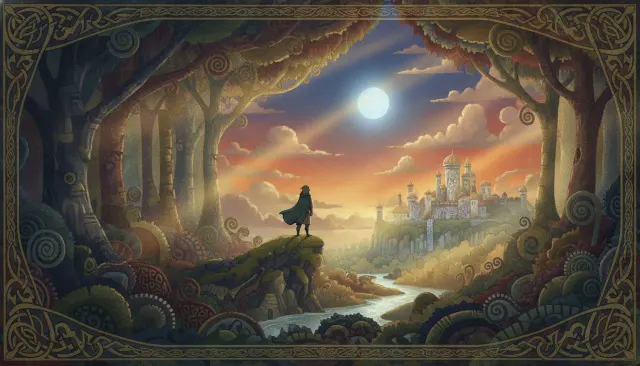 Indie Art AnimationCartoon Saloon Celtic Illuminated
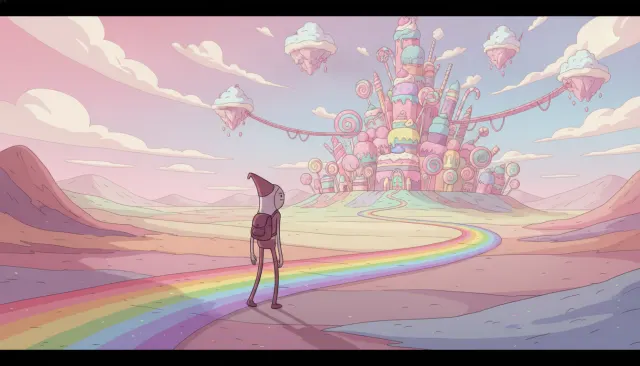 Cn Modern PastelAdventure Time Pastel
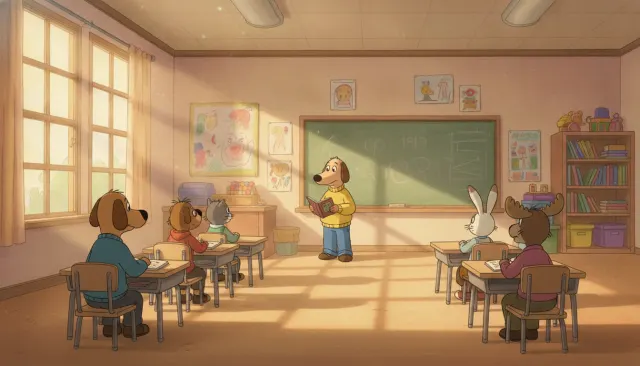 Pbs Kids EducationalArthur PBS Warm Watercolor
 Pbs Kids EducationalClifford the Big Red Dog Painterly
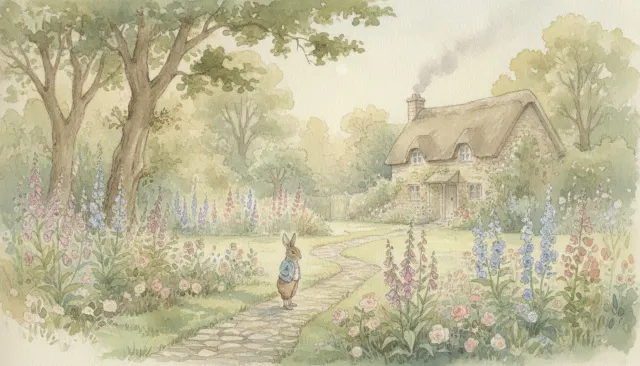 Childrens BookBeatrix Potter Watercolor Storybook
 Kids Cn Action ClassicAvatar The Last Airbender Anime-Influenced Western