CHILDRENS BOOK · 1900S · UK
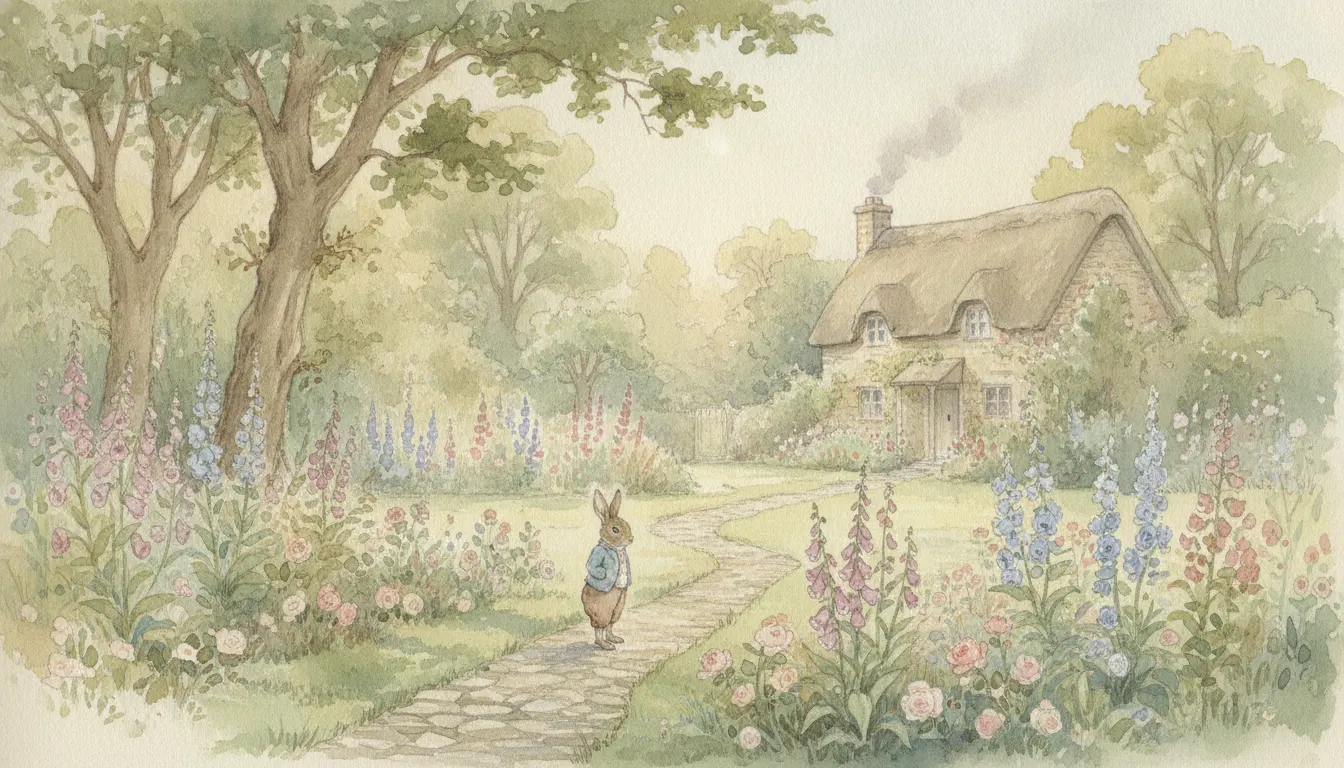
Beatrix Potter Watercolor Storybook
Beatrix Potter Peter Rabbit pale watercolour. Tiny vest-wearing animal, Lake-District cottage garden, soft Edwardian palette.
potterwatercolouredwardiancottagecore
WHEN TO USE
- Children's content for toddlers and early readers
- English countryside, nature, or gardening content seeking gentle pastoral warmth
- Brand content for children's products, nursery decor, or family-friendly companies
- Storybook animation or title sequences for family entertainment
- Nostalgic content celebrating British heritage or childhood reading
- Content about natural history, botany, or wildlife for young or family audiences
WHEN NOT TO USE
- Adult audiences where the gentle pastoral register reads as infantile
- Urban or contemporary aesthetic contexts
- Dark, edgy, or emotionally intense content
- Bright, saturated, maximalist aesthetics
- Any content that requires visual energy or dynamism
SIGNATURE TECHNIQUES
How the look is made.
The moves a human crew would use to get here. Cue applies them for you, and knowing their names is how you ask for a change.
- 01Transparent watercolor washes over pencil outline
luminous, not opaque
- 02Small
scale precision: individual fur hairs, correct botanical species, accurate insect anatomy
- 03Anthropomorphized animals in period
appropriate human clothing within accurate natural settings
- 04Soft, muted English pastoral palette
sage, mushroom brown, dusty blue, warm buff
- 05Integrated text
and-image layout designed for small-format pages children can hold
- 06Centered, slightly symmetrical compositions with the animal subject as clear focal point
- 07Domestic and garden settings
hedgerows, kitchen gardens, farmhouses, woodland paths
HISTORY & CONTEXT
Where it comes from.
Beatrix Potter: Naturalism and Narrative in Watercolor
Helen Beatrix Potter (1866-1943) was a British author, illustrator, and natural scientist whose illustrated books - beginning with The Tale of Peter Rabbit (1902) - defined a visual language for children's picture book illustration that remains influential over a century later. Her work represents an unusual synthesis: the rigorous observational precision of a Victorian naturalist (she was a serious mycologist and prepared detailed scientific illustrations of fungi) filtered through the warmth and anthropomorphic playfulness of Victorian children's literature.
The Books and Their Illustration
Potter initially self-published The Tale of Peter Rabbit in 1901 after repeated rejections, then secured publication with Frederick Warne & Co. in 1902. The book's format - small square pages designed to fit children's hands, closely integrated text and illustration - was revolutionary. Over the next two decades she produced 23 canonical books, including:
- The Tale of Squirrel Nutkin (1903)
- The Tale of Jemima Puddle-Duck (1908)
- The Tale of Mrs. Tiggy-Winkle (1905)
- The Tale of Mr. Jeremy Fisher (1906)
- The Tale of Tom Kitten (1907)
- The Tale of the Pie and the Patty-Pan (1905)
Illustration Technique
Potter's watercolors are small in scale - often painted at the same size as the printed reproductions, which forced extreme precision - and deploy transparent washes that allow the white paper to glow through. Outlines are drawn in pencil, then filled with careful washes of color. The result is luminous but controlled: rabbits have individual fur patterns, mushrooms have correctly identified gill structures, English hedgerows are botanically accurate. The anthropomorphized animals wear Edwardian clothing (Peter Rabbit's famous blue jacket was based on a real garment) but inhabit accurately depicted natural environments.
Her palette is consistently soft: sage green, mushroom brown, dusty blue, warm buff, and the muted greens of English pastureland. There is no garish color; even the most intense notes (Peter's jacket blue, a red mushroom cap) are desaturated against earthy surrounds.
Influence
The Beatrix Potter visual tradition influenced virtually every subsequent school of British children's illustration, including Ernest Shepard (Winnie-the-Pooh, 1926), and established the format of the illustrated children's board book that remains the industry standard.
NOTABLE WORKS
Where you have seen it.
The Tale of Squirrel Nutkin
1903
The Tale of Mrs. Tiggy-Winkle
1905
The Tale of Mr. Jeremy Fisher
1906
The Tale of Tom Kitten
1907
The Tale of Jemima Puddle-Duck
1908
Scientific fungal illustrations (1890s, submitted to Royal Botanic Gardens, Kew; rejected as a woman)
THE RECIPE
The exact knobs
the renderer turns.
A Look is not a filter. It is a set of stored decisions the pipeline reads before it makes a single frame, so two videos in the same Look actually match.
SettingValue
TransitionHow one shot becomes the next
hard cuts · 160ms · linearKen BurnsCamera move applied to stills
Slow push · 0.02 · centerTypographyDisplay / body / mono pairing
Playfair Display · Lora · JetBrains MonoMusic moodWhat the bed under the voice sounds like
english-folk-strings · piano-pastoralPrompt suffixAppended to every shot prompt in this Look
Beatrix Potter Peter Rabbit pale watercolour, tiny vest-wearing animal, Lake District cottage garden, soft Edwardian palettePALETTE
Primary
#A8C9A0
Secondary
#D4A574
Accent
#7A5C36
Text/Light
#2A1F10
Text/Dark
#F5F0E0
BG 900
#F5F0E0
BG 800
#E8E0CC
RELATED LOOKS
Next to it on the shelf.
Your first cut
is on us.
+ New videoFree plan · no card · 1080p export