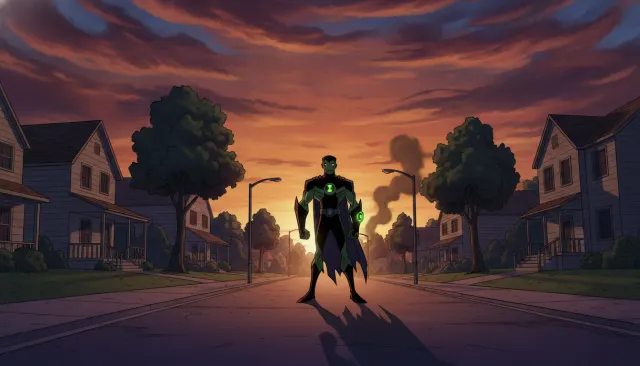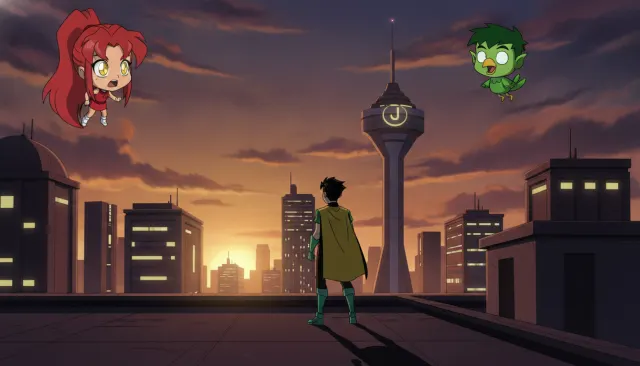
Dexter's Laboratory
Genndy Tartakovsky / Cartoon Network · 1996
The canonical work; the first full expression of Tartakovsky's geometric-bold animation system
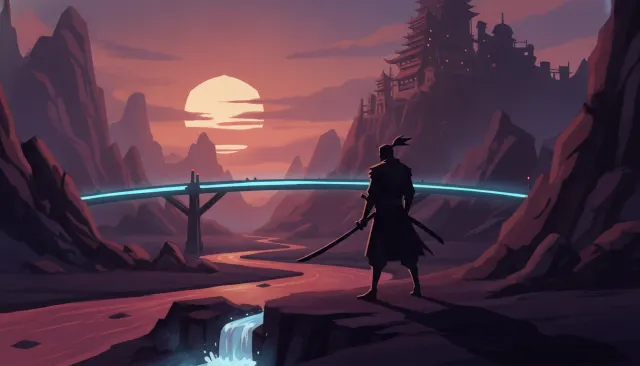
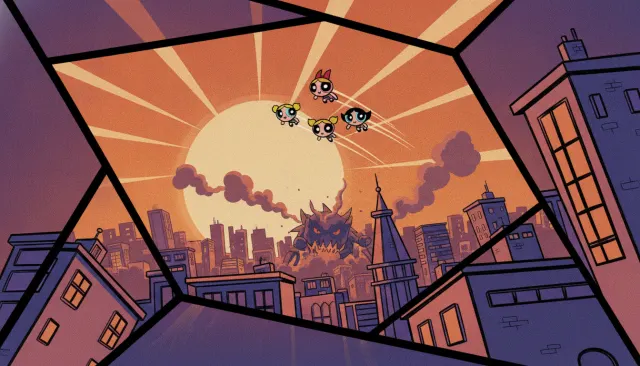
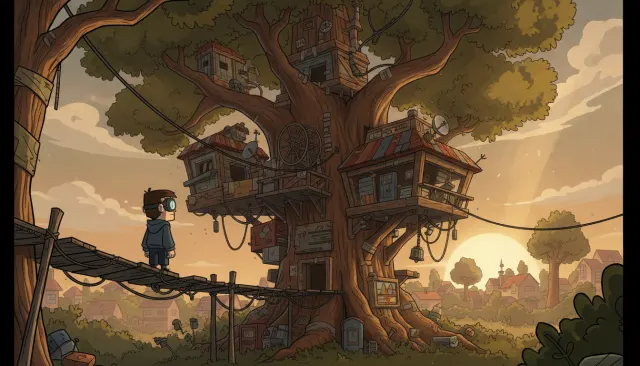
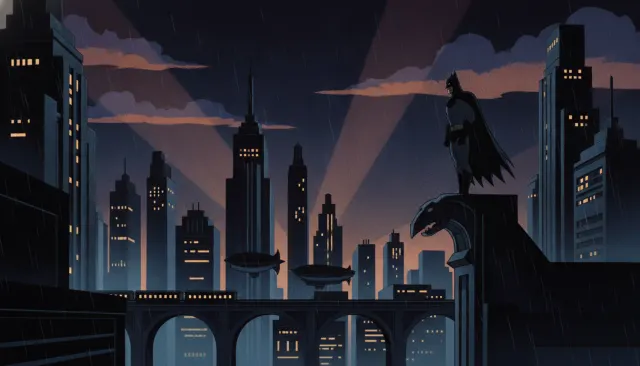
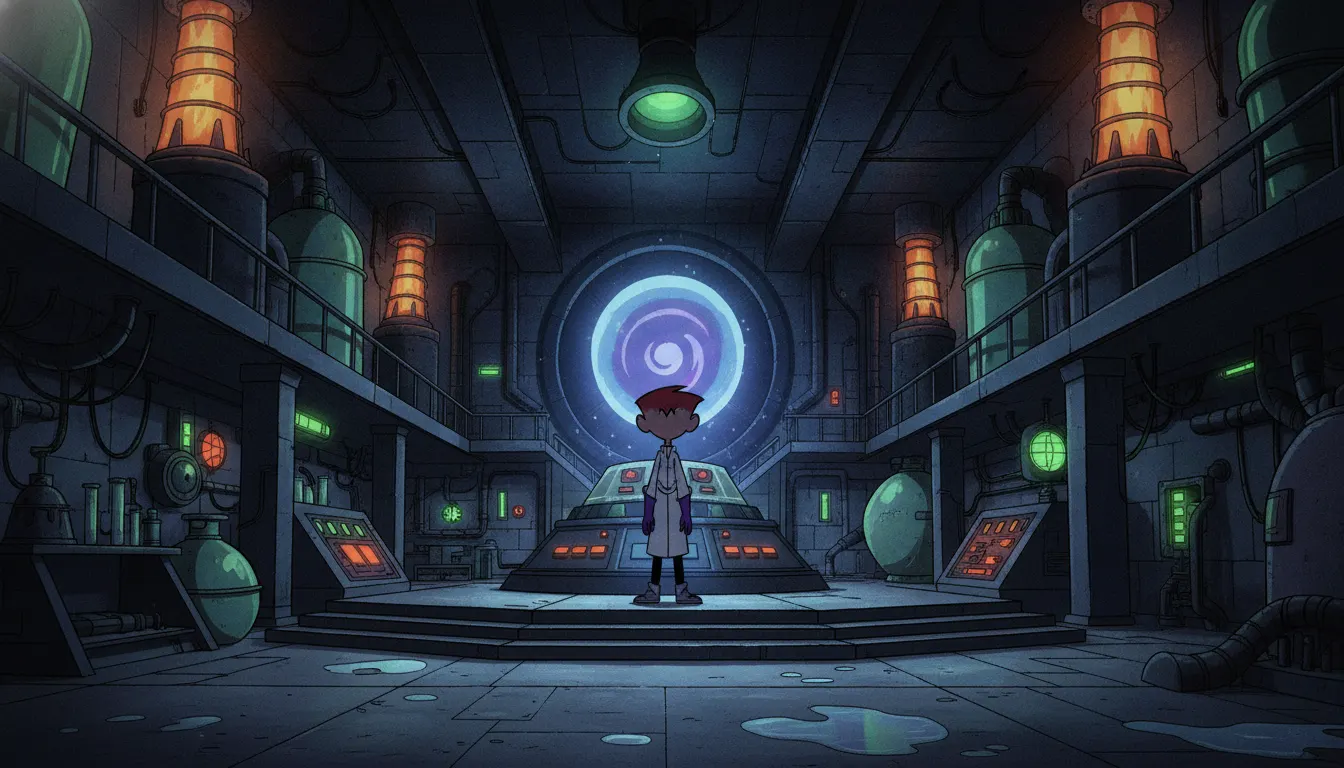
Genndy Tartakovsky bold linework 90s Cartoon Network. Boy genius mad-scientist suburban basement lab, crisp angular shapes, primary palette.
The moves a human crew would use to get here. Cue applies them for you, and knowing their names is how you ask for a change.
Characters are built from pure geometric forms (circles, rectangles, triangles) assembled with graphic designer logic rather than anatomical precision.
Character designs use extreme proportion ratios as personality shorthand -- tiny body/huge head for Dexter, elongated limbs for Dee Dee.
Scenes are composed as graphic design spaces using asymmetric layouts, extreme color fields, and cinematographic angles unusual in TV animation.
Dexter's lab uses clean-geometric primary-color machinery that references 1950s-1960s science fiction production design.
Tartakovsky uses held poses and minimal movement deliberately, treating animation economy as visual style rather than budget limitation.
Every character reads as a distinct shape in silhouette alone -- a Tartakovsky design principle applied consistently across the roster.
Dexter's Laboratory premiered on Cartoon Network as part of the What a Cartoon! anthology on April 28, 1996, and as a full series on April 28, 1996, created by Genndy Tartakovsky. Tartakovsky, a CalArts graduate who had trained under John Kricfalusi, developed the show as his original creator showcase. Dexter ran through November 20, 2003 (with an original run through 1998 and a revival run 2001-2003). Tartakovsky later created Samurai Jack (2001), Star Wars: Clone Wars (2003), and Primal (2019).
Tartakovsky developed one of the most recognized and influential visual systems in American TV animation. His approach combines geometric simplification with bold graphic composition, drawing from sources that include Japanese manga, UPA-era American limited animation, and the action filmmaking of Steven Spielberg (Tartakovsky was a particular student of Spielberg's Raiders of the Lost Ark, 1981).
Dexter himself is a visual paradox: a perfectly round head balanced on a tiny body, enormous glasses obscuring most of his face, always in a white lab coat. The design uses extreme proportion contrast as character shorthand. His sister Dee Dee is the inverse -- elongated limbs, exaggerated ballet-dancer proportions, enormous blonde hair. Their visual opposition (compact/precise vs. extended/chaotic) embodies the show's comedic conflict.
Tartakovsky's character designs are built from pure geometric forms: circles, rectangles, and triangles assembled with graphic designer logic rather than anatomical logic. This geometric foundation means characters can be reproduced consistently across thousands of animation frames -- a practical advantage in TV production -- while also giving the show a visual identity that reads as deliberately designed rather than conventionally animated.
The influence of Osamu Tezuka (Astro Boy, 1963) is visible in the large-eye, simplified-anatomy approach. Tartakovsky was direct about studying Tezuka's work at CalArts. But where Tezuka's designs are organic and expressive, Tartakovsky's are geometric and precise -- American geometric formalism applied to anime character design principles.
Tartakovsky treated the television frame as a graphic design space rather than a window. He used bold, asymmetric compositions, extreme color fields, and cinematographic conventions (Dutch angles, push-in zooms, long static shots) that were unusual in TV animation. This 'directorial' approach to television animation was influential on subsequent generations of animation directors.
The laboratory itself -- Dexter's secret world hidden behind his bookcase -- is rendered with the clean-geometric aesthetic of mid-century science fiction: primary-color machinery, perfectly ordered equipment, space-program modular architecture. This environment is a character as much as Dexter himself.
Tartakovsky's Dexter launched a career that defines sophisticated American animation: Samurai Jack (2001) pushed his geometric-bold style toward its most rigorous visual expression; Star Wars: Clone Wars (2003) applied the aesthetic to theatrical IP; Primal (2019) evolved it into wordless action cinema. His work is cited by virtually every subsequent generation of American animation creators as a primary influence.
Genndy Tartakovsky / Cartoon Network · 1996
The canonical work; the first full expression of Tartakovsky's geometric-bold animation system
Genndy Tartakovsky / Cartoon Network · 2001
The visual system pushed to its most rigorous expression -- bold, graphic, deeply composed
Genndy Tartakovsky / Cartoon Network · 2003
Tartakovsky applied to theatrical IP; demonstrates the aesthetic's adaptability
Genndy Tartakovsky / Sony Animation · 2012
Theatrical work applying the bold geometric approach to a family-comedy format
Genndy Tartakovsky / Adult Swim · 2019
Mature evolution of the visual system into adult wordless action cinema
Craig McCracken / Cartoon Network · 1998
Contemporaneous CN show using related geometric-character design principles from the same What a Cartoon! generation
Osamu Tezuka / Mushi Production · 1963
Primary Japanese anime influence on Tartakovsky's large-eye simplified-anatomy character design approach
A Look is not a filter. It is a set of stored decisions the pipeline reads before it makes a single frame, so two videos in the same Look actually match.