Ben 10
Man of Action / Cartoon Network Studios · 2005
The canonical Classic McGrath series; the design peak of the franchise
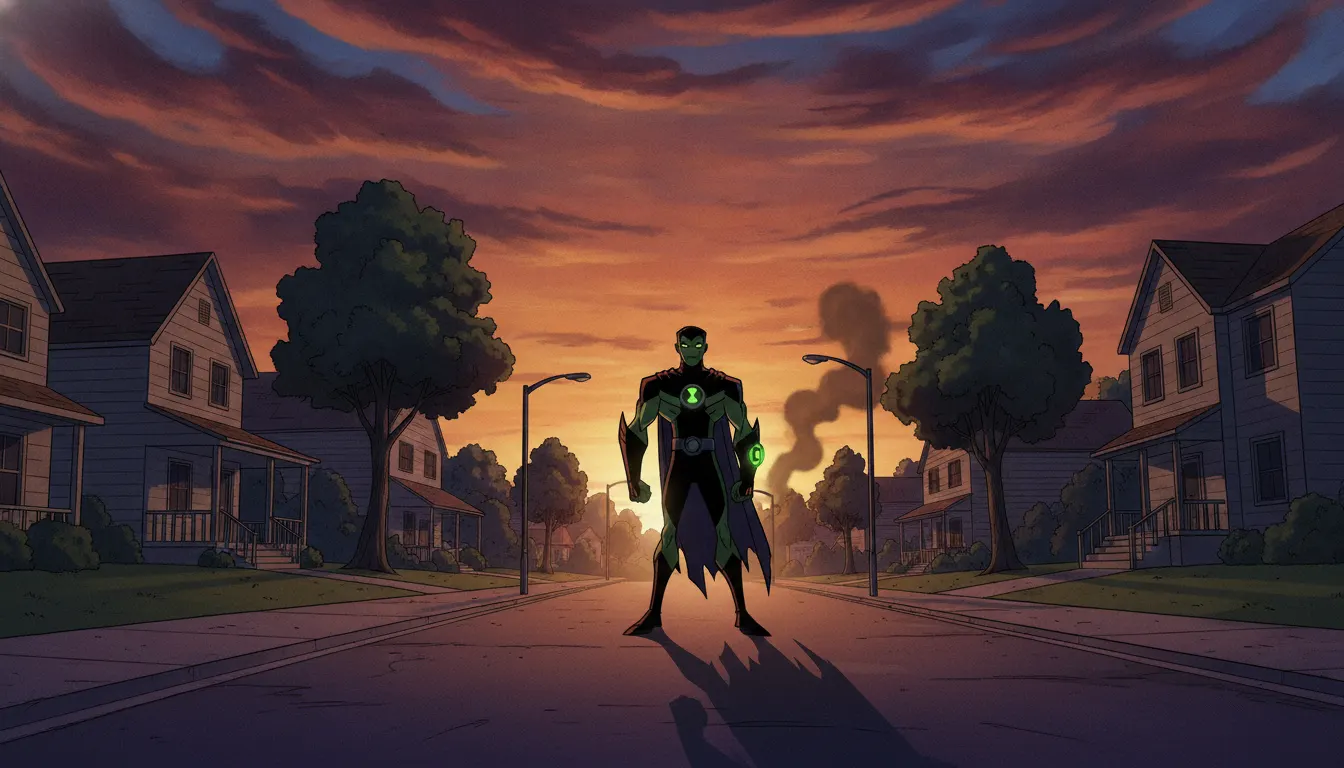
Glen Murakami and Man of Action original Ben 10. Tetrax-shaped alien hero kid, Bellwood suburban exteriors, sharp Western action line.
The moves a human crew would use to get here. Cue applies them for you, and knowing their names is how you ask for a change.
Each alien transformation is designed for instant silhouette recognizability -- a core principle from the original 10 alien roster.
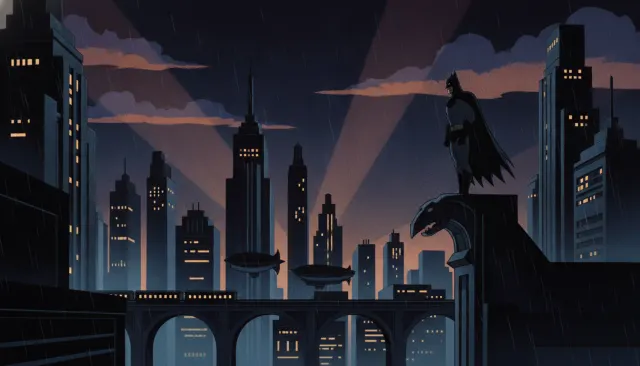
Fight sequences use impact poses held for readability, drawing from Bruce Timm's Batman: TAS visual vocabulary.
Costumes and key characters use bold, saturated colors that pop against action backgrounds and support toy design.
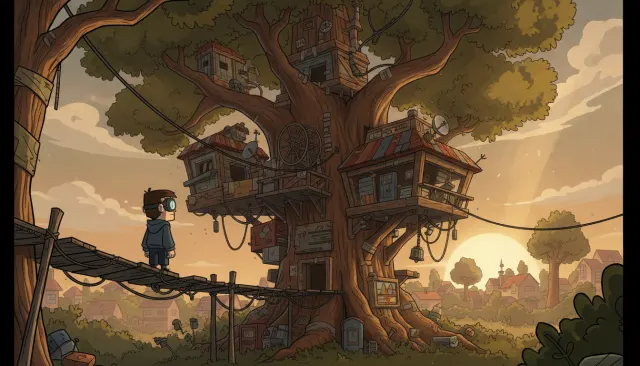
National park backgrounds are rendered in clean, flat fills with warm summer light, establishing scale without detailed rendering.
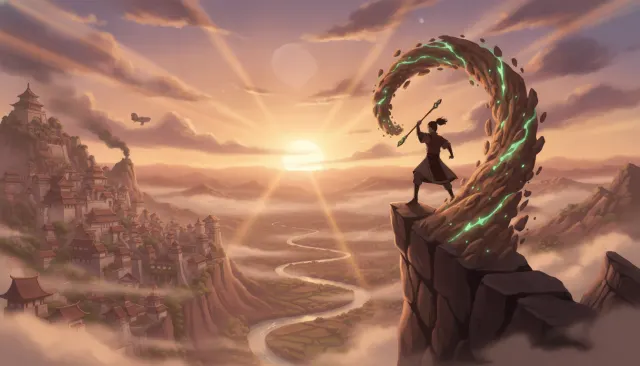
Alien transformations follow a consistent visual grammar -- green energy flash, body reconstruction -- that became a franchise signature.
Characters use a consistent, assured line weight without excessive detail, optimized for TV budget animation without looking cheap.
Ben 10 premiered on Cartoon Network on December 27, 2005, created by Man of Action (Duncan Rouleau, Joe Casey, Joe Kelly, and Steven T. Seagle). The original series ran through April 15, 2008, and was animated by Cartoon Network Studios with production design led by Dave Johnson and character design by co-creator Duncan Rouleau. The show spawned multiple sequel series: Alien Force (2008), Ultimate Alien (2010), Omniverse (2012), and a 2016 reboot.
The 'Classic McGrath' designation refers specifically to the original 2005-2008 series and its visual language, as distinguished from the sequel series that evolved the aesthetic. The name references Ben Tennyson, the 10-year-old protagonist, whose design encapsulates the show's visual philosophy.
Character designer Duncan Rouleau developed a clean, confident line style that balanced the angular dynamism of 1990s superhero animation (Bruce Timm's DCAU influence is visible) with the more rounded accessibility needed for a younger audience. Ben's design uses simple, strong shapes -- a white t-shirt with a black stripe, cargo shorts, a chunky alien device on his wrist -- that are immediately readable at any scale.
The show's most significant design achievement is its roster of 10 original alien forms (expanded to 20+ across the run). Alien designer Dave Johnson created transformation designs that needed to be visually distinct, functionally suggestive of their powers, and animatable within a TV budget. The original 10 aliens -- Heatblast, Wildmutt, Diamondhead, XLR8, Grey Matter, Four Arms, Stinkfly, Ripjaws, Upgrade, Ghostfreak -- each have immediately readable silhouettes that have remained iconic in animation design.
The show's fight and transformation sequences draw heavily from Bruce Timm and Paul Dini's DCAU (particularly Batman: The Animated Series, 1992, and Justice League, 2001). Movements are bold and graphic, with impact poses held for readability, deliberate use of held frames for dramatic effect, and a color design that uses high contrast and limited palette to read clearly on small screens.
Background artist Dave Hartman developed environmental designs that complemented the action-forward character work: road trip America (national parks, deserts, forests) in summer light, rendered with clean flat fills and minimal texture that keeps the visual focus on character action.
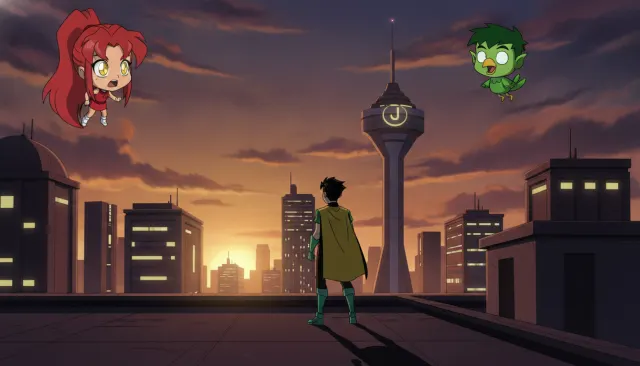
Ben 10 arrived as part of Cartoon Network's superhero animation push alongside Teen Titans (2003) and the DCAU. It became one of the most successful boys' action-animation franchises of the 2000s, generating billions in merchandise revenue. The show's visual language -- clean line, strong shape, primary-adjacent hero colors -- became a template for boys' action animation across the decade.
Man of Action / Cartoon Network Studios · 2005
The canonical Classic McGrath series; the design peak of the franchise
Man of Action / Cartoon Network · 2008
Sequel that aged up the aesthetic toward teen drama -- darker palette, more detailed design
Man of Action / Cartoon Network · 2010
Further evolution; introduced the Ultimatrix and more complex alien designs
Bruce Timm, Paul Dini / WB · 1992
Primary visual influence on the classic series' action design language
Sam Register / Cartoon Network · 2003
Contemporaneous Cartoon Network action series sharing the clean-line-with-anime-influence approach
Man of Action / Cartoon Network · 2010
Follow-up series by Man of Action with similar action-transformation visual grammar
A Look is not a filter. It is a set of stored decisions the pipeline reads before it makes a single frame, so two videos in the same Look actually match.