Leon Gatys, Alexander Ecker, Matthias Bethge
'A Neural Algorithm of Artistic Style' arXiv preprint (August 2015)
Gatys 2015 neural style transfer. Photo content with painting style applied, Van Gogh swirl or Picasso cubism overlaid on real scene, brush-stroke texture.
The moves a human crew would use to get here. Cue applies them for you, and knowing their names is how you ask for a change.
use the original algorithm with content weight 1.0, style weight 1e4-1e7 for varying style intensity
forward network: pre-trained style models run 1000x faster, useful for video or batch processing
combine style loss from multiple reference paintings at different weights (0.3 Van Gogh + 0.7 Cezanne)
use semantic segmentation to apply style transfer only to background, preserving subject clarity
use optical flow warping to propagate style activation from frame to frame, reducing flicker
apply NST at multiple scales and blend for consistent brushstroke scale at high output resolution
transfer sharpening: apply Unsharp Mask at 60-80% amount to recover edge definition softened by style texture
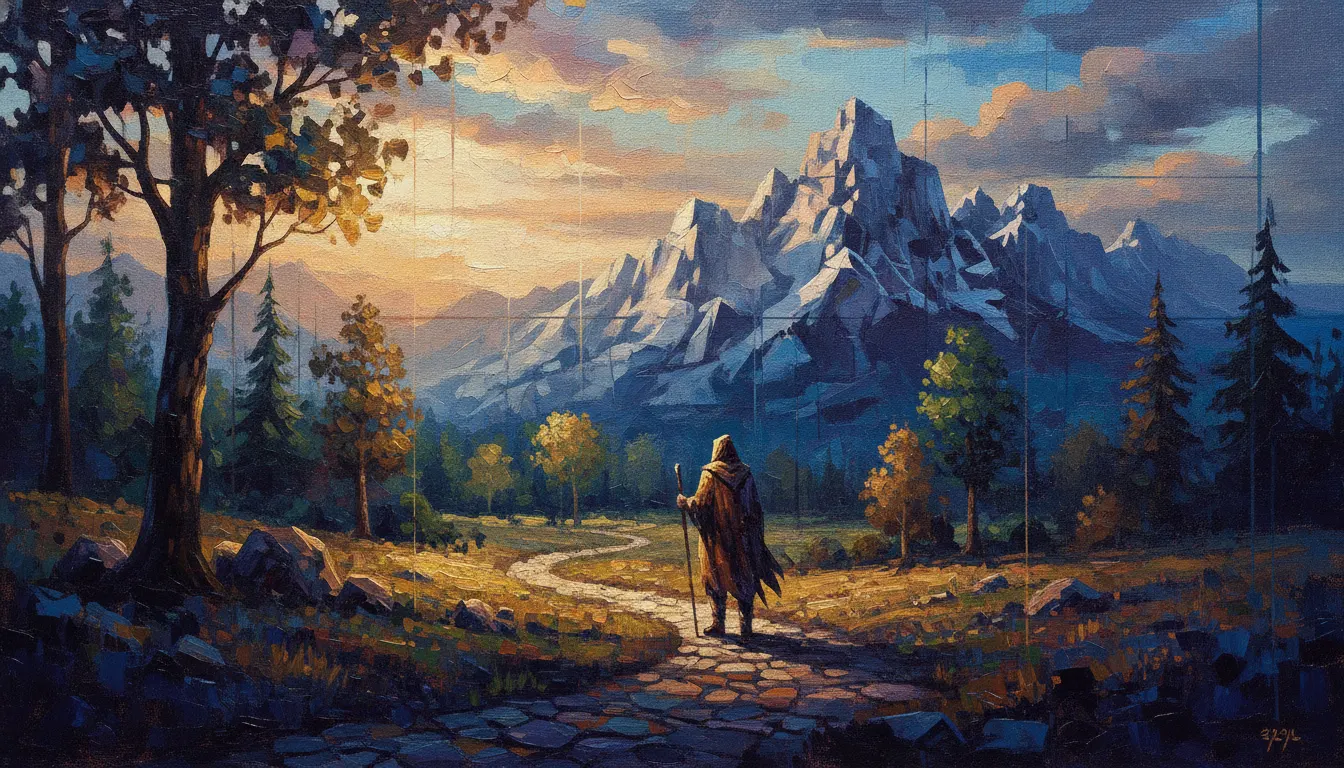
Neural style transfer is a deep learning technique that decomposes a style reference image (typically a painting) into its textural statistics via a convolutional neural network, and then iteratively modifies a content photograph until its own CNN feature statistics match both the original content and the target style. The result is a photograph rendered as if it were painted in the style of the reference artwork: Van Gogh's swirling strokes applied to a cityscape, Picasso's cubist faceting applied to a portrait, Klimt's gold leaf patterns applied to a forest.
Leon A. Gatys, Alexander S. Ecker, and Matthias Bethge at the University of Tubingen published "A Neural Algorithm of Artistic Style" on arXiv in August 2015. The paper demonstrated that the VGG19 convolutional neural network, trained on ImageNet for image classification, had learned separable internal representations of content (object and scene geometry, captured in deeper layers) and style (texture, color, and stroke patterns, captured in shallower layers via Gram matrix correlations). By performing gradient descent on a random noise image to minimize both the content loss relative to the photograph and the style loss relative to the painting, the algorithm produced convincing photographic-painting hybrids.
The paper generated immediate interest in both the AI research community and the broader public. Multiple open-source implementations (Torch, TensorFlow, Caffe) appeared within weeks, and the technique was covered in mainstream press by early 2016.
Prisma (Prisma Labs), launched in June 2016, brought neural style transfer to smartphones. By running optimized CNN inference on-device and in-cloud, Prisma could produce style-transferred photos in under 10 seconds. Within its first month it had been downloaded 10 million times; by mid-August 2016 it had reached 70 million downloads with 1.5 million images processed daily. It was the #1 app in multiple countries simultaneously. The Prisma moment marked the first time a specific deep learning algorithm had produced a mass-market consumer aesthetic movement.
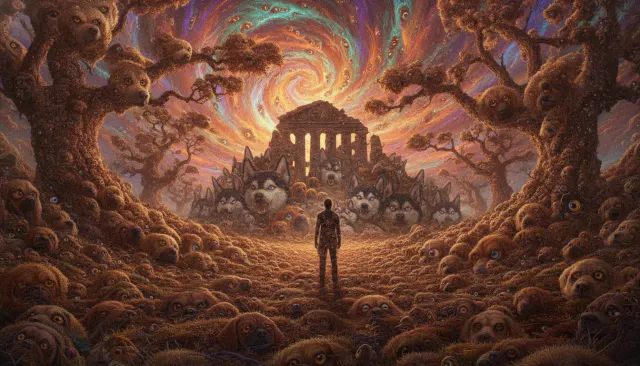
Deep Dream (Google, 2015) preceded Prisma and used a related CNN feature-amplification technique (optimizing input images to maximize specific convolutional layer activations), producing hallucinatory dog-face and eye-fur patterns. Though technically distinct from Gatys-style transfer, Deep Dream and NST circulate together as the two founding aesthetics of the "AI art" era that preceded diffusion models.
NST as a standalone technique has been largely superseded by diffusion model approaches (Stable Diffusion, Midjourney) for commercial creative work, but it retains a specific aesthetic identity - less photorealistic than diffusion, more overtly filtered, with visible brushwork patterns tiled across the image surface - that makes it distinct and intentional when chosen today.
'A Neural Algorithm of Artistic Style' arXiv preprint (August 2015)
70 million downloads by August 2016
2016
_Portraits of Imaginary People_ series, NST and GAN
Perceptual Losses for Real-Time Style Transfer (Stanford, 2016), enabling fast video NST
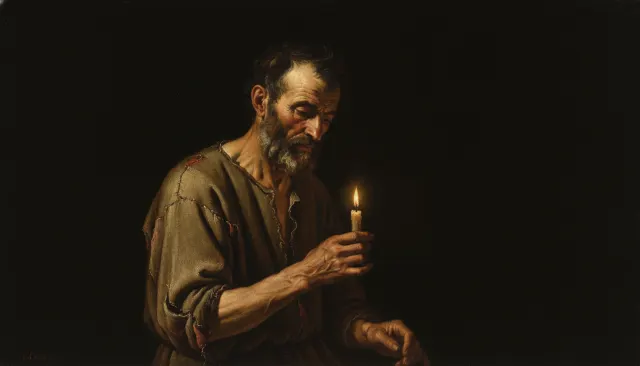
CNN-analysis of Rembrandt for generated painting
A Look is not a filter. It is a set of stored decisions the pipeline reads before it makes a single frame, so two videos in the same Look actually match.