Rosa Menkman
2010
_Glitch Studies Manifesto_ video essay
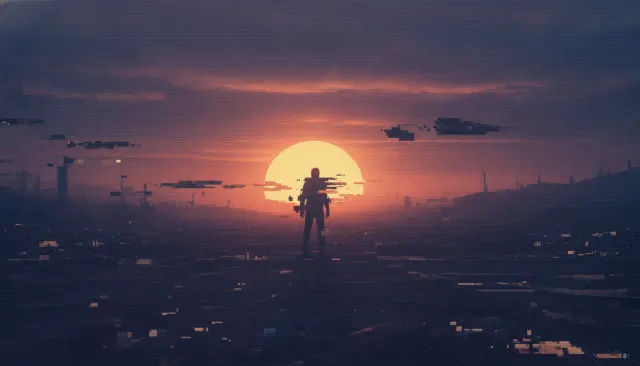
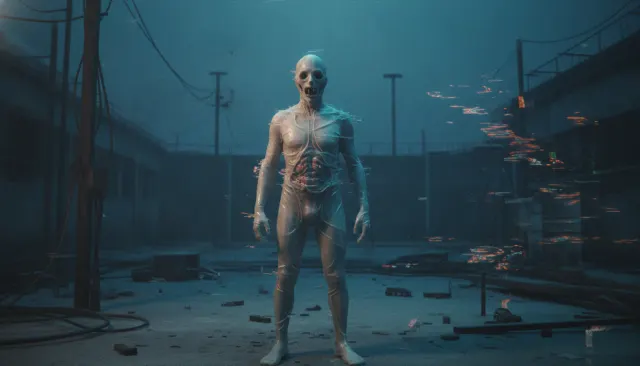
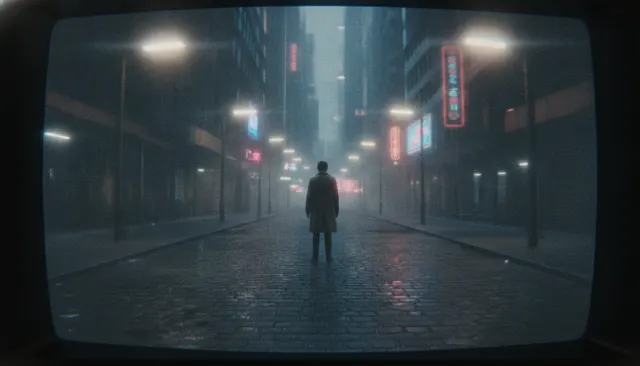
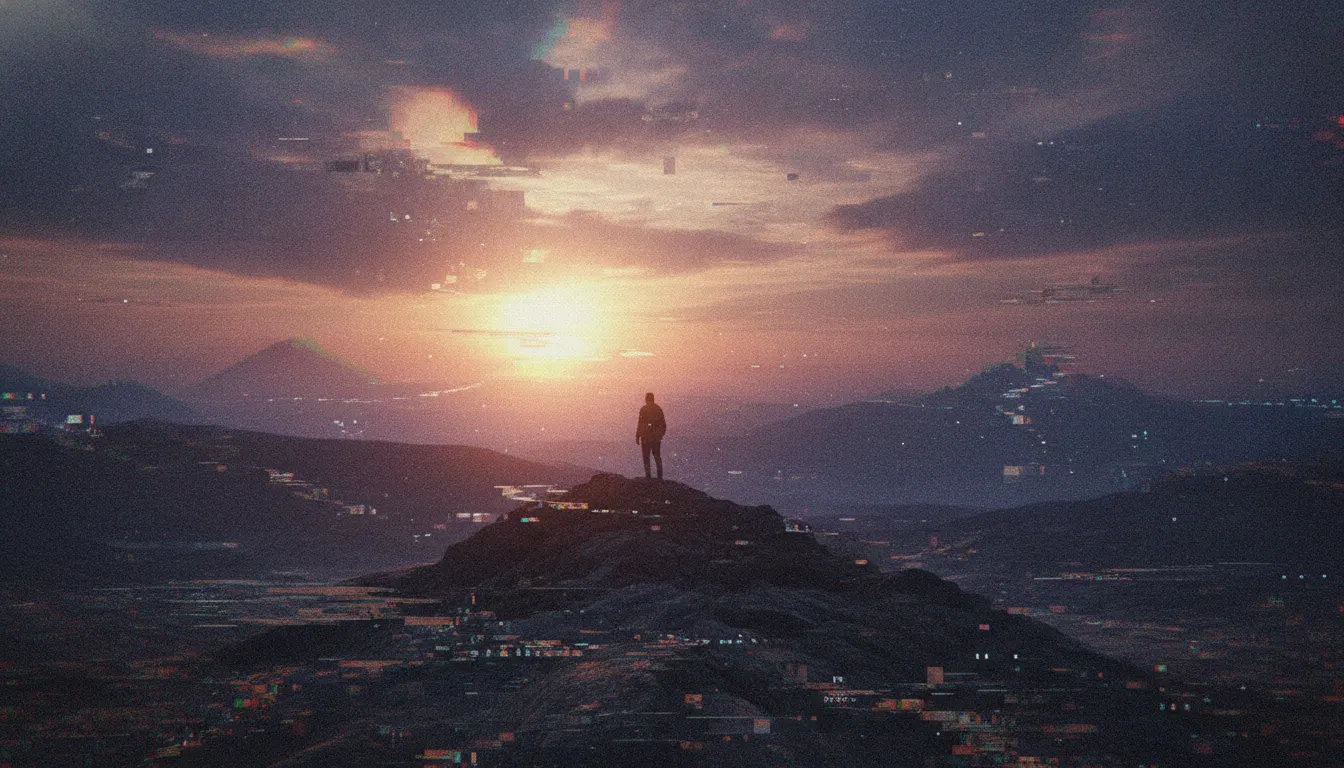
Datamoshed RGB channel separation. Red green blue channels offset on a horizontal axis, JPEG block tearing, deliberate corruption aesthetic.
The moves a human crew would use to get here. Cue applies them for you, and knowing their names is how you ask for a change.
offset R, G, B layers independently by 10-80px horizontally or at angle
line horizontal tearing: random horizontal strips shifted laterally mid-frame
compress image to 5-15% quality and composite at low opacity
duplicate or skip video frames to create pixel-smear between cuts
data edit: open PNG/BMP in Audacity as raw audio, apply effects, re-import as image
channel with radius 2-6px before displacement
add Gaussian or salt-and-pepper noise selectively to the B channel for CRT-era texture
Glitch art treats digital malfunction not as a flaw to correct but as a raw aesthetic medium. The RGB shift variant - sometimes called channel separation or chromatic aberration glitch - isolates the red, green, and blue image channels and displaces them independently by a few pixels to dozens of pixels, producing fractured color halos, trailing ghost edges, and a sense of reality tearing at its seams.
The theoretical foundation was laid by Rosa Menkman, whose 2010 _Glitch Studies Manifesto_ framed compression artifacts, buffer overflows, and signal noise as legitimate artistic vocabulary. Her video works and the ongoing _Resolution Studies_ series demonstrated how JPEG macroblocking and YCbCr color space bleeding could be harnessed deliberately. Phillip Stearns pushed into hardware: his _Year of the Glitch_ project (2012-2013) circuit-bent consumer cameras and scanners to produce physical glitch artifacts, some of which were woven into textiles. Nick Briz brought the practice into pedagogy and networked performance art, publishing accessible tutorials that spread RGB-split technique across the early 2010s internet art community.
Earlier precedents include the analog signal disruptions of Nam June Paik in the 1960s - magnet-distorted television cathode rays - and the tape-degradation aesthetic of early video art. The digital iteration crystallized around 2010 when affordable video editing tools and open-source tools such as Audacity (used to edit raw image data as audio) made the technique reproducible.
Signature elements include lateral or diagonal channel offset (R left, B right, G centered), scan-line tearing where horizontal bands shift out of register, JPEG block artifacts stacked over the displacement, and motion blur applied only to individual channels. Color fringing along high-contrast edges mimics lens chromatic aberration but at extreme scale.
The look spread from net art circles into mainstream music video production - see the 2013-2016 wave of EDM and indie music videos using After Effects plug-ins like Datamosh and Glitch. Fashion photography adopted channel separation to signal edge-tech identity. Contemporary social media filters have since domesticated it into a low-commitment aesthetic shorthand for "digital" or "corrupted."
2010
_Glitch Studies Manifesto_ video essay
_Resolution Studies_ series (2012-ongoing)
_Year of the Glitch_ photography and textiles (2012-2013)
2011
_Apple Computers_ net art piece and glitch tutorials
_Welcome to Heartbreak_ music video, directed by Hiro Murai (datamosh, 2009)
2012
album cover and promo imagery heavy RGB-split
video art installations with heavy signal corruption (2000s-2010s)
2011
_Lotus Flower_ glitch-influenced live visuals
A Look is not a filter. It is a set of stored decisions the pipeline reads before it makes a single frame, so two videos in the same Look actually match.