STUDIO AESTHETIC EXPANDED · 1990S · JAPAN
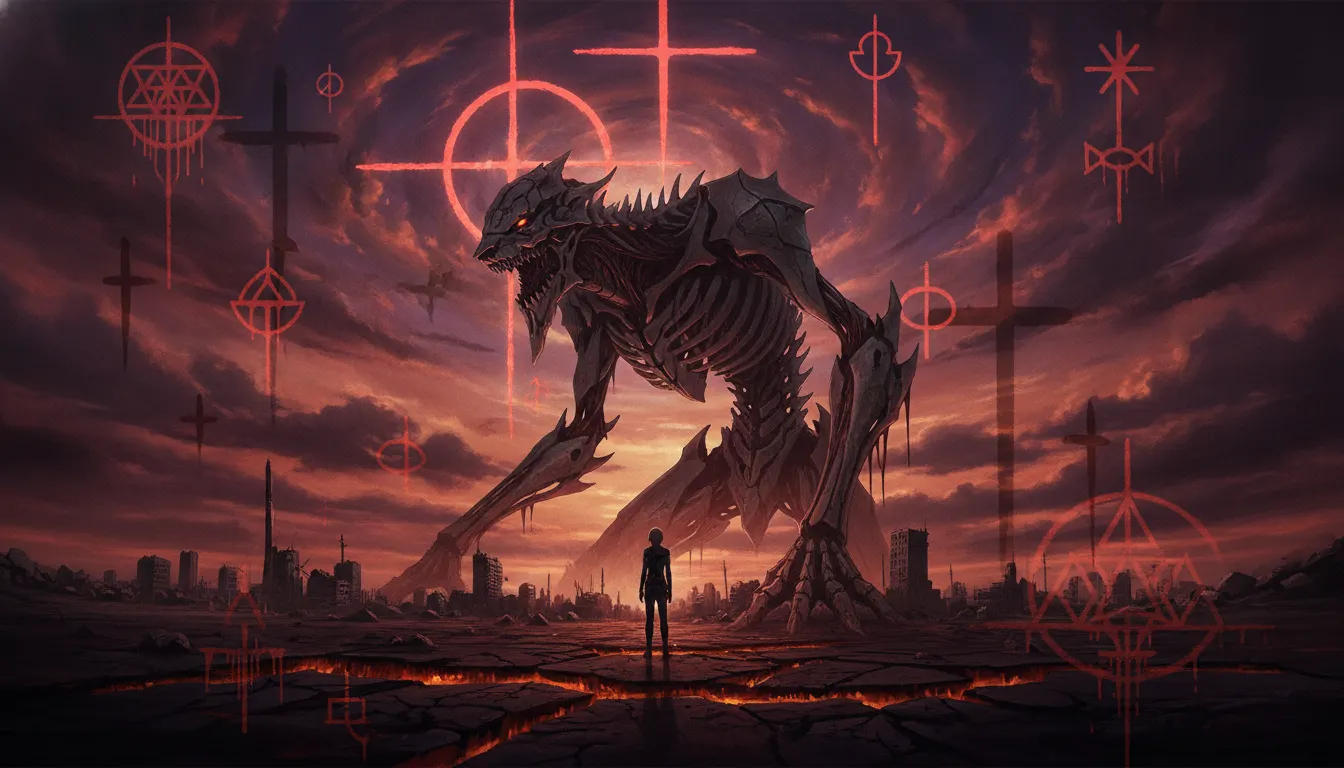
Gainax Evangelion Mecha Mystical
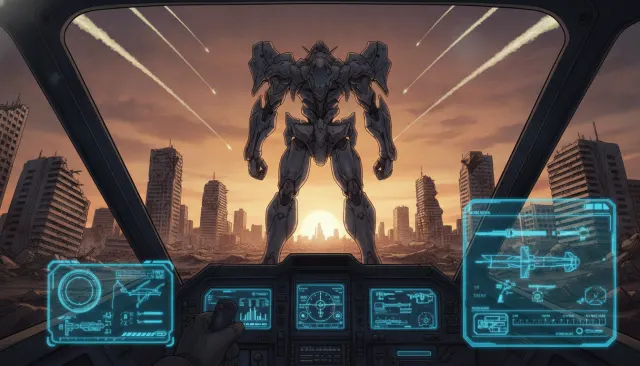
Gainax / Khara Neon Genesis Evangelion register. Religious symbol overlays, blood-red typography, biomechanical mecha, psychological apocalyptic staging.
apocalypticmysticalpsychologicalbiomechanical
LUT eva-blood-symbol
WHEN TO USE
- Dark psychological or existential content requiring anime's most sophisticated visual art direction reference
- Mecha or sci-fi content where post-Christian symbolism and psychological depth elevate the aesthetic beyond action genre
- Content targeting highly anime-literate audiences who value artistic ambition over accessibility
- Brand campaigns requiring cultural prestige and artistic credibility - Evangelion is a recognized fine art reference
- Music or audiovisual content where the combination of industrial mecha aesthetic and psychological fragmentation creates specific atmosphere
- Content around mental health, existential crisis, or psychological depth where Anno's honest visual language is relevant
WHEN NOT TO USE
- Children's content where the psychological horror, religious imagery, and adult themes are inappropriate
- Action-oriented content where audiences expect cathartic combat resolution and the introspective register frustrates
- Optimistic or hopeful brand campaigns where the series' fundamental pessimism undercuts the message
- General anime entry-point content where the assumed cultural knowledge is too specialized
SIGNATURE TECHNIQUES
How the look is made.
The moves a human crew would use to get here. Cue applies them for you, and knowing their names is how you ask for a change.
- 01Extreme eye close
up during psychological distress: single eye filling the frame as interior state indicator
- 02Static empty environment holds
cockpit, classroom, street held for discomfort-inducing duration
- 03Typographic insert cards
white text on black or colored text as externalized internal state
- 04Post
Christian visual symbolism: cross shadows, Kabbalistic Tree of Life, Sephiroth diagrams
- 05Eva unit biomechanical design
mecha that bleeds, strains against restraints, rages within functional hardware
- 06Budget
driven visual innovation: static frames, repeated stills, slide-show sequences as intentional aesthetic devices
- 07Hand
held camera simulation suggesting documentary instability during highest-stress sequences
HISTORY & CONTEXT
Where it comes from.
Gainax, Evangelion, and the Mecha-Mystical Aesthetic
Neon Genesis Evangelion (Gainax, 1995-1996, director Hideaki Anno) is the most analyzed, discussed, and influential anime in the medium's history. Produced by the amateur-turned-professional studio Gainax (founded 1984 by Anno, Hiroyuki Yamaga, and others; earlier productions include Gunbuster 1988 and Nadia: The Secret of Blue Water 1990), Evangelion entered production with a severely diminished budget midway through the series' run, forcing the production team to develop unconventional narrative and visual strategies that accidentally created the show's most memorable sequences.
Hideaki Anno's Visual Language
Anno's direction synthesizes multiple contradictory aesthetic registers. The mecha combat sequences draw from the Super Robot genre tradition (Tomino's Gundam, Nagahama's Getter Robo), while the psychological sequences borrow from live-action film: static shots, typographic text cards, black-and-white photography, hand-held camera simulation, slide-show stills, and repeated scene fragments used as psychological repetition rather than narrative continuity.
The distinctive Evangelion shot vocabulary includes: the extreme close-up on a single eye during psychological distress; the static overhead shot of a character lying motionless; the empty environment shot (empty cockpit, empty classroom) held for uncomfortable duration; and the typographic insert - white text on black, or colored text appearing alone on a blank frame - presenting character internal states as text rather than action.
Post-Christian Symbolism and Visual Design
Gainax designer Ikuto Yamashita and Anno created the series' most identifiable visual contribution: the integration of post-Christian and Kabbalistic symbolism into mecha design. The Angels (adversary creatures) have cross-shaped shadows and names from Judeo-Christian angelology. The Evangelion units bleed and rage. The NERV headquarters logo uses the Kabbalistic Tree of Life. The Third Impact sequences use the Dead Sea Scrolls, a Sephiroth diagram, and Christian crucifixion imagery simultaneously. Anno has stated the symbolism was chosen for visual impact rather than religious meaning, but its coherence and density creates a visual mythology that distinguishes Evangelion from every other mecha anime.
The End of Evangelion (1997) and the Rebuild Series
The 1997 theatrical conclusion The End of Evangelion (Gainax, directors Anno and Kazuya Tsurumaki) pushed the visual vocabulary to its extreme: mass production Evangelion units consuming protagonist Rei Ayanami, the Third Impact rendered as abstract visual poetry, and live-action footage of the audience watching the film spliced with animated sequences. The Rebuild of Evangelion tetralogy (Khara, 2007-2021) used modern digital production to revisit the visual language with unlimited budget.
NOTABLE WORKS
Where you have seen it.
*The End of Evangelion*, Gainax, directors Anno and Kazuya Tsurumaki, 1997
*Rebuild of Evangelion* tetralogy: 1.11 , 2.22 (2009), 3.33 (2012), 3.0+1.0 (2021), Khara
2007
*Gunbuster*, Gainax, director Hideaki Anno, 1988-1989
*FLCL* (*Fooly Cooly*), Gainax, director Kazuya Tsurumaki, 2000
*Gurren Lagann*, Gainax, director Hiroyuki Imaishi, 2007
Ikuto Yamashita, mechanical design, Evangelion unit and Angel design systems
THE RECIPE
The exact knobs
the renderer turns.
A Look is not a filter. It is a set of stored decisions the pipeline reads before it makes a single frame, so two videos in the same Look actually match.
SettingValue
GradeColour LUT applied to every frame
eva-blood-symbolTransitionHow one shot becomes the next
hard cuts · 160ms · linearKen BurnsCamera move applied to stills
Slow push · 0.05 · centerTypographyDisplay / body / mono pairing
IBM Plex Mono · Inter · JetBrains MonoMusic moodWhat the bed under the voice sounds like
dark-orchestral · choral-apocalypticPrompt suffixAppended to every shot prompt in this Look
Gainax Khara Neon Genesis Evangelion anime, religious symbol overlays, blood-red typography, biomechanical mecha, psychological apocalyptic stagingPALETTE
Primary
#DC2626
Secondary
#4A3F5C
Accent
#F59E0B
Text/Light
#0F0F14
Text/Dark
#F0E8E4
BG 900
#0A0A10
BG 800
#1A1A22
RELATED LOOKS
Next to it on the shelf.
Your first cut
is on us.
+ New videoFree plan · no card · 1080p export