ERA CLASSIC ANIME EXPANDED · 1980S · JAPAN
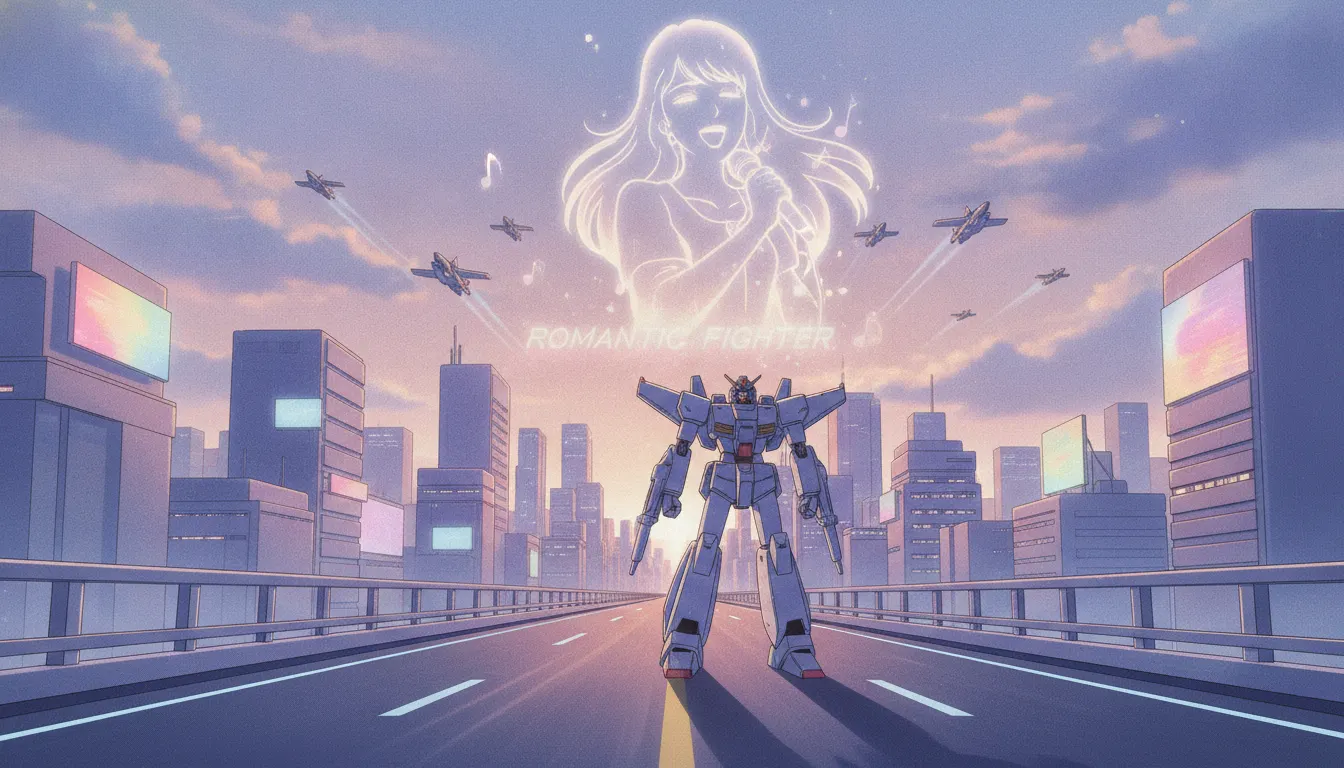
80s Macross Mecha Pastel
1980s Macross / Megazone 23 register. Pastel cel-shaded mecha, transforming jet fighters, idol-singer pop overlay, retro-future love-triangle melodrama.
80smechapastelretro-future
LUT macross-80s-pastel
WHEN TO USE
- Mecha, sci-fi, or space opera content with a romantic, nostalgic 1980s anime register
- Music-themed content referencing idol culture or pop music as narrative centerpiece
- Retro anime nostalgia content targeting audiences who grew up with 1980s-1990s anime
- Brand campaigns for consumer electronics, aviation, or defense with a warm human-scale counterpoint
- Content contrasting technology and emotion, or war and romance
- Fashion or lifestyle content with pastel color palette and vintage anime illustration style
WHEN NOT TO USE
- Contemporary action content where the pastel softness undercuts urgency
- Dark or gritty content where the warm pastel palette breaks tonal consistency
- Children's content requiring simpler, more accessible character design
- Content requiring photorealistic environments or modern cel-shaded 3D aesthetics
SIGNATURE TECHNIQUES
How the look is made.
The moves a human crew would use to get here. Cue applies them for you, and knowing their names is how you ask for a change.
- 01Haruhiko Mikimoto multi
catchlight eye design: highly detailed irises with multiple light reflections
- 02Pastel 1980s cel paint palette
dusty rose, pale teal, lavender, warm cream skin tones
- 03Hard technical mecha line work contrasting against soft organic character design
- 04Transformation sequence animation
smooth mechanical reconfiguration from vehicle to humanoid
- 05Idol performance staging
concert lighting, crowd reaction shots, emotional musical climax
- 06Space backdrop rendering
star fields with lens flare, orbital environment depth
- 07Cold geometric machinery palette (blue
grey, white, metallic) against warm human figure palette
HISTORY & CONTEXT
Where it comes from.
Macross and the 1980s Mecha Pastel Aesthetic
The Super Dimension Fortress Macross (Studio Nue / Tatsunoko Production, 1982-1983) is one of the foundational texts of the mecha anime genre and the origin of a distinctive visual aesthetic that shaped anime production through the 1980s and remains a touchstone for retro-animation nostalgia. Created by Shoji Kawamori (mechanical design) and Haruhiko Mikimoto (character design), Macross merged giant-robot combat with pop idol music and romantic melodrama in a combination that defined the "idol mecha" subgenre.
Haruhiko Mikimoto's Character Design
Mikimoto's character design for Macross represents the full refinement of the post-Tezuka large-eye aesthetic applied to teenage romance narratives. His character Lynn Minmay became the template for anime idol character design: large, highly detailed eyes with multiple catchlight reflections, soft pastel skin tones, and hair rendered in flowing, light-catching waves rather than the simpler mass-shapes of earlier anime. Mikimoto's designs emphasize youth, softness, and emotional accessibility - qualities that matched the series' romantic triangle narrative between pilot Hikaru Ichijo, ace pilot Misa Hayase, and pop idol Lynn Minmay.
Mecha Design and Mechanical Aesthetics
Shoji Kawamori's Valkyrie VF-1 design introduced the transforming mecha concept - a fighter jet that converts to a giant humanoid robot through intermediate "GERWALK" mode - that became the defining innovation of the genre. Mechanically, the Valkyrie is drawn with hard technical lines contrasting against the soft pastel character art, creating the visual tension that defines the aesthetic: metallic blue-grey or white aircraft against warm human figures, cold geometric transformation sequences breaking into warm romantic scenes.
Pastel Color Palette
The series' color design uses a distinctly 1980s pastel register: cel animation colors before the digital era used physically available paint sets, and the Macross palette of dusty rose, pale teal, lavender, and warm cream reflect both the technology constraints and the cultural aesthetics of early-1980s Japan (contemporaneous with Shojo manga color conventions and 1980s J-pop visual identity). This pastel warmth distinguishes the 1980s mecha aesthetic from both the earthier 1970s Gundam palette and the higher-saturation digital color of 1990s successors.
Legacy and Influence
Macross directly inspired Robotech (Harmony Gold, 1985) for American audiences and contributed to the global mecha anime market. Kawamori continued the franchise through Macross Plus (1994), Macross Frontier (2008), and Macross Delta (2016). The pastel-mecha aesthetic he established recurs in each iteration while updating character design conventions to their respective era's standards.
NOTABLE WORKS
Where you have seen it.
*Macross: Do You Remember Love?* theatrical film, Studio Nue, director Noboru Ishiguro, 1984
*Macross Plus* OVA, Studio Nue / Triangle Staff, director Shoji Kawamori, 1994-1995
*Macross Frontier*, Satelight, 2008
*Mobile Suit Gundam*, Sunrise, director Yoshiyuki Tomino, 1979 (parallel mecha tradition)
*Neon Genesis Evangelion*, Gainax, director Hideaki Anno, 1995 (next-generation evolution)
Shoji Kawamori, mechanical designer, Valkyrie VF-1 and subsequent Macross designs
THE RECIPE
The exact knobs
the renderer turns.
A Look is not a filter. It is a set of stored decisions the pipeline reads before it makes a single frame, so two videos in the same Look actually match.
SettingValue
GradeColour LUT applied to every frame
macross-80s-pastelTransitionHow one shot becomes the next
dissolve cuts · 460ms · ease-in-outKen BurnsCamera move applied to stills
Slow push · 0.07 · centerTypographyDisplay / body / mono pairing
Orbitron · Inter · JetBrains MonoMusic moodWhat the bed under the voice sounds like
city-pop-80s · synthwave-retroPrompt suffixAppended to every shot prompt in this Look
1980s Macross Megazone 23 anime, pastel cel-shaded mecha, transforming jet fighters, idol singer pop overlay, retro future melodramaPALETTE
Primary
#F4B7DD
Secondary
#5BC0EB
Accent
#FFE066
Text/Light
#2A1F2E
Text/Dark
#FFF6FA
BG 900
#1F1424
BG 800
#2A1F2E
RELATED LOOKS
Next to it on the shelf.
Your first cut
is on us.
+ New videoFree plan · no card · 1080p export