ERA CLASSIC ANIME EXPANDED · 1970S · JAPAN
70s Future Boy Conan Miyazaki Early
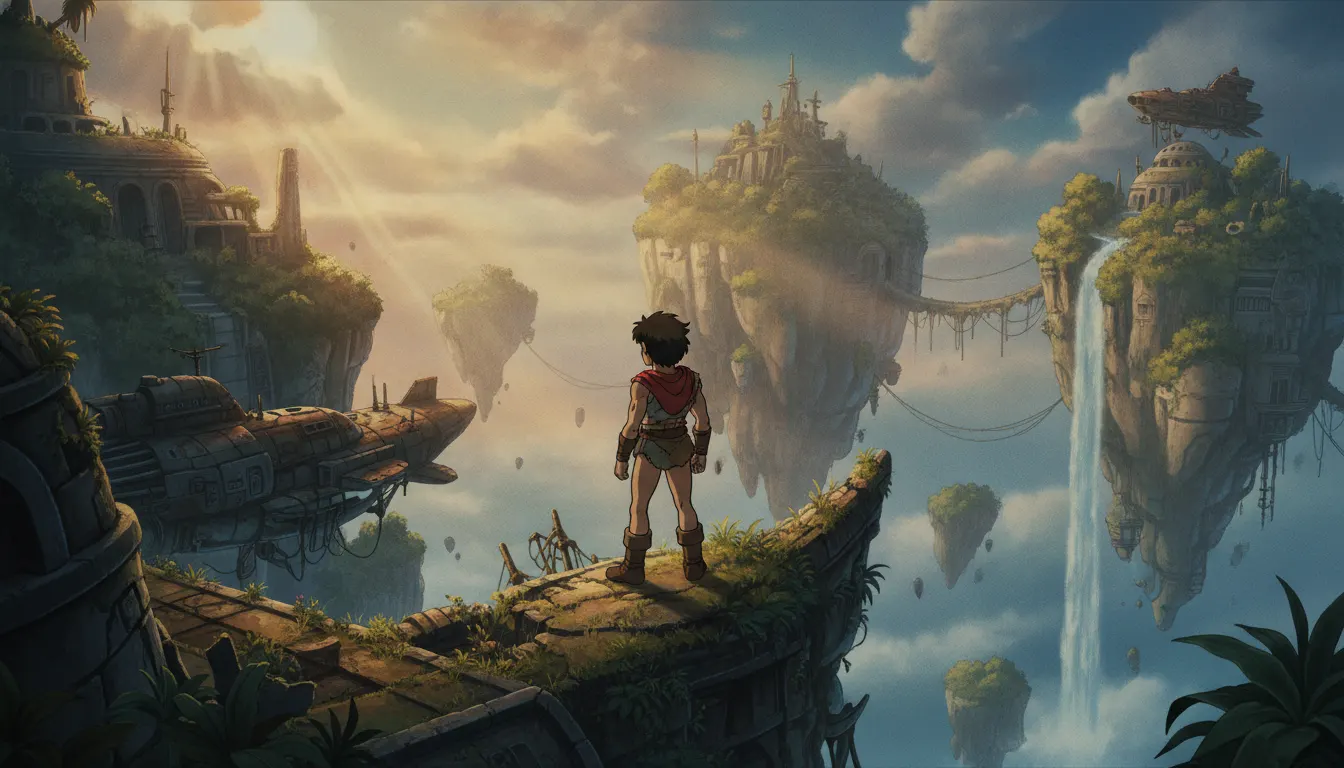
Late-1970s early Miyazaki Future Boy Conan register. Nippon Animation adventure-cel, hand-painted island landscapes, hopeful post-apocalyptic worldbuilding.
adventuroushopefulpainterlyearly-miyazaki
LUT conan-future-boy-70s
WHEN TO USE
- Nature, environmentalism, or adventure content with a romantic, nostalgic aesthetic
- Children's or family content that respects the audience's emotional intelligence
- Content set in post-apocalyptic or ruined-world environments rendered with warmth rather than grimdark
- Brand campaigns around adventure, sustainability, and the value of the natural world
- Animated storytelling where environments are as important as characters
- Content referencing the origin of Studio Ghibli and Japanese animation history
WHEN NOT TO USE
- Fast-paced action content where the contemplative, environment-heavy pacing creates drag
- Urban contemporary content where the pastoral aesthetic is mismatched
- Horror or intensely dark content where Miyazaki's warm humanist palette breaks tone
- Content targeting audiences exclusively familiar with post-2000 anime who won't recognize the reference
SIGNATURE TECHNIQUES
How the look is made.
The moves a human crew would use to get here. Cue applies them for you, and knowing their names is how you ask for a change.
- 01Physically weighted character animation
figures have bone structure and momentum
- 02Painterly natural background art treated with equal or greater detail than character foreground
- 03Lush environmental specificity
moss, rust, weathering, and wind-moved vegetation
- 04Color opposition
warm organic nature palettes vs. cold industrial blue-grey machine palettes
- 05Athletic protagonist design
lean, physically capable, built for motion through landscapes
- 06Sky and cloud sequences rendered with meteorological specificity
- 07Post
apocalyptic overgrown ruins imagery where nature reclaims industrial architecture
HISTORY & CONTEXT
Where it comes from.
Future Boy Conan and Miyazaki's Early Aesthetic (1970s)
Future Boy Conan (Mirai Shonen Conan, 1978, NHK) is the television directorial debut of Hayao Miyazaki and the essential document of his visual and thematic preoccupations before he co-founded Studio Ghibli in 1985. Produced by Nippon Animation, the 26-episode series is based on Alexander Key's 1970 novel The Incredible Tide and represents the first full expression of what would become the signature Miyazaki worldview.
Visual Identity and Character Design
Miyazaki's character design in Conan establishes the visual vocabulary he would refine for the next four decades. Protagonist Conan is drawn with short, spiky hair, expressive dark eyes smaller than the Tezuka convention, and a lean, athletic body built for physicality. Unlike Tezuka's rounded, soft-form characters, Miyazaki's figures have structural solidity - they feel like they have bones and weight. Female lead Lana introduces the large-eyed, wind-blown-hair female protagonist archetype that recurs through Nausicaa, Sheeta, Kiki, and Sophie.
Background Art and Environment
The series introduced what became Miyazaki's defining visual signature: lush, painterly natural environments given equal or greater visual weight than character action. Animation director Yasuo Otsuka supervised backgrounds depicting ocean waves, overgrown ruins, and sky sequences that treat the natural world with reverent detail. This is early evidence of the Ghibli principle that landscapes must be lived-in and specific - weathered metal, moss-covered concrete, wind-moved grass - rather than generic cartoon scenery.
Technology and Nature Tension
Conan's post-apocalyptic setting - a world flooded by war-triggered natural disaster, with scattered islands of survivors - frames the technology-versus-nature conflict central to all Miyazaki's subsequent work. The derelict machines of the villain Industria faction are rendered with decay and rust; the natural environments they threaten are rendered with warmth and specificity. This visual argument - that industrial machinery is always cold, angular, and death-colored while organic nature is warm, curved, and life-colored - became Miyazaki's visual thesis.
Bridge to Ghibli
Conan established Miyazaki's working relationships with key collaborators including Yasuo Otsuka (animation director) and led directly to the theatrical film Lupin III: The Castle of Cagliostro (1979, TMS Entertainment), his theatrical debut. The animation principles refined across these 1970s works became the technical and aesthetic foundation of Studio Ghibli (est. 1985) and films including Nausicaa of the Valley of the Wind (1984), My Neighbor Totoro (1988), and Princess Mononoke (1997).
NOTABLE WORKS
Where you have seen it.
*Lupin III: The Castle of Cagliostro*, TMS Entertainment, director Hayao Miyazaki, 1979
*Nausicaa of the Valley of the Wind* manga by Hayao Miyazaki, Animage, 1982-1994
*Nausicaa of the Valley of the Wind* film, Topcraft, director Hayao Miyazaki, 1984
*My Neighbor Totoro*, Studio Ghibli, director Hayao Miyazaki, 1988
*Princess Mononoke*, Studio Ghibli, director Hayao Miyazaki, 1997
Yasuo Otsuka, animation director, *Conan* and subsequent Miyazaki productions
THE RECIPE
The exact knobs
the renderer turns.
A Look is not a filter. It is a set of stored decisions the pipeline reads before it makes a single frame, so two videos in the same Look actually match.
SettingValue
GradeColour LUT applied to every frame
conan-future-boy-70sTransitionHow one shot becomes the next
dissolve cuts · 480ms · ease-in-outKen BurnsCamera move applied to stills
Slow push · 0.06 · rule-of-thirdsTypographyDisplay / body / mono pairing
Hachi Maru Pop · Nunito · JetBrains MonoMusic moodWhat the bed under the voice sounds like
orchestral-adventure · folk-acousticPrompt suffixAppended to every shot prompt in this Look
Hayao Miyazaki Future Boy Conan late 1970s Nippon Animation, adventure cel anime, hand-painted island landscapes, hopeful post-apocalyptic worldbuildingPALETTE
Primary
#7DD3FC
Secondary
#16A34A
Accent
#FACC15
Text/Light
#1A2E3A
Text/Dark
#FFF8E7
BG 900
#0F1F2E
BG 800
#16263A
RELATED LOOKS
Next to it on the shelf.
Your first cut
is on us.
+ New videoFree plan · no card · 1080p export